Ollantaytambo Travel Guide
Plan a rewarding visit to Ollantaytambo with practical guidance on its archaeological park, historic settlement, Cusco road access, Machu Picchu trains, tickets, timing, accessibility, and overnight stays.
 Visit Sacred Valley
August 23, 2026
Visit Sacred Valley
August 23, 2026

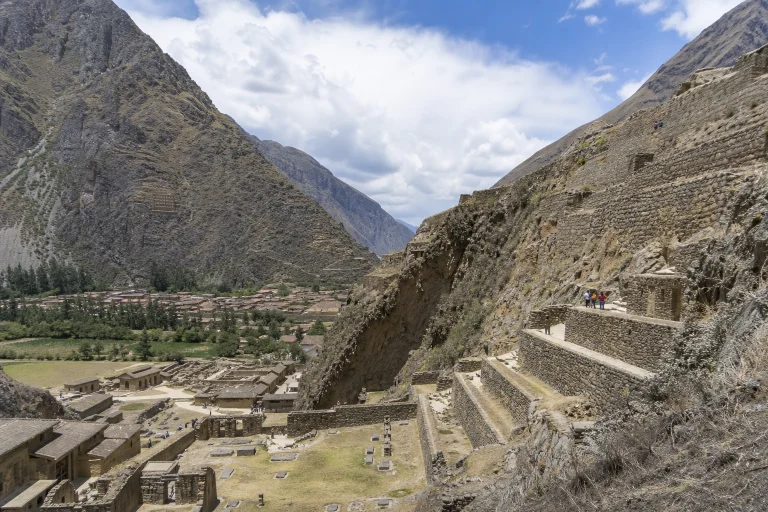
Ollantaytambo combines a major archaeological park with a living historic settlement on the route toward Machu Picchu. That combination makes it more than a brief sightseeing stop. Travelers can spend time at the monumental site, explore the town, and use the visit to break up a longer Sacred Valley journey. The main planning challenge is transport: road congestion, access works, and onward rail schedules all reward a generous buffer.
Ollantaytambo at a glance
- Allow roughly two hours for a guided visit to the archaeological park, plus additional time for arrival and entry.
- The archaeological park is included in the Cusco Tourist Ticket, which is personal and non-transferable.
- Two paved approaches connect Ollantaytambo with Cusco through different parts of the Sacred Valley.
- Road works, a temporary bypass, and congestion near the park make extra transport time important in 2026.
- Ollantaytambo is a practical base for continuing toward Machu Picchu, but rail status and departure details should be checked directly with the operator.
The strongest plan separates sightseeing from any time-sensitive connection. Arrive early, give the archaeological park the attention it deserves, and avoid scheduling your exit at the narrowest possible margin. Staying overnight is especially useful when Ollantaytambo forms part of a Machu Picchu itinerary, since it reduces the pressure to combine a road transfer, archaeological visit, and train departure in one rushed sequence.

Sacred Valley Tour: Pisac, Maras, Chinchero & Ollantaytambo
Explore the best of Peru’s Sacred Valley on a private full-day tour designed for a personalized and comfortable experience. With your own expert loc...
Why Ollantaytambo works as a Sacred Valley base
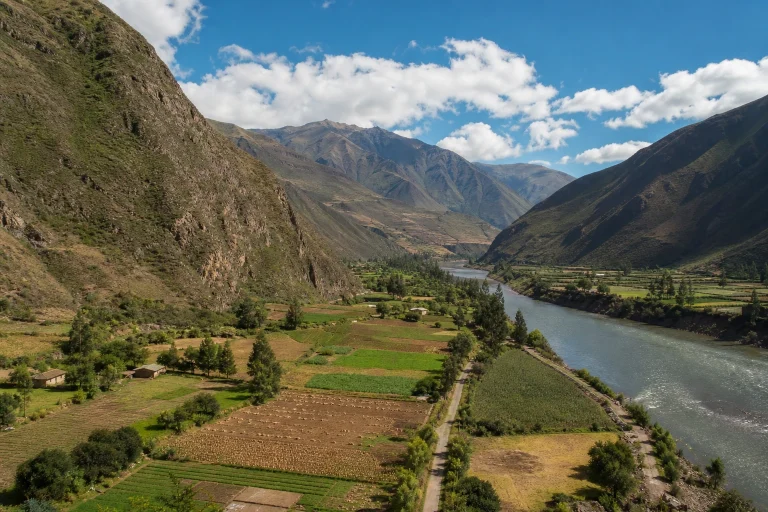
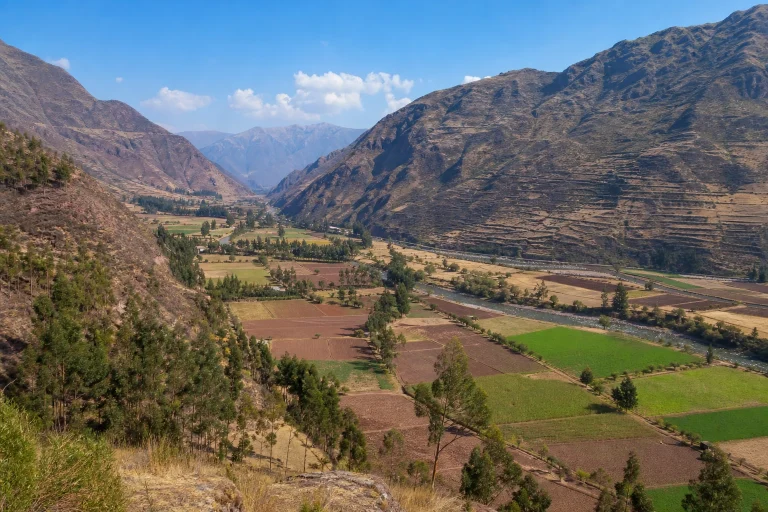
Ollantaytambo suits travelers who want archaeology and practical onward transport in the same stop. Mincetur places the town about 80 kilometers from Cusco and 40 kilometers from Machu Picchu. Those distances help explain its role as a staging point, although they should not be converted into fixed driving times. Road conditions and congestion can change the pace considerably.
The town is also useful for slowing down a crowded itinerary. Instead of treating the Sacred Valley as a corridor between Cusco and Machu Picchu, an overnight stop creates room for a focused archaeological visit and time in the historic settlement. This format is particularly sensible for travelers carrying luggage or managing several prebooked connections.
The tradeoff is concentrated visitor traffic. Regional authorities identified vehicle congestion, weak traffic control, and tourism vehicles using local roads as active access problems in July 2026. These issues do not erase Ollantaytambo’s convenience, but they make tightly packed schedules less dependable. A flexible afternoon or an overnight stay provides a more forgiving framework.
Visiting Ollantaytambo Archaeological Park
Set aside about two hours for a guided tour of the archaeological park. This is a practical core visit rather than a promise that every traveler will finish in the same amount of time. Photography, pauses, congestion, and personal mobility can extend the visit, so avoid placing a fixed departure immediately afterward.
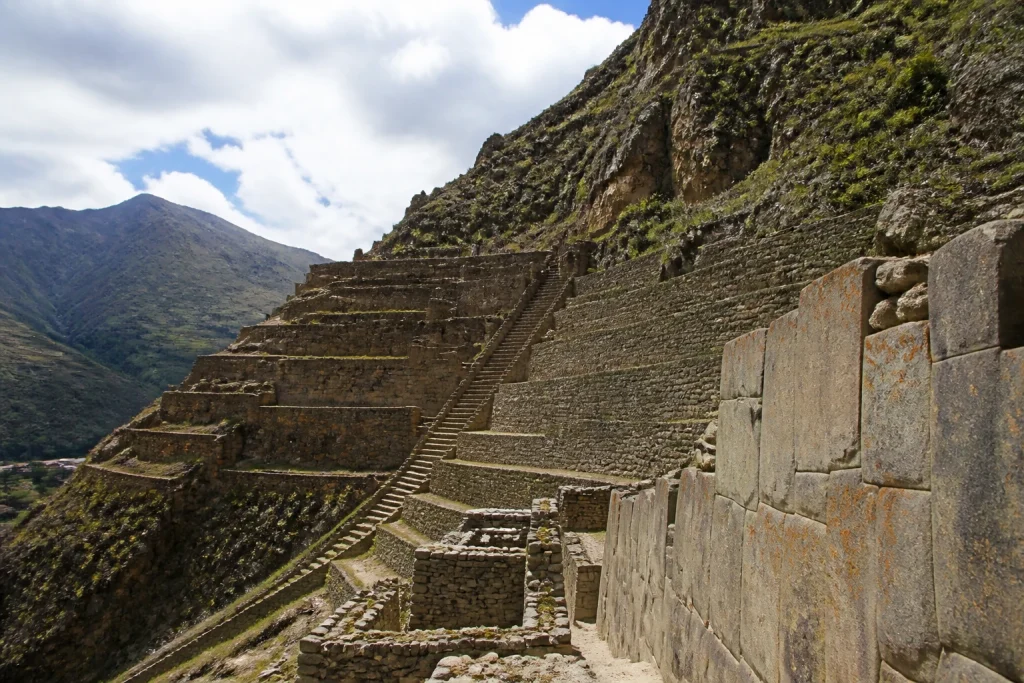
Guides can be requested at the entrance. A guide is most useful if you want the site’s built features placed in context instead of moving through it as a sequence of viewpoints. Confirm the fee, language, route, and expected duration before beginning, since those details can depend on the individual arrangement.
Arrive earlier rather than relying on a late entry. A regional update dated July 16, 2026 temporarily extended the maximum entry time to 17:00 while authorities addressed congestion and visitor-flow problems. The temporary arrangement should not be treated as a permanent daily schedule. Check current admission information before visiting and build your day around a morning or early-afternoon arrival.
Keep your plan simple on arrival. Have your ticket information ready, decide whether you want a guide, and leave nonessential schedule decisions until after the visit. The access area is the wrong place to discover that a train, transfer, or tour leaves no room for a slower-than-expected entry process.
Exploring the living historic settlement
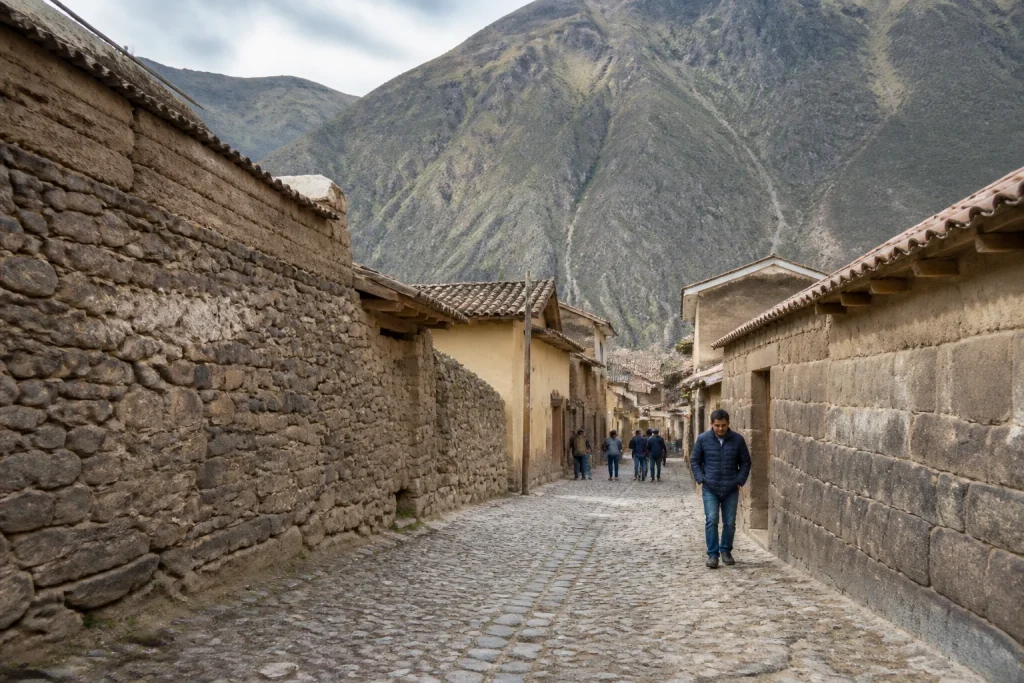
Ollantaytambo’s appeal continues beyond the archaeological park because the destination is also a living historic settlement. That relationship between inhabited town and monumental site gives the visit a different rhythm from an isolated archaeological excursion. Allow unstructured time rather than treating every minute as a transfer between ticketed attractions.
A useful sequence is to tour the park first and explore the settlement afterward. The guided visit supplies context, while the later walk lets the day open up without another fixed deadline. If you arrive late, reverse the plan and save the archaeological park for the following morning instead of racing a temporary last-entry arrangement.
For a closer look at the town itself, the companion feature about living inside an Inca town explores Ollantaytambo’s historic character in greater depth. It is a useful complement for travelers deciding whether the settlement deserves an overnight stop rather than a quick pause between vehicles.

Machu Picchu Circuit 2 Guided Tour
Explore the wonders of Machu Picchu via the official Circuit 2 route, known for its stunning views and historical si...

Machu Picchu Private Tour from Aguas Calientes with Ticket & Bus
Maximize your time at Machu Picchu with this private guided tour starting directly from Aguas Calientes. Skip the ha...

Machu Picchu Circuit 2 Entry Ticket and Private Official Guide
Can't find Circuit 2 tickets? We have you covered! We exclusively provide the highly-coveted Circuit 2 (Classic Rout...
How to reach Ollantaytambo from Cusco
The Cusco culture authority lists two paved-road approaches. One follows Cusco, Chinchero, Urubamba, and Ollantaytambo. The other follows Cusco, Pisaq, Calca, Urubamba, and Ollantaytambo. The route that makes sense depends on your starting point and any other Sacred Valley stops included that day.
| Road approach | Useful when | Planning consideration |
|---|---|---|
| Cusco–Chinchero–Urubamba–Ollantaytambo | Your itinerary approaches through Chinchero and Urubamba | Allow extra time for current access works and local congestion. |
| Cusco–Pisaq–Calca–Urubamba–Ollantaytambo | Your itinerary includes the eastern Sacred Valley around Pisaq or Calca | This is a longer sequence of valley stops, so avoid stacking it with a fixed late-afternoon commitment. |
| Direct transfer within the Sacred Valley | You are already staying elsewhere in the valley | Confirm pickup timing and leave a buffer near Ollantaytambo’s access points. |
In April 2026, Peru’s transport ministry reported that work on the principal access road had shifted traffic to a temporary three-kilometer bypass between Araccama and Rumira on route PE-28B while paving continued. Travelers visiting later in 2026 should confirm current road conditions and allow more time than a map estimate alone suggests.
If you are arranging a private transfer or joining a tour, ask for the realistic pickup window rather than the ideal driving time. If you are driving, confirm the final approach and parking plan with your accommodation before setting out. The goal is not to predict every delay. It is to avoid making one delay cascade into a missed entry or departure.
Continuing to Machu Picchu by train
Ollantaytambo is a practical departure point for the rail corridor toward Machu Picchu. Rail service on the corridor was officially reported as fully restored on January 1, 2026 after an incident in December 2025. That notice is historical rather than a live operating update, so check your operator’s current service information before committing to an onward plan.

Use the departure time printed in your booking as the anchor for that day. Work backward to include the operator’s check-in instructions, movement through town, luggage handling, and a road-delay buffer. Do not assume a two-hour archaeological visit can be inserted immediately before departure without additional margin.
Travelers still choosing a service can use the comparison of PeruRail and Inca Rail routes to Machu Picchu to understand the main planning questions. After booking, follow the details supplied by the selected operator because departure arrangements and service conditions can change.
Sacred Valley Tour: Pisac, Maras, Chinchero & Ollantaytambo
Explore the best of Peru’s Sacred Valley on a private full-day tour designed for a personalized and comfortable experience. With your own expert loc...
Treat the train as a fixed commitment and the archaeological visit as the flexible part of the day.
Choosing the best time of day to visit
Morning is the lower-risk choice for the archaeological park. It provides more room for a two-hour guided visit, access delays, and an unhurried return to town. It also prevents the day from depending on the temporary 17:00 maximum-entry arrangement announced in July 2026.
An early-afternoon visit can work when Ollantaytambo is your final destination for the day. It is less attractive when you must continue by train or road on a strict schedule. In that case, visit the park the following morning or add an overnight stay rather than compressing the experience.
After severe weather, check both road and rail conditions before departure. Peru’s emergency authority recorded a rain-triggered rockfall in the Ancopachar sector of Ollantaytambo district on May 13, 2026. That event is not a current closure notice, but it illustrates why recent conditions matter when roads and fixed rail departures share the same itinerary.
Still comparing Ollantaytambo Archaeological Park?
Ask for tour ideas, hotel suggestions, or a simple trip plan that combines both.
Trip Helper
Tickets, admission and guides
Ollantaytambo Archaeological Park is included in the Cusco Tourist Ticket, commonly called the Boleto Turístico del Cusco or BTC. COSITUC describes the ticket as personal and non-transferable, so each traveler should carry the ticket issued for their own use and follow the current entry procedure.
Check current ticket options and prices through COSITUC or an official ticket office before budgeting. Admission details can change, and a specific current amount should not be assumed from an old itinerary or forum post. Also confirm which other sites are included if you plan to use the ticket elsewhere in the Cusco region.
A guide can be requested at the park entrance. Before agreeing, establish the language, approximate duration, route, and fee. A roughly two-hour guided visit is a sensible planning baseline, but you can leave additional time if you prefer a slower pace or expect to stop frequently.
Two practical Ollantaytambo itineraries
A one-day visit from elsewhere in the Sacred Valley
- Leave with a generous road buffer and aim to reach Ollantaytambo early in the day.
- Confirm your admission arrangements and request a guide at the entrance if desired.
- Allow roughly two hours for the archaeological park without placing a hard departure immediately afterward.
- Spend the remaining time in the living historic settlement rather than adding another distant attraction.
- Begin the return journey early enough to absorb congestion at the park approaches and along local roads.
An overnight stop before Machu Picchu
- Travel to Ollantaytambo without tying your arrival to a same-day archaeological last entry.
- Settle in and explore the historic town at an easy pace.
- Visit the archaeological park early the next day and allow about two hours for a guided tour.
- Return with enough time to collect luggage and follow the rail operator’s check-in instructions.
- Reconfirm rail service, departure details, and current road conditions before the travel day.
The overnight version is more resilient because it separates the road journey from the park visit. If the train leaves early, move the archaeological visit to the previous afternoon only after confirming current entry times. Do not depend on the temporary 17:00 arrangement without checking that it remains in effect.
Should you stay overnight or visit on a day trip?
Stay overnight if Ollantaytambo connects your Sacred Valley sightseeing with a Machu Picchu train. The extra night creates room for delays and lets the town function as a destination rather than a waiting area. It also removes the need to combine a Cusco road transfer, archaeological tour, and rail departure in one sequence.
A day trip is reasonable if you are already based in the Sacred Valley and have no fixed onward departure. Make the archaeological park the day’s priority and treat anything else as optional. This approach is stronger than covering several distant sites while hoping every road segment runs perfectly.
For help choosing a base, the guide to where to stay in the Sacred Valley compares the role of different villages, hotels, and lodges. Consider the location of your next fixed commitment, not just the attraction list, when deciding where to sleep.
What to bring and how to prepare
- Your personal Cusco Tourist Ticket and any identification required under the current entry procedure.
- A confirmed rail or transfer itinerary saved somewhere accessible without depending on a strong connection.
- Water and a compact day bag that will not become awkward during a two-hour site visit.
- Sun and rain protection so a change in conditions does not force an early departure.
- Comfortable, secure footwear chosen for an archaeological visit rather than only for the train journey.
- Any essential medication, plus extra time if you need a slower pace or assistance.
Keep luggage logistics separate from sightseeing when possible. Ask your accommodation or transport provider about storage before arriving, especially if you plan to continue by train. Review the rail booking for luggage conditions and check-in directions rather than assuming every service follows the same procedure.

Machu Picchu Guided Tour from Aguas Calientes
The Incan site of Machu Picchu is a UNESCO World Heritage Site. It is one of the most famous places in the world. It...

Machu Picchu Private Tour with Expert Guide
Discover the wonders of Machu Picchu with a professional private guide, available in English, French, or Spanish. Yo...

Aguas Calientes Machu Picchu Official Ticket Bus and Guide
Discover Machu Picchu with this all-inclusive guided tour, including official entrance tickets, round-trip bus trans...
Accessibility and reduced-mobility planning
Do not assume the archaeological park offers a step-free route. Current official information does not establish accessible parking, surface conditions, ramps, adapted toilets, or an alternative route through the complex. Travelers who need these features should contact the local tourism office or site authority before visiting and describe their specific requirements.
A private transfer, flexible start time, and shorter route can make the day easier, but these choices do not confirm accessibility inside the park. Ask which areas are currently reachable, where a vehicle can stop, and whether assistance is available. Build in rest time and avoid pairing the visit with an inflexible departure.
Combining Ollantaytambo with the rest of the Sacred Valley
Choose neighboring stops according to your road approach rather than collecting names from a checklist. The route through Chinchero and Urubamba supports one style of itinerary, while the Pisaq, Calca, and Urubamba approach supports another. Trying to cover both sides of the valley before a fixed Ollantaytambo entry or train departure creates unnecessary pressure.
The broader guide to the best things to do in the Sacred Valley can help you choose which stops deserve separate days. Once you have selected them, organize the route geographically and preserve the largest buffer before any train departure.
For many first-time visitors, Ollantaytambo is substantial enough to anchor a full sightseeing day or an overnight stay. The archaeological park, living settlement, and Machu Picchu connection already form a complete plan. Extra stops should improve that plan rather than crowd it.
A well-paced plan makes Ollantaytambo worthwhile
Ollantaytambo is best for travelers who value both archaeological context and a useful Sacred Valley base. Its major strength is the combination of a monumental park, a living historic settlement, and a practical route toward Machu Picchu. Its main limitation is transport friction near a busy access point.
Plan the park for earlier in the day, allow about two hours with a guide, and keep a buffer around road and rail connections. Before leaving, check current ticket details, entry arrangements, road conditions, and your rail operator’s instructions. With those pieces in place, Ollantaytambo becomes a rewarding pause in the Sacred Valley rather than another race against the clock.
Frequently asked questions
How long should I spend in Ollantaytambo?
Allow at least half a day for the archaeological park and town, with roughly two hours reserved for a guided park visit. An overnight stay is the stronger choice if Ollantaytambo connects your Sacred Valley trip with a Machu Picchu train.
Is Ollantaytambo worth staying overnight?
Yes, especially if you are continuing toward Machu Picchu. Staying overnight separates the road transfer from the archaeological visit and gives you more protection against congestion or other transport delays.
Is Ollantaytambo included in the Cusco Tourist Ticket?
Yes. Ollantaytambo Archaeological Park is included in the Cusco Tourist Ticket, and COSITUC describes the ticket as personal and non-transferable. Check current ticket options and prices through an official sales channel before visiting.
Can I hire a guide at Ollantaytambo Archaeological Park?
Yes. Guides can be requested at the entrance, and roughly two hours is a useful planning estimate for a guided visit. Confirm the language, route, duration, and fee before starting.
What time should I visit the archaeological park?
Morning is the safest planning choice because it leaves room for a full visit and possible access delays. A temporary maximum entry time of 17:00 was announced in July 2026, but travelers should not assume that arrangement is permanent.
How do I get from Cusco to Ollantaytambo?
Two paved approaches are officially listed: one through Chinchero and Urubamba, and another through Pisaq, Calca, and Urubamba. Current access works and congestion make extra journey time advisable.
Can I take a train from Ollantaytambo toward Machu Picchu?
Yes, Ollantaytambo serves the rail corridor toward Machu Picchu. Because operating conditions can change, check the selected rail operator’s current service status, departure instructions, and timetable before travel.
Is Ollantaytambo Archaeological Park wheelchair accessible?
Step-free access and adapted facilities should not be assumed. Contact the local tourism office or site authority before visiting to ask about current routes, vehicle access, toilets, surfaces, and assistance for your specific needs.
Are there road problems near Ollantaytambo in 2026?
Travelers should allow extra road time in 2026. Authorities reported principal-access paving, use of a temporary three-kilometer bypass, and congestion near the archaeological park, so check conditions shortly before departure.
Should I visit Ollantaytambo and take a Machu Picchu train on the same day?
It can work with a generous buffer, but an overnight stay is less stressful. Treat the train as the fixed commitment and avoid scheduling the archaeological visit immediately before check-in.