Sacred Valley Towns and Villages Guide
Plan a more rewarding Sacred Valley trip with this guide to Pisac, Urubamba, Ollantaytambo, Chinchero, and Calca. Compare the best bases, rail connections, pacing, transport estimates, tickets, and altitude considerations.
 Visit Sacred Valley
October 14, 2026
Visit Sacred Valley
October 14, 2026
The Sacred Valley is easier to enjoy when each town has a clear role in your itinerary. Pisac works as an archaeological and town stop on the eastern side; Urubamba is the central overnight base; Ollantaytambo combines a historic settlement with the key rail departure point for Machu Picchu; and Chinchero sits on the Cusco side of the valley. Calca is best treated as a flexible corridor stop.
Choose each Sacred Valley town by your next day’s plan
- Choose Pisac when you want to give an archaeological park and the surrounding town proper time.
- Choose Urubamba for a central valley base, especially when rail-station convenience is not your main priority.
- Choose Ollantaytambo when a Machu Picchu train is the next major step in your journey.
- Choose Chinchero when entering or leaving the valley through Cusco and you want to pair a village setting with an archaeological park.
- Give the main towns two days when possible; a single day works best as a selective route rather than a race across the valley.
For many first-time visitors, the best rhythm is a two-day route with one or two overnights. This gives Pisac, Chinchero, and Ollantaytambo more than a passing glance, while Urubamba can keep the middle of the trip practical. If an early Machu Picchu train is on the schedule, an Ollantaytambo overnight is the cleanest way to reduce pressure on departure morning.
At a glance: the four main Sacred Valley bases and stops
| Town | Choose it for | Main planning trade-off |
|---|---|---|
| Pisac | An archaeological park paired with an eastern-valley town stop | Do not build the day around assumed market hours or a particular market day. |
| Urubamba | A central valley location, agricultural character, and a practical all-purpose base | It is less convenient than Ollantaytambo when a Machu Picchu train departure is the priority. |
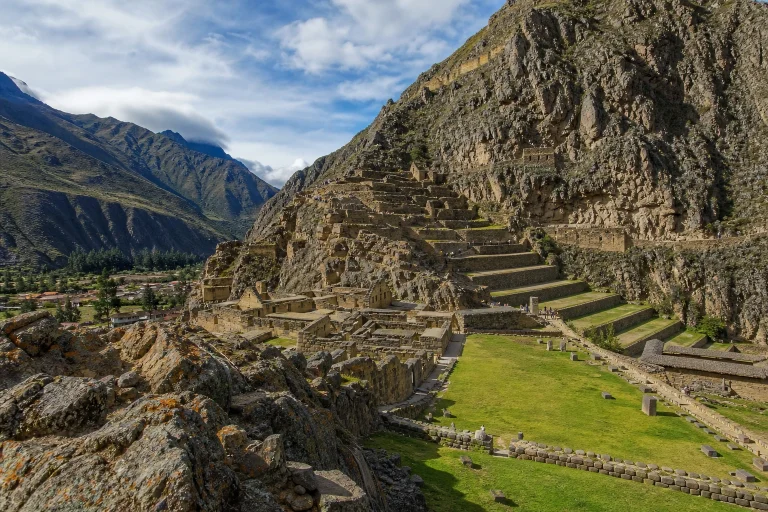
| Ollantaytambo | An archaeological park, historic settlement, and rail departure point for Machu Picchu | Train timing can shape the entire overnight plan. |
| Chinchero | A village setting and archaeological park on the Cusco side of the valley | It suits Cusco-side routing better than a train-focused Machu Picchu itinerary. |
Pisac: make the archaeological park the anchor
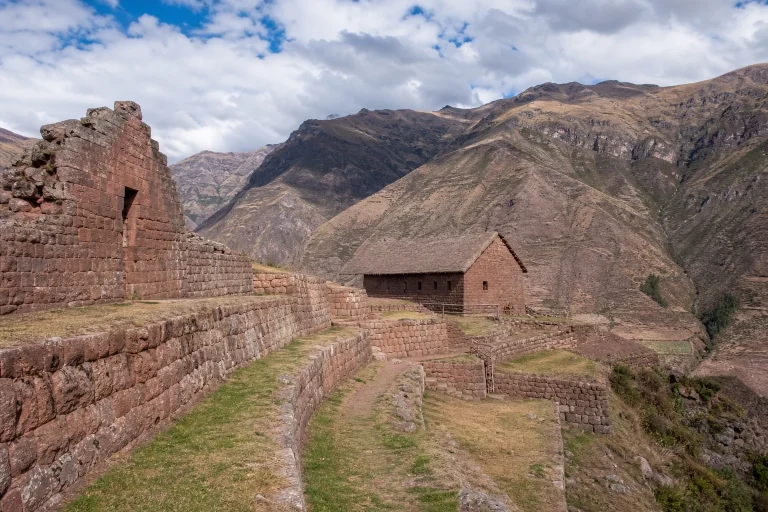
Pisac deserves to be planned as more than a shopping stop. Its archaeological park is part of the Cusco Tourist Ticket circuit, so it can anchor a fuller eastern-valley visit that also leaves room for the town. Give yourself enough time to avoid turning the stop into a hurried photo break between Cusco and another destination.
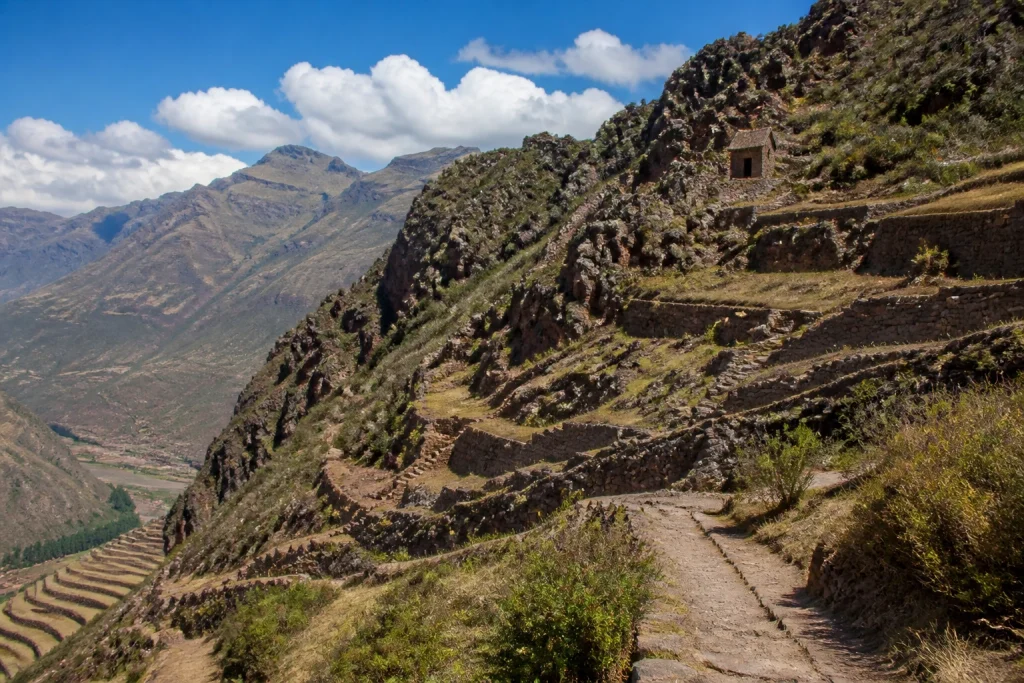
If browsing the market matters to you, confirm the current timetable close to your visit rather than relying on an old online schedule. A focused guide to Pisac ruins and the market can help shape the day, but the archaeological park should remain the dependable centerpiece of the plan.
Urubamba: the central base for a slower valley stay
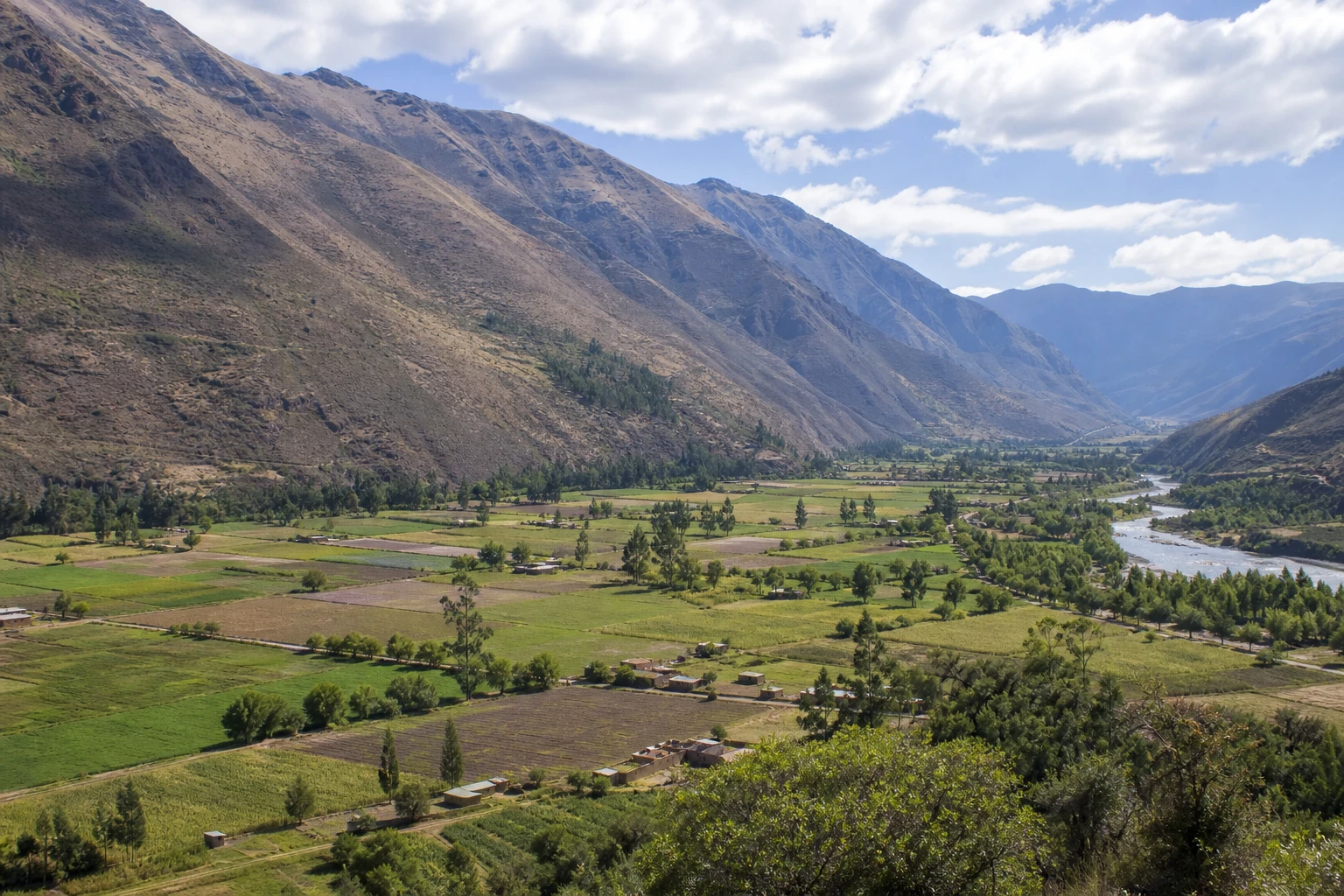
Urubamba is a city in the heart of the Sacred Valley at 2,871 metres. Its agricultural tradition, relatively mild valley climate, and central position make it the strongest all-purpose base in this guide. It suits travelers who would rather spread sightseeing across several days than sleep beside the rail departure point.
Use Urubamba as the practical middle of a route that includes both sides of the valley. The town makes particular sense after a Cusco-side stop such as Chinchero or before continuing west to Ollantaytambo. For the accommodation decision itself, a guide to Sacred Valley lodges, hotels, and villages is useful alongside your transport plan.
Ollantaytambo: stay here when the train matters most
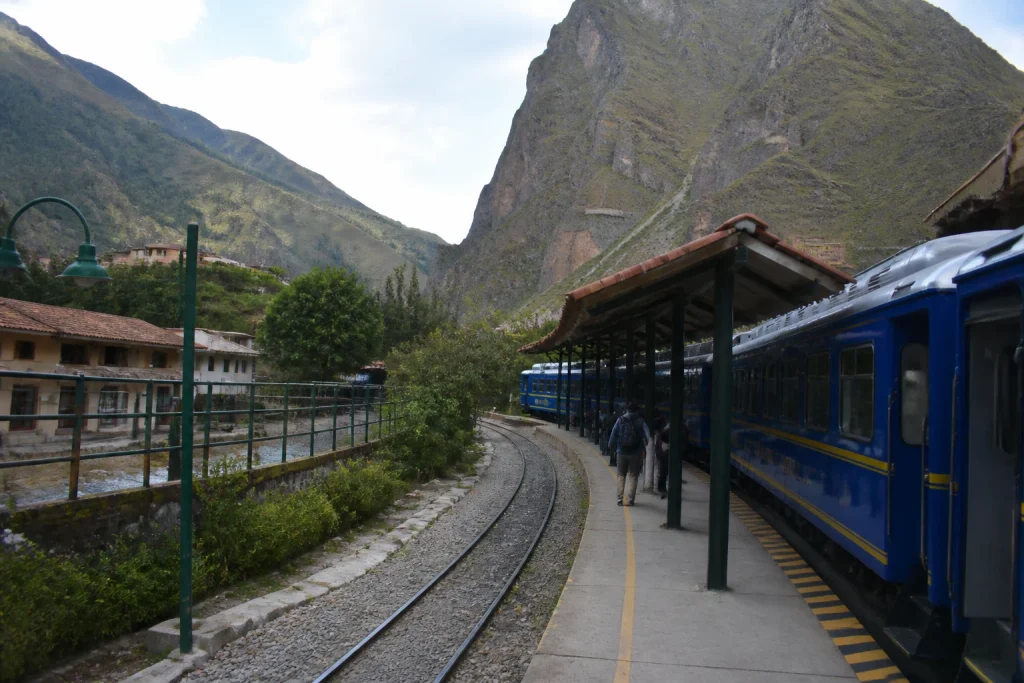
Ollantaytambo is the right choice when Machu Picchu is next. It combines an archaeological park and historic settlement with the principal rail departure point used for the journey to Machu Picchu Pueblo. The official tourism inventory describes that rail journey as 43 kilometres and about 1 hour 32 minutes, while regular services are listed on current rail schedules.
Book the train first, then choose the overnight plan around it. An Ollantaytambo night before departure gives you more breathing room, especially when your train leaves early. Schedules and seat availability change, so recheck the rail operator’s timetable when booking. A Sacred Valley trains to Machu Picchu comparison can help when weighing the rail options.
Still comparing Sightseeing?
Ask for tour ideas, hotel suggestions, or a simple trip plan that combines both.
Trip Helper
Chinchero: a Cusco-side village stop with an archaeological park
Chinchero is about 30 kilometres from Cusco, putting it in a logical position for the first or last valley stop. The district pairs a village setting with an archaeological park included in the Cusco Tourist Ticket circuit. It works particularly well for travelers who want to connect the valley with a Cusco arrival or departure day.
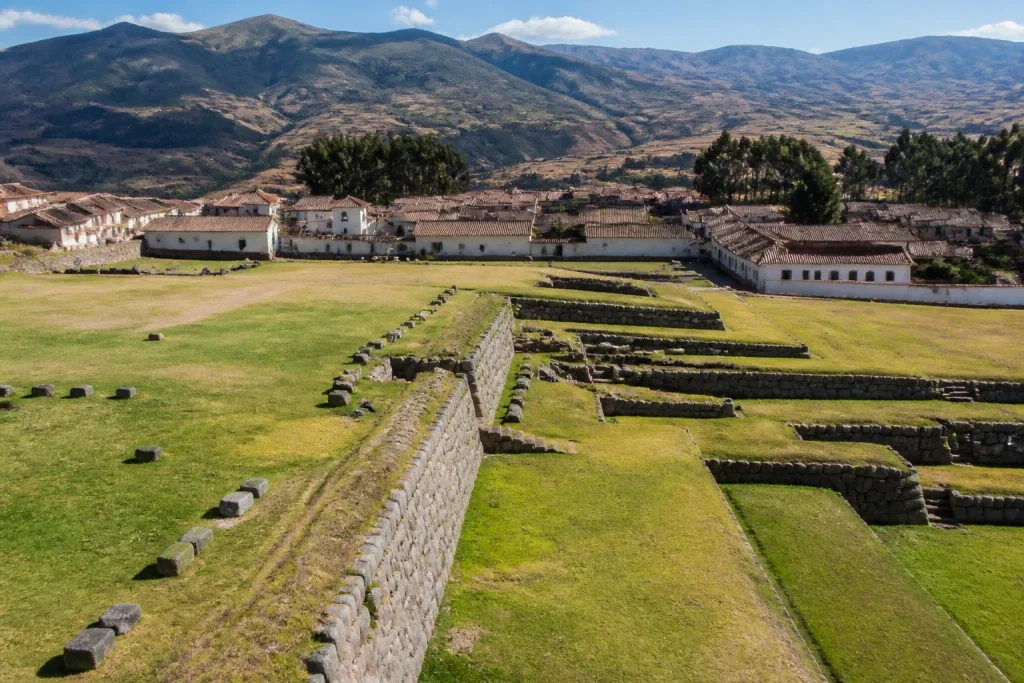
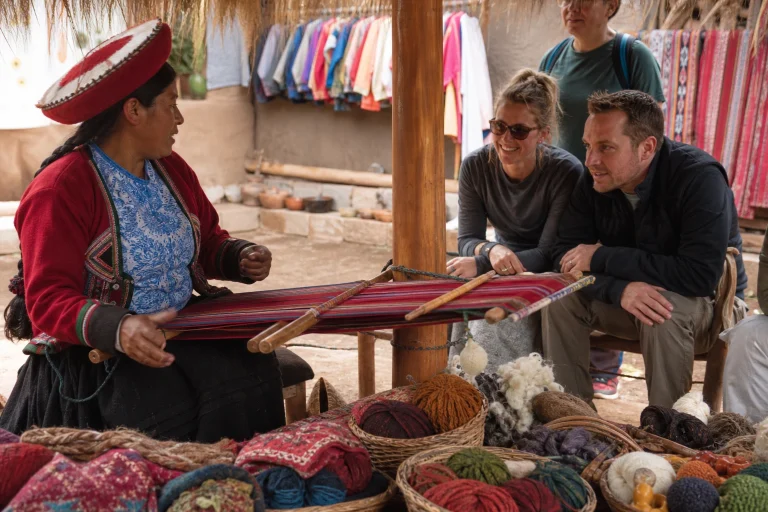
Keep the plan flexible around village activities. Do not assume a particular market schedule or textile demonstration without checking current local arrangements. For a deeper cultural read, the Chinchero guide on Andean weaving offers a focused companion to the archaeological visit.
Calca: use this valley town as a flexible corridor stop
Calca is one of the Sacred Valley tourism area’s recognized urban centers, alongside Pisac and Urubamba. It fits naturally into the route as a corridor town rather than a rival to the valley’s major archaeological and rail-focused stops. Build it into the day when it matches your route, but let your overnight choice be driven by Pisac, Urubamba, Ollantaytambo, or Chinchero.
This approach keeps the itinerary spacious. The valley is more rewarding when towns are used as places to pause between archaeological visits, not simply pins to collect before returning to Cusco.
Give the valley two days instead of rushing every stop into one
A single full day can work if you select two towns and one archaeological park, then accept that other highlights will wait for another trip. Two days are better suited to Pisac, Chinchero, and Ollantaytambo, which are grouped in a recent PromPerú Sacred Valley itinerary. Add a third night in the valley if you want an unhurried base in Urubamba as well.
| Time available | Most sensible approach |
|---|---|
| One full day | Choose a selective route with two towns and one archaeological park. |
| Two days | Give Pisac, Chinchero, and Ollantaytambo meaningful time rather than treating them as drive-through stops. |
| Machu Picchu next | Finish in Ollantaytambo and stay overnight before the rail journey. |
The order should follow your lodging and train plans, not a rigid checklist. A traveler sleeping in Urubamba can approach the same sites in a different sequence from someone arriving from Cusco and continuing directly to Ollantaytambo station.
Getting from Cusco to the Sacred Valley towns
Use published driving figures as broad private-vehicle planning estimates, not public-transport timetables. Road choice, traffic, weather, and the exact Cusco pickup point all affect the journey. Leave extra time for transfers and do not convert a private-car estimate into a guaranteed colectivo, bus, or shared-transfer schedule.
| Route | Private-vehicle planning estimate |
|---|---|
| Cusco to Calca | About 51.7 kilometres and 1 hour 15 minutes. |
| Cusco to Urubamba via Chinchero | About 62.3 kilometres and 1 hour 25 minutes. |
| Cusco to Ollantaytambo station | Allow roughly 1.5 to 1.75 hours, depending on the route and starting point. |
For a rail day, protect the connection rather than scheduling a tightly timed sightseeing stop beforehand. Ollantaytambo station is central to the Machu Picchu route, and the best itinerary leaves room for normal road variability before check-in.
Tickets, altitude, and accessibility: plan the practical details early
The Cusco Tourist Ticket is personal and non-transferable. Its circuit includes archaeological sites at Pisac, Ollantaytambo, Chinchero, and Moray, among others. Check the current official ticket type and tariff before you go, since the available options and prices should be confirmed at the time of purchase.
Do not treat the Sacred Valley as altitude-free. Urubamba sits at 2,871 metres, and altitude illness is a risk above 2,500 metres. Give yourself a gentler first day, stay hydrated, and avoid overexertion while you adjust. Check that your travel insurance covers altitude-related care or evacuation if that protection matters to your trip.
Accessibility needs require attraction-by-attraction planning. Historic streets and archaeological sites can present challenges for mobility, fatigue, and balance, so confirm step-free access, facilities, transport arrangements, and assistance policies directly with each site, station, and hotel before committing to the route.
Build flexibility into road and rail days
Planning note for 2026: demonstrations, strikes, blockades, and local disputes can disrupt road and rail-adjacent travel in the Cusco region, including routes connected with Machu Picchu. Check current official road-closure and rail notices before leaving Cusco and again before a train day. Avoid placing an inflexible onward connection immediately after a rail journey.
Maintain normal urban crime awareness in Cusco and keep a little time in reserve around transfers. Peru’s Ministry of Foreign Trade and Tourism also publishes a 2026 Cusco traveler guide that is useful for final route and last-mile planning checks.
Match the town to the journey, then slow down
Choose Urubamba for a central valley stay, Ollantaytambo for a smooth transition to Machu Picchu, Pisac for an archaeology-led eastern stop, and Chinchero for a Cusco-side village visit. Calca can fill the spaces between them. The main limitation is time: give the Sacred Valley two days when you can, secure rail plans early, and leave room for road conditions to change the rhythm of the route.
Frequently asked questions
Which Sacred Valley town is the best base?
Urubamba is the strongest all-purpose Sacred Valley base because of its central position in the valley. Choose Ollantaytambo instead if a Machu Picchu train departure is your immediate priority.
Can you visit the main Sacred Valley towns in one day?
Yes, but one day works best as a selective route with two towns and one archaeological park. Two days give Pisac, Chinchero, and Ollantaytambo much more meaningful time.
Is Ollantaytambo the best place to stay before Machu Picchu?
Ollantaytambo is the most practical choice when your next major leg is the train to Machu Picchu Pueblo. Staying overnight there reduces the pressure of reaching the station from another valley town on departure morning.
What does the Cusco Tourist Ticket cover in the Sacred Valley?
The Cusco Tourist Ticket includes archaeological sites at Pisac, Ollantaytambo, Chinchero, and Moray. It is personal and non-transferable, so check the current ticket option and tariff before purchase.
Do I need to worry about altitude in the Sacred Valley?
Yes, altitude still matters in the Sacred Valley. Urubamba is at 2,871 metres, above the 2,500-metre threshold where altitude illness can occur, so plan a gradual first day.
How far is Chinchero from Cusco?
Chinchero is about 30 kilometres from Cusco. Its Cusco-side position makes it a natural stop at the beginning or end of a Sacred Valley route.