Sacred Valley Markets Guide
Plan a better Sacred Valley market day with clear guidance on Písac’s daily market, the larger Sunday gathering, travel from Cusco, craft shopping, and how to fit Chinchero and Corao into a flexible itinerary.
 Visit Sacred Valley
August 16, 2026
Visit Sacred Valley
August 16, 2026
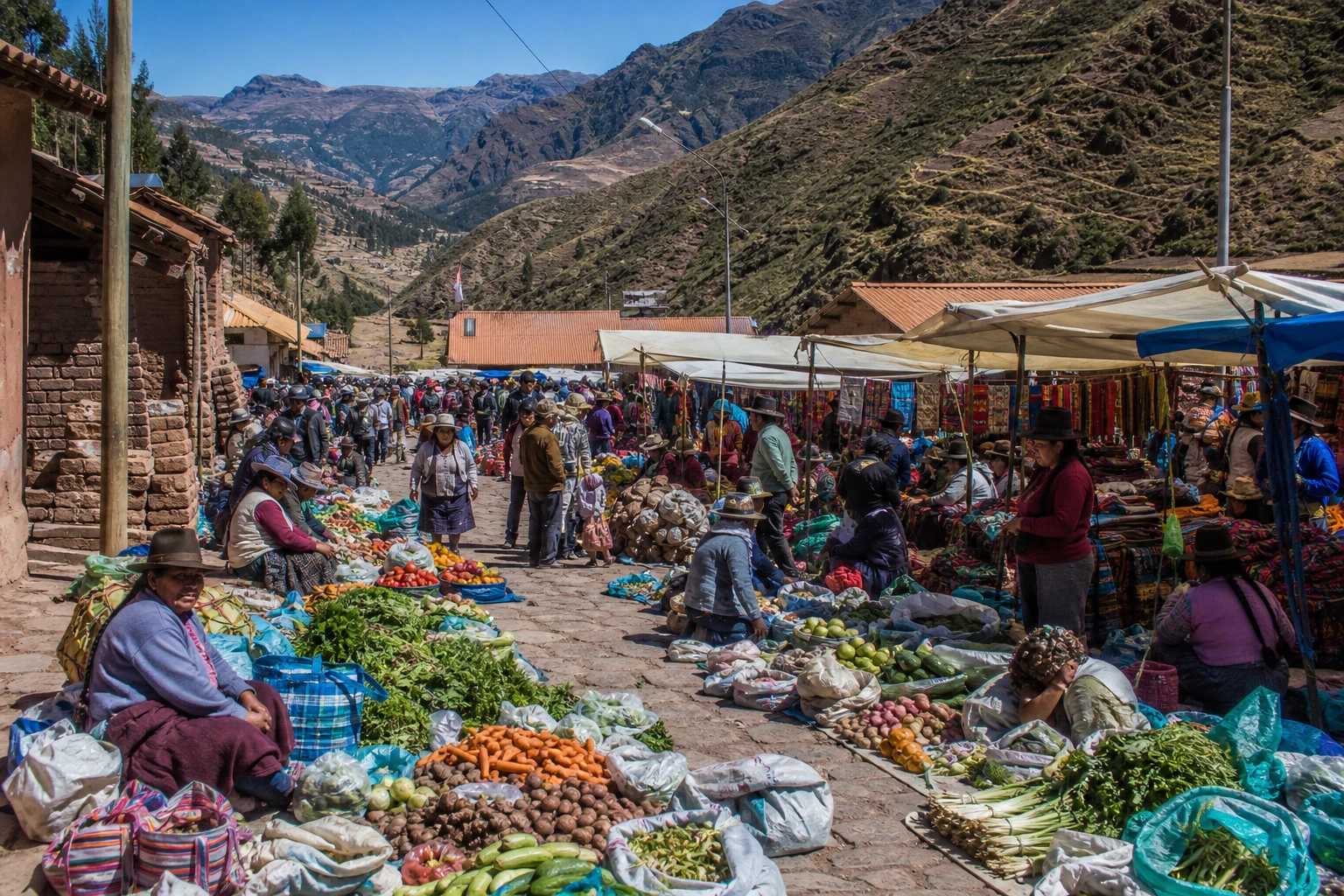
Sacred Valley markets reward travelers who plan around a purpose rather than treating every stop as the same. Písac is the clearest anchor: its market operates daily, with official market days on Tuesday, Thursday, and Sunday. Sunday is the largest gathering, when Quechua communities from the surrounding highlands come in to sell produce alongside the handicrafts that draw many visitors.
Plan your market day around Písac
- Choose Sunday in Písac for the largest market day, produce, and a stronger connection to surrounding highland communities.
- Visit Písac on another day when craft shopping is the priority; the market operates daily.
- Allow about 50 minutes by car from Cusco to Písac town, which lies 33 km northeast of the city.
- Keep the Písac town market and the archaeological park as separate stops. The park is 7 km from town and sits on a 3,300 m mountain.
- Treat Chinchero and Corao as flexible handicraft-market additions until you have confirmed their current local schedules.
The useful distinction is simple. Sunday suits travelers looking for a larger, more locally oriented market day with produce. A Tuesday, Thursday, or another daily visit can still be a strong choice for silver jewelry, Andean weavings, alpaca throws, scarves, and other handicrafts, especially when your itinerary does not line up with Sunday.

Sacred Valley Alpaca Hiking Tour
We involve local people in the activity: By doing so, we provide an opportunity for them to actively participate in the tourism industry in Cusco. You...
Why Sunday changes the Písac experience
Sunday is Písac’s biggest market day. The arrival of Quechua sellers from surrounding highland communities, including those bringing produce, gives the day a broader purpose than a crafts-only shopping stop. Travelers who want to see this larger gathering should make Sunday their first choice and leave enough room in the itinerary to browse without rushing onward.
For a narrower set of Písac Sunday Market tips, build the visit around browsing and conversation rather than a checklist of purchases. The market’s appeal lies in the mix of local produce and craft shopping, so it is worth deciding beforehand which matters more to you. That choice helps determine whether Sunday’s larger gathering is essential or simply a welcome bonus.
Other days work well for handicrafts
Do not skip Písac simply because your schedule misses Sunday. The daily market is associated with silver jewelry, Andean weavings, alpaca throws and scarves, along with other handicrafts. For travelers who mainly want time to compare craft items, a non-Sunday visit can be the more practical fit, while Sunday remains the better pick for its larger produce-focused gathering.
Keep Písac town and the archaeological park separate
Písac town is about 33 km northeast of Cusco, with an estimated drive of roughly 50 minutes. The archaeological park is a different stop: it lies about 7 km from the town market. Planning them as one pin on a map is the fastest way to make the day feel compressed.

The park is set on a 3,300 m mountain. From Písac town, the reference journey is about 30 minutes by car or roughly 1 hour 30 minutes on foot, and a full exploration of the ruins can take three to four hours. Visitors still acclimatizing should avoid treating a major market shop and a complete ruins visit as an effortless single stop.
A slow Písac ruins-and-market day works best when one experience leads the schedule and the other remains flexible. Start with the market if Sunday’s gathering is your priority. Put the ruins first if archaeological exploration is the purpose of the day, then return to town only if time and energy allow.
Where Chinchero and Corao fit into a market itinerary
Písac is not the Sacred Valley’s only market stop. PROMPERÚ identifies handicrafts markets in Corao, Písac, and Chinchero. That makes Chinchero and Corao sensible additions for travelers interested in crafts, but Písac remains the most straightforward market to schedule in advance because its daily operation and official market days are clearly identified.

Build Chinchero and Corao into the day as flexible stops, rather than promising yourself a specific market format at a specific hour. Confirm current operation locally before setting out. This approach leaves room for the markets while protecting the rest of your route if a schedule has changed.
Choose the right market plan for your trip
| Planning goal | Best fit | Why |
|---|---|---|
| See Písac at its largest and shop for produce | Písac on Sunday | Sunday brings the largest gathering, with Quechua communities from surrounding highlands selling produce. |
| Shop for jewelry, textiles, or alpaca items | Písac on any market day | The market operates daily and is known for silver jewelry, Andean weavings, alpaca throws, scarves, and other handicrafts. |
| Combine a market with archaeology | Make Písac town and the park two separate stops | The archaeological park is 7 km from town, at 3,300 m, and a full visit can take three to four hours. |
| Add another handicrafts market | Keep Chinchero or Corao flexible | Both are identified as handicrafts markets, but current schedules and practical details need local confirmation. |

Machu Picchu Shuttle Bus Round Trip from Aguas Calientes
Travel worry-free with the official CONSETTUR shuttle bus, the only authorized transport between Aguas Calientes and...

Machu Picchu Official Bus – Round Trip
Travel seamlessly between Aguas Calientes and the majestic Machu Picchu with this official round-trip shuttle servic...

Explore Machu Picchu Private Guided Tour from Aguas Calientes
Discover the secrets of Machu Picchu with a private tour guide on an unforgettable journey from Aguas Calientes. Sta...
Confirm hours, prices, and payment before you commit
Avoid building the day around a fixed published market opening time. Confirm same-day hours locally, particularly if you are arranging transport around an early arrival. Vendor prices and payment methods also vary, so ask directly before choosing an item or finalizing a purchase. Keep market shopping costs separate from any archaeological-site ticket you decide to buy.
Getting to Písac from Cusco
Use Písac town, not the archaeological park, as the destination when the market is your first stop. From Cusco, Písac is about 33 km northeast and the estimated journey is around 50 minutes by car. If your day includes the ruins, factor in the separate 7 km transfer between town and the park before committing to another Sacred Valley stop.
Check route conditions and market operation close to departure, then confirm the meeting point and timing with any transport provider you use. This is especially important for a Sunday plan, when Písac is the larger market-day destination and a missed connection can reshape the whole itinerary.
Plan carefully for accessibility and pace
Do not treat Písac, Chinchero, or Corao markets as wheelchair-accessible by default. Travelers who need step-free access should arrange an appropriate vehicle and check the specific market streets, gradients, and restroom availability immediately before travel. A market-only visit to Písac is also easier to pace than adding a full archaeological-park exploration on the same day.
Shop with a clear wish list
A short wish list makes market browsing more useful. In Písac, decide if you are looking for silver jewelry, Andean weaving, alpaca throws and scarves, other handicrafts, or Sunday produce. Ask about the material, size, and care of any item that interests you, and inspect it before settling on a purchase. Agree on the price and payment method directly with the vendor.
If you intend to continue to the archaeological park after shopping, keep purchases light and protected. Larger items are easier to enjoy when the market is the main event rather than a quick detour before a long ruins visit. That small bit of restraint helps the day stay focused on the reason you chose Písac in the first place.
A simple Sacred Valley market-day route
- Choose Písac Sunday for the largest market day, or select another day when daily handicraft shopping is enough for your plans.
- Confirm current market timing and route conditions before departure, then travel from Cusco to Písac town rather than directly to the archaeological park.
- Browse with a short list of what you want to buy, and ask vendors directly about prices and payment methods.
- Decide on the day whether the 7 km trip to the archaeological park fits your energy, acclimatization, and remaining time.
- Keep Chinchero and Corao as optional handicrafts-market stops only after checking their current local operation.
The best Sacred Valley market choice for most travelers
For most visitors, Písac is the market to prioritize because it offers a dependable daily option and a clearly defined Sunday peak. Go on Sunday for the biggest gathering and produce, or visit another day for a crafts-focused stop. Its main limitation is pacing: the market and the high-altitude archaeological park deserve to be planned as separate experiences, not squeezed into a rushed checklist.
Frequently asked questions about Sacred Valley markets
What is the best day to visit Písac Market?
Sunday is the best day for Písac’s largest market gathering and for produce sold by Quechua communities from the surrounding highlands. Tuesday and Thursday are also official market days, while the market operates daily for visitors focused on handicrafts.
Is Písac Market open every day?
Yes, Písac Market operates daily. Tuesday, Thursday, and Sunday are identified as official market days, with Sunday described as the largest.
How far is Písac Market from Cusco?
Písac town is about 33 km northeast of Cusco, with an estimated travel time of around 50 minutes by car. Allow extra planning time if you are also visiting the archaeological park, which is 7 km from town.
Can I visit Písac Market and the ruins on the same day?
Yes, but plan them as two substantial stops rather than a quick combined visit. The archaeological park is on a 3,300 m mountain, and a full exploration can take three to four hours after the transfer from town.
What should I expect to buy at Písac Market?
Písac is known for silver jewelry, Andean weavings, alpaca throws, scarves, and other handicrafts. On Sunday, the larger market also includes produce brought by sellers from surrounding highland communities.
Are Sacred Valley markets wheelchair-accessible?
Do not assume that Písac, Chinchero, or Corao markets offer step-free access. Travelers with limited mobility should arrange suitable transport and check the specific streets, gradients, and restroom options immediately before visiting.
Frequently asked questions
What is the best day to visit Písac Market?
Sunday is the best day for Písac’s largest market gathering and for produce sold by Quechua communities from the surrounding highlands. Tuesday and Thursday are also official market days, while the market operates daily for visitors focused on handicrafts.
Is Písac Market open every day?
Yes, Písac Market operates daily. Tuesday, Thursday, and Sunday are identified as official market days, with Sunday described as the largest.
How far is Písac Market from Cusco?
Písac town is about 33 km northeast of Cusco, with an estimated travel time of around 50 minutes by car. Allow extra planning time if you are also visiting the archaeological park, which is 7 km from town.
Can I visit Písac Market and the ruins on the same day?
Yes, but plan them as two substantial stops rather than a quick combined visit. The archaeological park is on a 3,300 m mountain, and a full exploration can take three to four hours after the transfer from town.
What should I expect to buy at Písac Market?
Písac is known for silver jewelry, Andean weavings, alpaca throws, scarves, and other handicrafts. On Sunday, the larger market also includes produce brought by sellers from surrounding highland communities.
Are Sacred Valley markets wheelchair-accessible?
Do not assume that Písac, Chinchero, or Corao markets offer step-free access. Travelers with limited mobility should arrange suitable transport and check the specific streets, gradients, and restroom options immediately before visiting.
Sacred Valley Alpaca Hiking Tour
We involve local people in the activity: By doing so, we provide an opportunity for them to actively participate in the tourism industry in Cusco. You...

The Best Private Sacred Valley Tour in Cusco ( with Pisac)
We know very well each place of this tour, since we have been grown in this area and we studied over 3 years to get...

From Urubamba & Ollantaytambo: Sacred Valley Day tour with Lunch
Explore the best and most unique sites in the Sacred Valley on a private tour. Visit the impressive ruins of Ollanta...

Machu Picchu Private Tour from Aguas Calientes (Tickets included)
Discover Machu Picchu at your own pace with our exclusive Private Guided Tour from Aguas Calientes. Perfect for inde...