Sacred Valley With Kids Guide
Plan a child-friendly Sacred Valley trip with a two-day archaeological itinerary, current ticket guidance, flexible transport, packing tips, and advice for families continuing to Machu Picchu.
 Visit Sacred Valley
August 24, 2026
Visit Sacred Valley
August 24, 2026
The best way to explore the Sacred Valley with kids is to slow the itinerary down. Circuit III of the Cusco Tourist Ticket covers Pisaq, Ollantaytambo, Chinchero, and Moray, and its two-day validity makes a split itinerary practical. Families can give each place real attention instead of turning four important archaeological sites into a race. A broader list of the best things to do in the Sacred Valley can help fill any spare time without crowding the core plan.
- Use two days for the four Circuit III sites rather than attempting all of them in one exhausting outing.
- Budget for admission separately from transportation, guides, meals, and accommodation.
- Carry identity documents for every family member and confirm the current ticket rule for children under 10.
- Build extra road time into days that include Pisaq or Ollantaytambo.
- Reconfirm the open route at Pisaq before taking children toward the Amaru Punku–Intihuatana section.
- If continuing by train, check the chosen operator’s luggage policy before packing.
This plan works best for families willing to choose depth over quantity. Give each day one main goal, one optional stop, and a clear point at which everyone can call it finished. Children often engage more readily when they have a simple mission, such as spotting stone patterns, comparing terrace shapes, or choosing one detail to sketch.
Build the itinerary around family energy
Treat the two-day ticket as permission to stop before everyone is tired. A reasonable framework is to pair two Circuit III sites on the first day and the other two on the second. This is a suggested family rhythm, not a required route. The order should follow your accommodation, transportation plan, and current access conditions.
Choose one anchor experience each day. The anchor is the place you intend to explore even if traffic, a late start, or low energy changes everything else. The second site remains optional until the family finishes the first. This prevents a prepaid ticket from dictating the day when a child clearly needs food, rest, or an early return.
Avoid planning the most demanding walking at the end of a long transfer. No single schedule suits toddlers, teenagers, and grandparents equally. Ask how long each person can comfortably stay engaged, then build in a generous margin. A shorter visit with curious children is usually more rewarding than a complete circuit completed in bad spirits.
Understand the Sacred Valley ticket before buying
For families concentrating on the valley’s main archaeological circuit, the partial Circuit III ticket is the most relevant starting point. COSITUC lists it at S/70 with two days of validity. It covers Ollantaytambo, Pisaq, Chinchero, and Moray. Transportation, guides, food, and lodging are separate expenses.
| Ticket option | Listed price | Validity | Relevant coverage |
|---|---|---|---|
| Partial Circuit III | S/70 | Two days | Pisaq, Ollantaytambo, Chinchero, and Moray |
| Integral Cusco Tourist Ticket | S/130 | Ten days | Circuit III plus participating attractions in the Cusco area |
The integral ticket can make sense when the family will also visit included Cusco-area attractions during a longer stay. Compare the planned sites rather than choosing it only because it lasts longer. Admission tariffs can change, so check the current COSITUC tariff before setting the final family budget.
COSITUC describes the tourist ticket as personal and non-transferable. Each eligible traveler therefore needs the appropriate admission document. Keep the tickets and identity documents together in a secure, easy-to-reach pouch rather than scattering them through several daypacks.
The published tariff identifies a S/70 student category for travelers ages 10 through 17 with identity documentation. It also gives documentation rules for students ages 18 through 25. The current rule for children under 10, including any price or exemption, is not clearly stated there. Confirm that age group directly before buying and do not build the budget around assumed free entry.

Machu Picchu 1 Day Tour Luxury Service
The Inca City of Machu Picchu, is the leading destination for many travelers, is the main tourist attraction in Peru...

Machu Picchu: Official Entrance Tickets
With this ticket you can visit the Inca city of Machu Picchu. The ticket allows you to visit most of the archaeologi...

Machu Picchu Official Entry Ticket
Discover the wonder of Machu Picchu with an official entrance ticket. Choose from several official circuits, each of...
A flexible two-day Sacred Valley itinerary with kids
One simple plan pairs Pisaq with Ollantaytambo and saves Chinchero and Moray for the second day. Reverse the days or change the pairings if that reduces driving from your accommodation. The essential idea is to spread the four included sites across the ticket’s two-day window.

Day one: Pisaq and Ollantaytambo
Begin with the site that matters most to the family and keep the other as the flexible half of the day. A detailed guide to the Pisaq ruins and market can help parents decide how much to combine. If the archaeological visit uses most of the family’s energy, treat anything afterward as a bonus rather than an obligation.
Take special care with route selection at Pisaq. The municipality reported in October 2025 that the Amaru Punku–Intihuatana section had faced a long closure because of rockfall danger and was undergoing work intended to support reopening. That announcement does not confirm its current status. Ask locally which paths are open before leading children toward that segment.
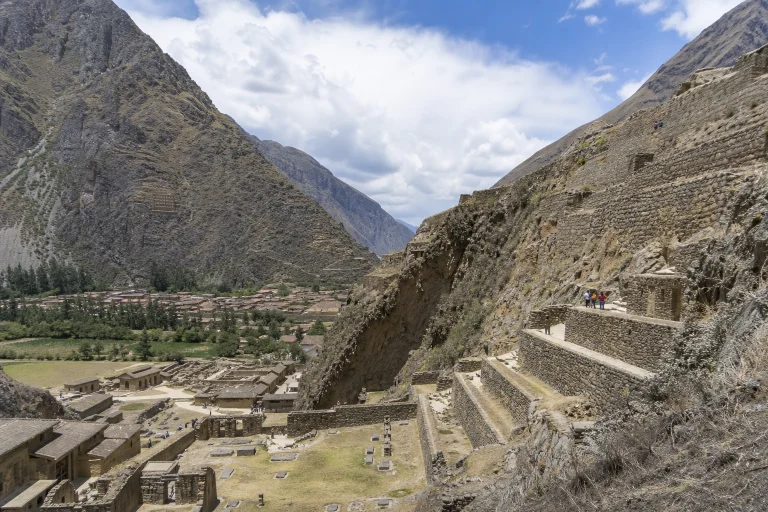
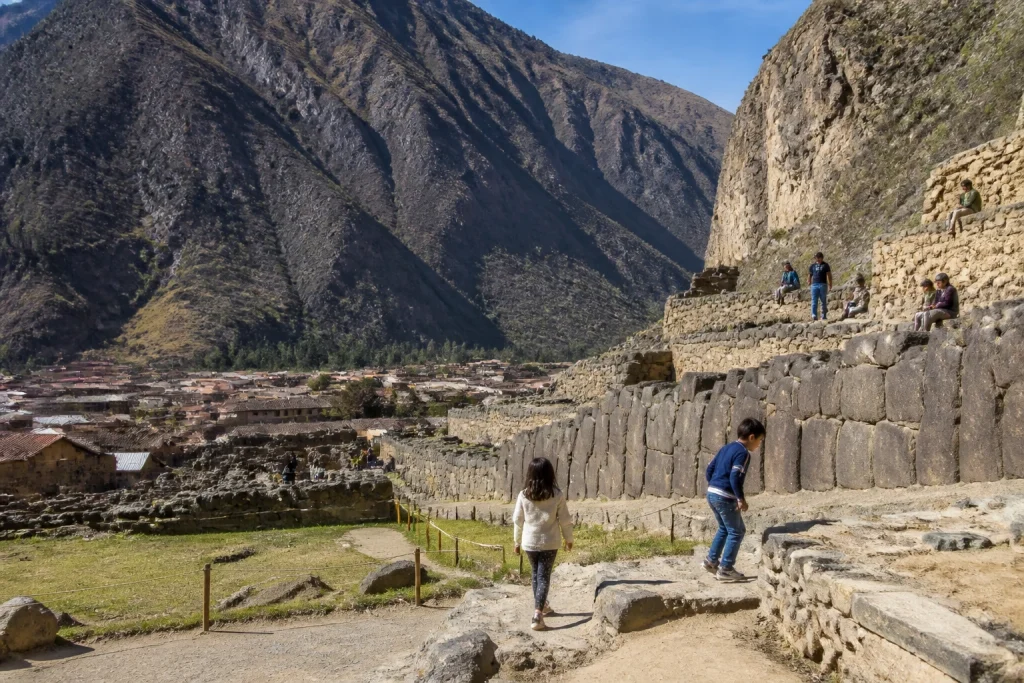
At Ollantaytambo, make the archaeological visit the priority and leave enough time to move through town without rushing. Families interested in its enduring Inca layout can read more about Ollantaytambo’s stone streets before choosing an overnight. The town also has practical value for travelers taking a later Machu Picchu train.
Day two: Chinchero and Moray
Use the second day for Chinchero and Moray, again choosing one as the anchor. Before visiting, introduce younger travelers to Chinchero’s textiles and market so they have a visual theme to follow. Looking for repeated colors, shapes, and patterns gives children a task without turning the outing into a lesson.
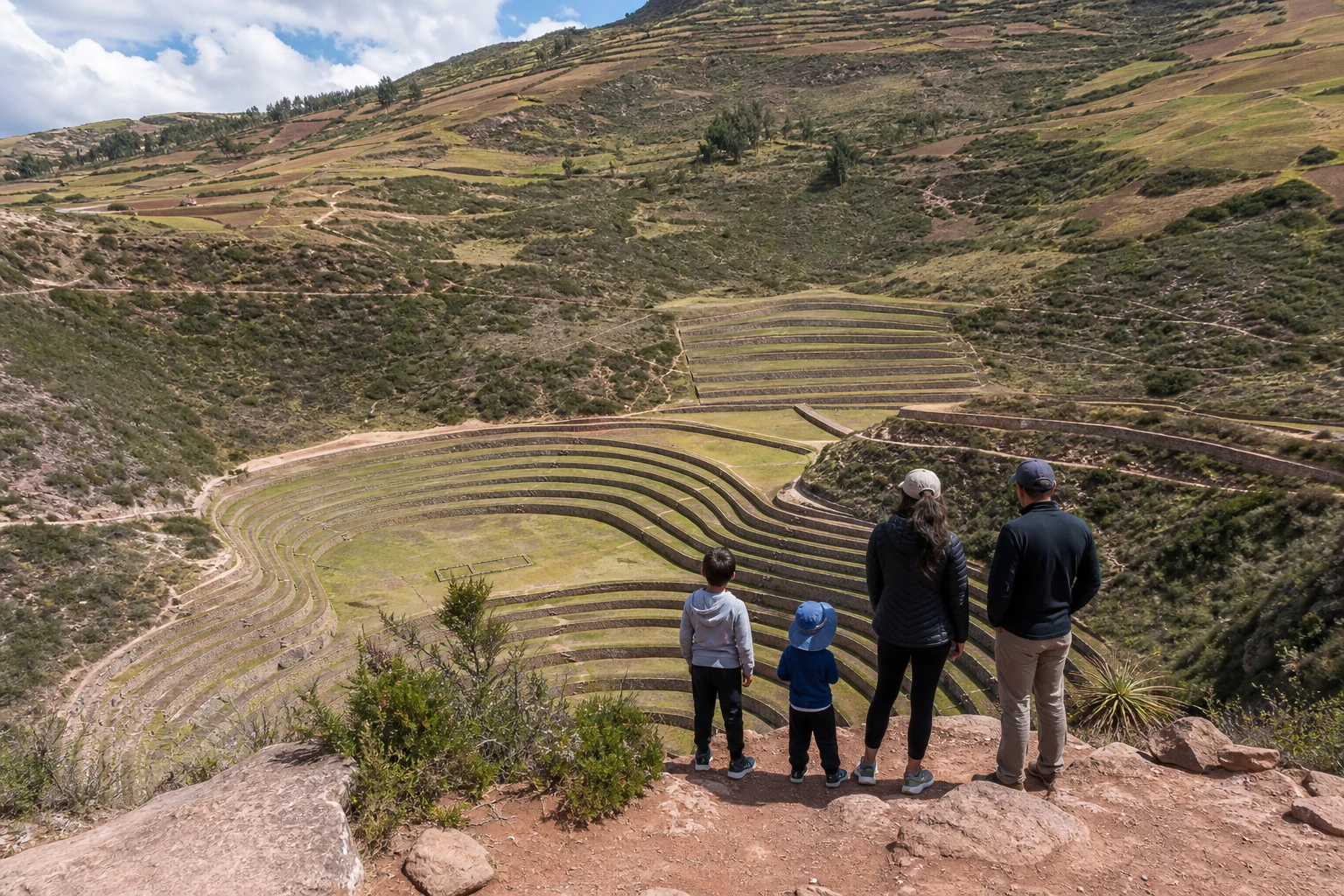
At Moray, let the circular terraces provide the structure for the visit. Children can compare rings, count visible levels, or draw the shape from a safe stopping point. A focused guide to Moray’s circular terraces gives families useful context without requiring them to add another destination to the day.
Keep the afternoon deliberately open. If everyone still has energy, spend longer at the second site. If not, return for food and rest. The ticket makes both places available, but it does not require the family to explore every corner or stay until the final admission window.
Make each archaeological stop engaging for children
Give children a purpose before entering. Ask them to choose one favorite stone pattern, terrace shape, view, or color. Older children can keep a four-site scorecard based on categories such as most surprising design, best family photograph, and place they would revisit. Keep the game observational and leave fragile surfaces untouched.
Break explanations into short pieces. Offer one memorable idea, then allow time to look around. A long lecture competes with the scale of the setting, while a concise prompt encourages children to notice details independently. Guides and parents can save deeper historical discussion for a seated rest or the return journey.
Set the turnaround rule before starting. For example, the family returns when the youngest child reaches a chosen energy level or when the agreed time arrives. This is especially useful where the status of a particular route must be checked locally. An open attraction does not mean every internal path is suitable or available.
Sacred Valley Alpaca Hiking Tour
We involve local people in the activity: By doing so, we provide an opportunity for them to actively participate in the tourism industry in Cusco. You...
Natural Inca Hot Springs Day Trip – Soak & Relax in the Andes
The Inca thermal baths of Lares Valley are completely natural water that comes from the Andean mountains. This water...
A successful family visit is measured by what the children remember, not by how many checkpoints the adults completed.


Still comparing Sacred Valley With Kids?
Ask for tour ideas, hotel suggestions, or a simple trip plan that combines both.
Trip Helper
Allow extra time for roads and same-day access
Road buffers are essential on days involving Pisaq or Ollantaytambo. A Cusco regional government notice dated July 16, 2026 reported vehicle congestion affecting Ollantaytambo access and other mobility problems along the Circuit III route. Avoid scheduling a tightly timed meal, transfer, or evening commitment immediately after a site visit.
The same notice temporarily extended the latest entry time at Pisaq and Ollantaytambo to 17:00 while authorities worked on access improvements. Treat that as a temporary measure, not a permanent opening-hours promise. Reconfirm current entry conditions on the day and plan to arrive comfortably earlier whenever possible.
When arranging transportation, share the family’s priorities in advance. Explain which site is the anchor, whether child seats are needed, and what time the family must be back. Ask how itinerary changes are handled if congestion delays the route. Clear expectations are more useful than an ambitious schedule built around ideal road conditions.
Keep tickets, drinking water, snacks, and any essential medication inside the passenger area rather than buried beneath luggage. A traffic delay is much easier to manage when the basics are immediately available. Download or note the accommodation name and the day’s agreed meeting instructions before leaving.
Plan an Ollantaytambo overnight before the train
An Ollantaytambo overnight can simplify the transition to a Machu Picchu train, especially when the family wants to separate archaeological sightseeing from departure logistics. Inca Rail says its staff guide passengers to the train station, described as about 100 meters away. That arrangement applies to Inca Rail’s process and should not be assumed for another operator, hotel, or ticket.
Check luggage limits before leaving the valley. Inca Rail states that each passenger can take one hand-luggage item weighing no more than 8 kilograms, or 17 pounds, with a maximum total of 118 linear centimeters. It also lists luggage storage at its Ollantaytambo station. Confirm the storage process and current conditions when planning to leave larger cases behind.
Pack the train bag as a separate unit before the Sacred Valley sightseeing day. Include only what the family needs for the rail journey and the next stage of the trip. This prevents a stressful platform-side repack and makes it easier to keep documents, children’s supplies, and essential clothing together.
Train rules, departure arrangements, and baggage services differ by operator and booking. A comparison of PeruRail and Inca Rail routes to Machu Picchu can help families choose a suitable departure plan. Review the confirmation for the station, check-in instruction, luggage allowance, and departure time rather than applying one company’s policy to every train.
Pack for flexible family days
A family daypack should solve common problems without becoming a burden. Divide shared supplies between adults, but keep tickets and identity documents with one designated person. Check the forecast and choose clothing that can be adjusted as conditions change during the day.
- Tourist tickets and the identity documents required for each traveler
- Drinking water and familiar snacks for traffic delays or late meals
- Weather-appropriate clothing selected after checking the daily forecast
- Sun protection and any personal medication the family routinely needs
- A small activity, notebook, or pencil for waiting periods
- A compact bag that stays within the chosen train operator’s allowance when continuing by rail
Bring food that children already know they will eat. Archaeological sightseeing is not the ideal moment to test a complicated new snack strategy. Reserve one treat for the return journey or a delayed transfer. It can become a useful morale boost without turning every stop into a negotiation.
Leave bulky entertainment behind. One pocket-sized activity is enough for most waits, and observation games work during the visits themselves. Encourage older children to photograph one detail at each site, then compare their choices at dinner. Follow any site-specific rules governing photography and restricted areas.

Machu Picchu Official Bus – Round Trip
Travel seamlessly between Aguas Calientes and the majestic Machu Picchu with this official round-trip shuttle servic...

Machu Picchu Shuttle Bus Round-Trip Tickets from Aguas CalienteS
Travel worry-free aboard the official CONSETTUR shuttle bus, the only authorized transportation between Aguas Calien...

Machu Picchu Entrance Ticket Official Circuits
Discover the wonders of Machu Picchu with an official entrance ticket that allows you to explore this ancient Inca c...
Choose accommodation and transport that reduce friction
The right family base is the one that simplifies the most important day. Travelers continuing by train can consider Ollantaytambo, while families focused only on Circuit III should compare each proposed base against their planned site pairings. A guide to Sacred Valley lodges, hotels, and villages can help narrow the choice before transport is reserved.
Before booking a driver or tour, ask for the planned site order, pickup arrangement, approximate meal plan, and policy for changes caused by road congestion. Also state the children’s ages and any child-seat needs. Prices and inclusions depend on the provider, date, route, and group size, so compare the full plan rather than the headline amount alone.
Families arranging each segment independently should preserve more spare time between commitments. Do not place a train departure immediately after an archaeological outing with a traffic-sensitive return. Separating the sightseeing day and train day is the clearest way to reduce pressure when the trip allows it.
Confirm accessibility and child-specific needs case by case
Do not assume a single accessibility standard across Pisaq, Ollantaytambo, Moray, and Chinchero. Current step-free routes, accessible toilets, vehicle lifts, and wheelchair suitability are not established for all four sites. Families using wheelchairs, mobility devices, or strollers should confirm the specific site route and transport arrangement before booking.
Ask practical questions tied to the traveler’s needs. Can the vehicle carry the mobility device? Where does passenger drop-off occur? Which part of the visit is step-free? Is there a suitable toilet on the planned route? Can the itinerary be shortened without losing the return transfer? Specific answers are more useful than a general label such as accessible.
Parents using a stroller should also ask about the exact route rather than assuming wheels will help throughout the visit. A child carrier may solve some family needs, but it creates its own comfort and mobility considerations. Choose equipment based on the adult’s capacity and the confirmed route.
Is the Sacred Valley worthwhile with kids?
The Sacred Valley suits families who enjoy open-ended observation, historical places, and days that can be adjusted as energy changes. Its Circuit III ticket gives a clear four-site framework, while the two-day validity supports a humane pace. The main limitation is logistical: road congestion, route conditions, and family stamina can overturn an overpacked schedule.
Buy the appropriate ticket only after confirming the child rules, select one anchor site for each day, and leave room to stop early. Families continuing to Machu Picchu should handle luggage and train arrangements as a separate planning task. With those decisions made, the valley becomes easier to experience through stonework, circular terraces, woven color, and time together rather than through a checklist.
Frequently asked questions
How many days should families spend visiting the main Sacred Valley sites?
Two days is a practical minimum for the four Circuit III sites. The partial tourist ticket is valid for two days and covers Pisaq, Ollantaytambo, Chinchero, and Moray, allowing families to split them into two manageable pairs.
How much is the Sacred Valley tourist ticket?
COSITUC lists the partial Circuit III ticket at S/70 with two days of validity. The S/130 integral ticket lasts ten days and includes Circuit III plus participating Cusco-area attractions. These prices cover admission rather than transport, food, guides, or lodging, and current tariffs should be checked before purchase.
Do children enter Sacred Valley archaeological sites free?
Do not assume that children enter free. The published tariff identifies a S/70 student category for ages 10 through 17 with identity documentation, but it does not clearly state the current rule for children under 10 or a separate child price for the partial Circuit III ticket.
Is the Amaru Punku–Intihuatana route at Pisaq open?
Its current status should be confirmed locally before using it. A 2025 municipal announcement described reopening work after a long closure related to rockfall danger, but that announcement does not confirm that the route is open now.
Are Sacred Valley archaeological sites wheelchair accessible?
Accessibility must be confirmed for each site and transport arrangement. Current step-free routes, accessible toilets, vehicle lifts, and wheelchair suitability are not established across Pisaq, Ollantaytambo, Moray, and Chinchero as a group.
How much luggage can families take on an Inca Rail train?
Inca Rail states that each passenger can carry one hand-luggage item weighing up to 8 kilograms, or 17 pounds, with a maximum of 118 linear centimeters. The company also lists luggage storage at its Ollantaytambo station, but families should confirm current storage arrangements before relying on it.