Sacred Valley Art and Culture Guide
Explore Sacred Valley art and culture through Chinchero textiles, Pisac market life, Moray’s archaeological landscape, and the living Inca town of Ollantaytambo.
 Visit Sacred Valley
September 1, 2026
Visit Sacred Valley
September 1, 2026
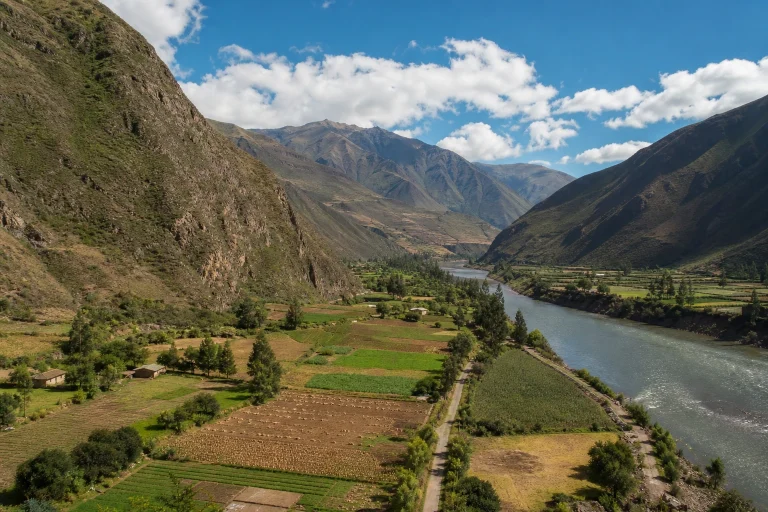
The Sacred Valley rewards travelers who look beyond its role as a route to Machu Picchu. Archaeological parks, artisan traditions, market culture, and living settlements connect different chapters of Andean history. Pisac, Chinchero, Moray, and Ollantaytambo form the strongest backbone for an art-and-culture itinerary, but each deserves enough time to be more than a roadside photograph.
Chinchero brings textiles and contemporary artisan work into focus. Pisac combines an archaeological stop with market culture, while Moray adds another distinctive heritage landscape. Ollantaytambo places monumental Inca construction beside a town that continues to maintain ancestral traditions. Together, they show that Sacred Valley culture belongs to both the past and the present.

Hiking with Alpaca in Sacred Valley (3-hours Experience)
We involve local people in the activity: By doing so, we provide an opportunity for them to actively participate in the tourism industry in Cusco. You...

Machu Picchu Official Entrance Ticket
This ticket is your gateway to the complete Machu Picchu experience. Not only will you step into the legendary Inca Citadel, one of the New Seven Wond...
- Build the cultural route around Pisac, Chinchero, Moray, and Ollantaytambo.
- Choose depth over coverage. Two nights in the valley create a more rewarding pace than a rushed circuit.
- Use Chinchero as the main stop for textiles, but confirm current workshop and market schedules before going.
- Check the current Cusco Tourist Ticket terms because it covers several major archaeological sites.
- Reserve a fixed Machu Picchu train before finalizing a same-day visit to Ollantaytambo.
A cultural visit works best when you decide what matters most before choosing transportation. Travelers drawn to textiles can concentrate on Chinchero and Pisac. Those interested in archaeology and urban history can spend more time at Moray and Ollantaytambo. Trying to collect all four sites around a fixed train departure leaves little room for interpretation, conversation, or an unhurried meal.
How the Sacred Valley’s cultural landscape fits together
The four principal stops offer related but different experiences. Pisac and Ollantaytambo combine archaeological significance with present-day towns. Chinchero has the clearest connection to textile traditions and artisan culture. Moray is primarily an archaeological visit, making it a useful contrast to the social energy of a town or market.
| Stop | Main cultural lens | Planning approach |
|---|---|---|
| Pisac | Archaeology and market culture | Allow time for both the heritage site and town rather than treating them as one quick stop. |
| Chinchero | Textiles, artisan work, and archaeological heritage | Confirm the current timing of any market or workshop you hope to visit. |
| Moray | Archaeological landscape | Pair it with Chinchero or visit during a slower multi-day valley stay. |
| Ollantaytambo | Inca religious and urban sectors within a living settlement | Stay overnight if continuing by train to Machu Picchu. |
These places should not be treated as interchangeable ruins. Their value comes from the relationship between built heritage and the communities around it. Leave space to observe how streets, gathering places, craft displays, and archaeological areas occupy the same broader landscape. That slower rhythm turns a checklist into a cultural journey.
Pisac: balance the archaeological site with market culture
Pisac is a useful first stop when traveling into the valley on the Cusco–Pisac–Urubamba corridor. It belongs to the main group of archaeological sites covered by the Cusco Tourist Ticket, while the town also contributes a market dimension to a cultural itinerary. Give the two settings separate attention instead of racing between them.
At the archaeological area, a guide can help place visible structures within a wider Inca landscape. In town, look at materials, finishing, and the way objects are presented before deciding what to buy. Ask before photographing vendors or makers, especially at close range. A market remains a workplace even when it is also a visitor attraction.
For a more detailed plan, the guide to Pisac’s ruins and market separates a slow archaeological morning from time in town. That structure is especially useful if Pisac is your main cultural destination for the day rather than one item in a crowded valley circuit.
Chinchero: make textiles the center of the visit
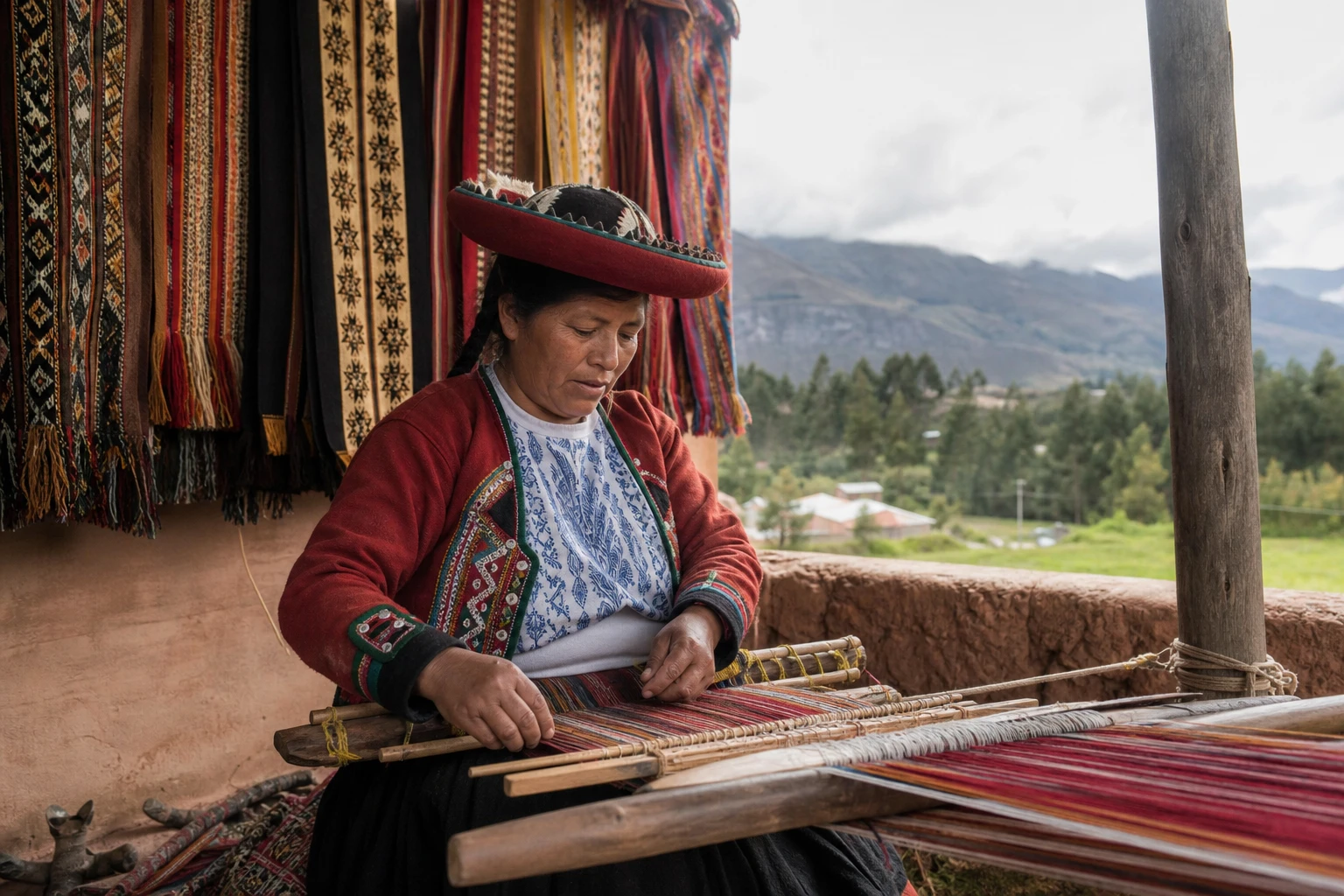
Chinchero is the strongest stop for travelers interested in Andean textiles and living craft traditions. Its contemporary artisan work belongs to a longer cultural story shaped by Andean and colonial artistic traditions. The archaeological park adds another layer, so the visit need not be limited to shopping or a brief demonstration.

Current workshop and market schedules can vary. If a particular demonstration is important, confirm its timing before arranging the day. Avoid assuming that every textile presentation follows the same format or that every object was made by the person selling it. Respectful questions about the maker, technique, materials, and production time are more useful than bargaining from the first sentence.
Watch the work as a process rather than only examining the finished cloth. Pattern, color, repetition, and skilled hand movements reveal why a textile can carry more meaning than a decorative souvenir. If a maker is explaining a technique, listen before lifting a camera. Purchasing is optional, but attention and courtesy should not be.
A deeper guide to Chinchero textiles and market culture can help you prepare for the artisan side of the visit. Combine it with the archaeological park when time allows, and resist squeezing Chinchero between a hotel checkout and a fixed train departure.

Machu Picchu Private Tour with Ticket, Bus from Aguas Calientes
Maximize your time at Machu Picchu with this private guided tour starting directly from Aguas Calientes. Skip the ha...

Machu Picchu Private Tour from Aguas Calientes (Tickets included)
Discover Machu Picchu at your own pace with our exclusive Private Guided Tour from Aguas Calientes. Perfect for inde...

Natural Inca Hot Springs Day Trip – Soak & Relax in the Andes
The Inca thermal baths of Lares Valley are completely natural water that comes from the Andean mountains. This water...
Moray: slow down and read the archaeological landscape
Moray is one of the archaeological parks managed within the Cusco cultural network and is included among the sites covered by the Cusco Tourist Ticket. It works best as a deliberate heritage stop rather than a quick detour made only for a photograph.
The guide to Moray’s circular terraces provides a closer interpretation of the site’s unusual form. On the ground, take time to compare the overall geometry with smaller construction details. A knowledgeable guide can help distinguish established history from the confident speculation that sometimes gathers around visually striking places.
Moray pairs naturally with Chinchero in a culture-focused plan because both lie on the alternate Cusco-side approach to the valley. Even so, transportation and time on site can consume much of the day. Begin early, limit unnecessary stops, and avoid adding a same-day train unless its departure leaves a generous buffer.
Ollantaytambo: encounter an Inca site and a living town
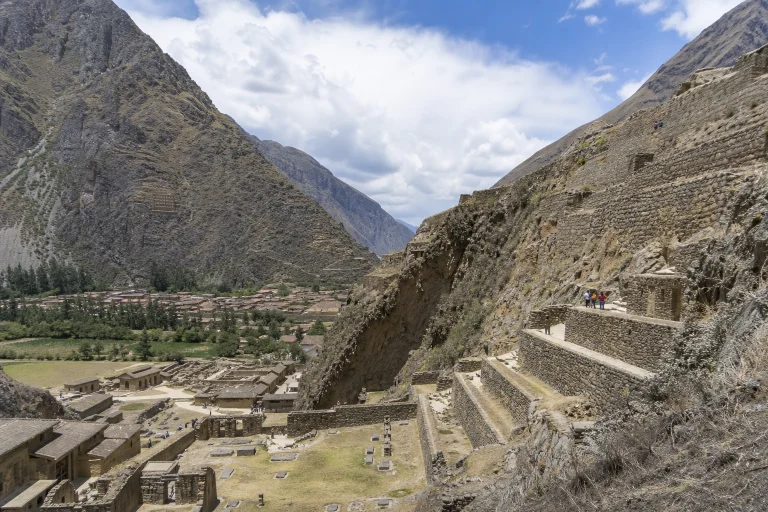
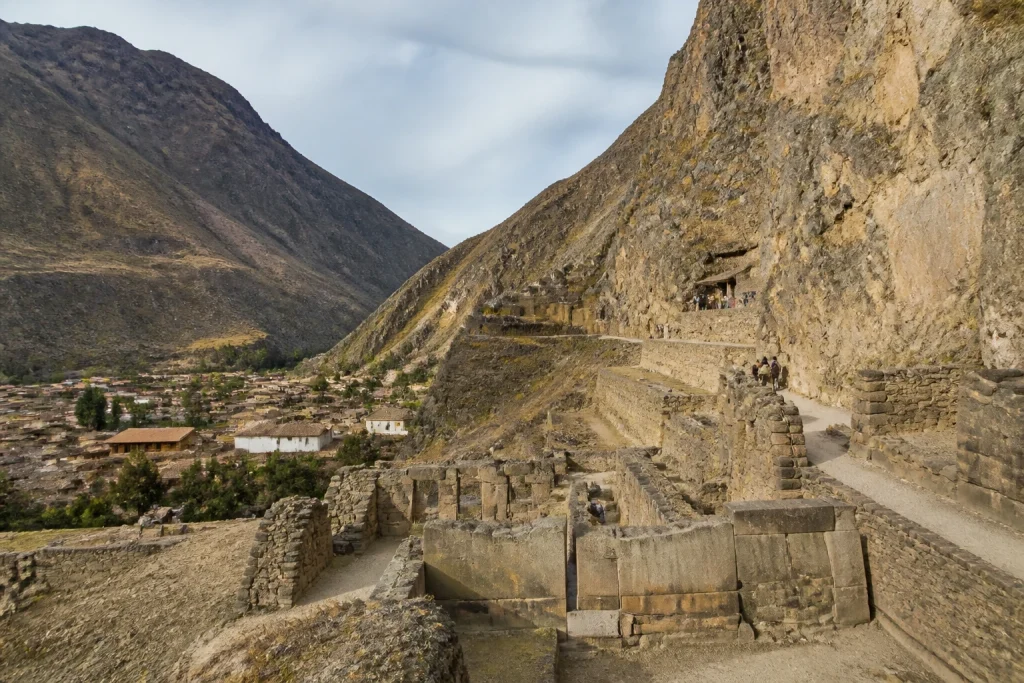
Ollantaytambo deserves to be treated as more than a rail connection. Official tourism material describes an Inca fortress with religious and urban sectors, while the surrounding town retains ancestral traditions. Peru’s tourism ministry also recognized Ollantaytambo through the UNWTO Best Tourism Villages program in 2021.
The archaeological site and settlement reward different kinds of attention. At the site, focus on the relationship between construction, terrain, and ceremonial space. In town, walk with awareness that homes, lanes, and public spaces support daily life. Keep doorways clear, lower your voice on residential streets, and ask before photographing people.
The guide to living inside Ollantaytambo’s Inca town explores this relationship in more depth. An overnight stay gives you time to separate the archaeological visit from the railway timetable, and it helps prevent the town from becoming little more than a platform on the way to Machu Picchu.
Ollantaytambo is the valley’s key rail connection for travelers continuing to Machu Picchu Pueblo. Numerous daily departures operate during the current timetable period, including early services, but operational changes remain possible. Book the exact train first, then work backward when scheduling the archaeological park, lunch, luggage transfer, and station arrival.
Choose an itinerary with enough time for interpretation
The central planning decision is depth versus coverage. A one-day excursion should focus on one cultural theme or one side of the valley. A two-night stay allows a fuller route without making every conversation, site visit, and meal compete with the clock.

A focused day for textiles and heritage
- Leave Cusco for Chinchero and devote the main part of the visit to textiles and artisan culture.
- Visit Chinchero’s archaeological park if its current schedule fits the day.
- Continue toward Moray for a second archaeological perspective.
- Return to Cusco or stay in the valley rather than adding a tightly timed train connection.
A two-night cultural route through the valley
- Day one: travel from Cusco through Pisac, dividing the day between the archaeological site and town before continuing toward Urubamba.
- Day two: use a driver or suitable tour to visit Chinchero and Moray, then return to your valley lodging or continue toward Ollantaytambo.
- Day three: explore Ollantaytambo’s archaeological and urban areas before departing or boarding a pre-booked train.
This plan includes some backtracking, but it protects time at each cultural stop. Choose lodging according to the itinerary rather than selecting a village only by price or appearance. A guide to where to stay in Sacred Valley villages can help compare Urubamba, Ollantaytambo, and other bases before committing to transportation.
Still comparing Sacred Valley Art And Culture?
Ask for tour ideas, hotel suggestions, or a simple trip plan that combines both.
Trip Helper
Getting around from Cusco without losing the day to traffic
The primary corridor runs from Cusco through Pisac and Urubamba to Ollantaytambo. Chinchero sits on the alternate Cusco-side approach. Historical planning estimates place Cusco to Urubamba at roughly two hours via Pisac or about one hour via Chinchero. Cusco to Ollantaytambo via Chinchero is estimated at about one hour and 45 minutes.
| Road segment | Indicative time | Best planning use |
|---|---|---|
| Cusco to Urubamba via Pisac | About 2 hours | Useful when Pisac is a principal cultural stop. |
| Cusco to Urubamba via Chinchero | About 1 hour | Useful for a Chinchero-focused route. |
| Cusco to Ollantaytambo via Chinchero | About 1 hour 45 minutes | A planning baseline for an Ollantaytambo stay or rail connection. |
Treat these figures as route estimates, not promised transfer times. Traffic, stops, and road conditions can extend the journey. A private driver offers flexibility for multi-site days, while a guided tour can add interpretation and simplify coordination. Shared or fixed-route transportation is better suited to travelers willing to narrow the itinerary and allow extra time.
Tickets and visiting hours require a current check
The Cusco Tourist Ticket, commonly called the Boleto Turístico del Cusco or BTC, is the central admission product for this route. The official ticket authority lists Pisac, Ollantaytambo, Moray, and Chinchero among its included archaeological sites. Check current ticket types, validity periods, prices, concessions, and sales arrangements directly with COSITUC before travel.
The Cusco culture authority currently displays visiting hours of 7:00 a.m. to 4:30 p.m. for Ollantaytambo and 7:00 a.m. to 5:00 p.m. for Moray. Recheck both shortly before visiting because operating information can change, and an older tourism guide gives a different Ollantaytambo closing time.
An early visit creates more room for interpretation and reduces the risk of reaching a gate near closing. It is especially helpful when the day also includes a long road transfer. Keep the final hour of the itinerary flexible rather than assuming every site, market, and workshop follows the same schedule.
Plan the Machu Picchu train before the cultural stops
Travelers continuing to Machu Picchu should treat the train as the day’s fixed appointment. Ollantaytambo has numerous daily departures in the May to December 2026 timetable, but the operator warns that schedules can change for operational reasons. Confirm the service shown on your booking before arranging a site visit that morning.
A comparison of Sacred Valley trains to Machu Picchu can help clarify the difference between rail routes and operators. Once the train is booked, leave a generous gap between the archaeological park and station arrival. Meals, luggage collection, traffic, and the simple pleasure of wandering through town all take time.
If the chosen departure is early, stay in Ollantaytambo the previous night and explore the town on arrival day. If it leaves later, visit the archaeological site early and keep the rest of the schedule light. Do not attempt Pisac, Chinchero, Moray, and Ollantaytambo before a fixed same-day train.
Engage with textiles and markets respectfully
A good craft purchase begins with curiosity. Ask who made the piece, where it was produced, and what techniques were used. Give the seller time to answer, and avoid treating a complex textile as an anonymous commodity. The goal is not to conduct an interrogation but to understand what you are considering buying.
Do not assume that a scheduled presentation represents every artisan in Chinchero or the wider valley. Workshops differ in structure, and market offerings can include work from different makers. If traceability matters to you, choose a setting where the production story is explained clearly and questions are welcomed.
- Ask permission before photographing a person, loom, demonstration, or private work area.
- Listen to the explanation before discussing price.
- Ask about the maker and technique when those details matter to your purchase.
- Avoid blocking stalls, doorways, or paths while taking photographs.
- Carry purchases carefully and request only the packaging you need.
Photography etiquette matters beyond markets. Archaeological parks can be workplaces for guides, guards, maintenance teams, and nearby residents. Follow posted rules, avoid climbing on structures, and keep equipment from obstructing narrow passages. A respectful visit is often less complicated than travelers expect: pay attention, ask when uncertain, and remember that daily life continues around you.
Machu Picchu Entrance Ticket
This experience gives you something most travelers can’t find: peace of mind. Whether you plan ahead or need a sol...

Private Guided Tour in Machu Picchu
The guide will be exclusively for you or your group, the tour is along the circuit indicated on your ticket. The gui...

Ticket Machu Picchu with Private Guide
Unlike standard tickets, this option includes a private licensed guide who will accompany you inside Machu Picchu. Y...
Accessibility planning should begin before arrival
Travelers who need mobility or sensory accommodations should confirm arrangements with their lodging, driver or tour operator, rail company, and each planned attraction. Site-specific details about step-free routes, gradients, accessible toilets, wheelchair availability, and sensory support should not be assumed.
Avoid building a tight multi-site day when accessibility support is required. A single principal attraction, flexible transportation, and a nearby overnight base create more room for rest and adjustments. Ask the transport provider what vehicle will be used and describe your needs clearly before the travel date.
Use daylight transfers and protect rail connections
Build buffer time around road and rail transfers, and avoid self-driving outside urban areas at night. Current U.S. travel guidance identifies road safety as a concern while noting that Cusco and nearby destinations, including the Sacred Valley and Machu Picchu, are outside the advisory’s specifically affected area.
Check local operating conditions shortly before departure, particularly when a delayed road transfer could affect a train. During the day, carry water, sun protection, and layers suited to the forecast. Keep admission details and transport confirmations available offline, but do not schedule every hour so tightly that one delay unravels the route.
Decide between a guide, driver, or independent visit
A knowledgeable cultural guide is most valuable when interpretation is the priority. Archaeological forms can be difficult to understand without context, and textile presentations become more meaningful when terminology and explanations are clear. Ask prospective guides which sites they cover and how much time the plan allows at each stop.
A private driver suits travelers who already know what they want to see and prefer to control the pace. Confirm the route and waiting arrangements in advance, especially if the day ends at Ollantaytambo station. Independent travel can work well for one town or one principal site, but it becomes less efficient as the number of stops grows.
Before booking a tour, look past the number of attractions in its title. A shorter list with meaningful time in Chinchero, Pisac, or Ollantaytambo usually serves an art-and-culture traveler better than a rapid circuit. Check whether admission, guiding, transportation, and train-station drop-off are included because package details vary.
Give Sacred Valley culture more than a passing glance
The best Sacred Valley art and culture itinerary is not the one with the most stops. It is the one that gives a textile maker time to explain, an archaeological guide time to build context, and a living town room to feel like a community rather than a transfer point.
Choose Chinchero and Pisac for an itinerary led by textiles and market culture. Choose Moray and an overnight in Ollantaytambo for a stronger archaeological focus and an easier transition to the train. With two nights, current ticket information, and sensible road buffers, the valley becomes a destination in its own right.
Frequently asked questions
Which Sacred Valley places are best for art and culture?
Pisac, Chinchero, Moray, and Ollantaytambo form the strongest cultural route. Chinchero is the principal textiles stop, Pisac adds market culture and archaeology, Moray offers an archaeological landscape, and Ollantaytambo combines an Inca site with a living settlement.
Is Chinchero the best place to learn about Sacred Valley textiles?
Yes, Chinchero is the strongest evidence-supported stop for a textiles-focused visit. Workshop formats and market schedules vary, so confirm timing if a specific demonstration is central to your plans.
Can I visit Pisac, Chinchero, Moray, and Ollantaytambo in one day?
A single day is too rushed for a meaningful visit to all four. Choose one cultural theme for a day trip, or spend two nights in the valley so road transfers do not replace time for interpretation.
Does the Cusco Tourist Ticket cover Sacred Valley archaeological sites?
Yes, the official Cusco Tourist Ticket authority lists Pisac, Ollantaytambo, Moray, and Chinchero among the included sites. Check current prices, ticket types, validity periods, concessions, and sales arrangements with COSITUC.
How long does it take to reach the Sacred Valley from Cusco?
Planning estimates place Cusco to Urubamba at about two hours via Pisac or about one hour via Chinchero. Cusco to Ollantaytambo via Chinchero is approximately one hour and 45 minutes, but traffic, road conditions, and stops can extend these times.
Can I visit Ollantaytambo before taking the train to Machu Picchu?
Yes, but book the exact train first and leave a generous buffer before departure. Staying overnight in Ollantaytambo is the most relaxed option when you want time for both the archaeological site and town.
Are Sacred Valley archaeological sites wheelchair accessible?
Accessibility arrangements need to be confirmed for each site. Contact your lodging, transport provider, rail operator, and planned attractions in advance rather than assuming step-free routes, accessible toilets, or wheelchair services are available.
Hiking with Alpaca in Sacred Valley (3-hours Experience)
We involve local people in the activity: By doing so, we provide an opportunity for them to actively participate in the tourism industry in Cusco. You...
Machu Picchu Official Entrance Ticket
This ticket is your gateway to the complete Machu Picchu experience. Not only will you step into the legendary Inca...