Sacred Valley Digital Nomad Guide
Compare Pisac, Urubamba, and Ollantaytambo as remote-work bases, then plan connectivity checks, accommodation, budgeting, rail connections, safety, and productive days in Peru's Sacred Valley.
 Visit Sacred Valley
August 21, 2026
Visit Sacred Valley
August 21, 2026

The Sacred Valley can be a rewarding remote-work base, but it demands more planning than a stay in one compact city. Pisac, Urubamba, and Ollantaytambo are separate places along the Vilcanota, also called Urubamba, corridor. Choosing among them affects daily logistics, off-hours plans, and onward travel. Treat the valley as a region of distinct bases rather than a collection of interchangeable neighborhoods.
- Choose a town according to your daily routine and transport plans, not the Sacred Valley name alone.
- Obtain a recent internet speed test from the exact room or workspace before committing to a long stay.
- Keep a second connection available because town-level coverage and power reliability are not established.
- Build a personal budget from current accommodation quotes instead of relying on generic monthly estimates.
- Allow extra time for Ollantaytambo rail connections and confirm current station-access arrangements.
- Check immigration and tax rules through current official channels before performing remote work in Peru.
The valley best suits remote workers who can verify their setup in advance and leave some flexibility around transport. Its central planning challenge is not finding an attractive place to stay. It is confirming that a specific property can support calls, uploads, focused work, and any backup connection you require. A short trial booking is often the safest structure before a longer commitment.
Is the Sacred Valley a practical remote-work base?
Yes, for travelers who can work with a property-by-property planning process. The region offers several possible bases and access to major visitor routes, including the rail connection through Ollantaytambo. However, there is no dependable valley-wide benchmark for fixed internet, mobile coverage, power stability, coworking, or monthly living costs. Those details must be checked for the exact location under consideration.
| Remote-work priority | Planning approach | Main point to verify |
|---|---|---|
| Stable video meetings | Choose the property only after testing the intended work connection | Upload speed, latency, room-level signal, and backup access |
| Flexible sightseeing | Keep demanding work and excursion days separate | Transport arrangements and return timing |
| Machu Picchu connection | Consider Ollantaytambo for its rail role | Train departure, transfer point, and station-access route |
| Long-stay value | Compare live quotes for your dates | What accommodation, utilities, and workspace access include |
| Accessibility | Arrange each part of the trip directly | Room access, vehicle setup, toilets, paths, and boarding assistance |
The practical advantage of this approach is clarity. Instead of asking whether the entire Sacred Valley has good internet, ask whether one room, one desk, and one backup plan meet your workload. That narrower question is far easier to answer before arrival.
Choose between Pisac, Urubamba, and Ollantaytambo
Start with the location that best matches your non-work plans, then screen individual properties for work readiness. Official tourism itineraries identify Pisac, Urubamba, and Ollantaytambo as stops within the wider valley corridor. They should be compared as separate bases, especially when transport connections matter.
Pisac for a Pisac-centered stay
Pisac makes sense when you want your free time centered on the town and its nearby visitor experiences. Before booking, use the same room-level internet checks required elsewhere in the valley. The Pisac ruins and market guide can help you judge whether the destination itself offers enough for your slower mornings and work-free afternoons.
Urubamba when the property matters most
Urubamba belongs on the shortlist, but choose it according to the actual lodging rather than an assumed town-wide digital-nomad infrastructure. Compare the desk, room layout, connection evidence, cancellation terms, and access to the places you intend to visit. A strong property can matter more than a town's general reputation when several focused workdays are involved.
Ollantaytambo for the rail connection
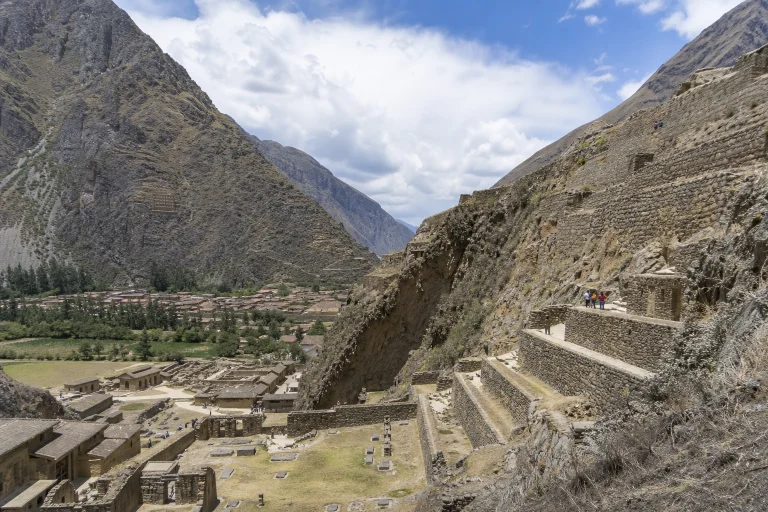
Ollantaytambo is the clearest choice when the Machu Picchu rail leg drives your itinerary. It is a key railway gateway, although reaching the station still requires careful planning. The town also rewards a closer look beyond the platform, and the guide to Ollantaytambo as a living Inca town introduces its stone streets and distinctive setting.
| Base | Strongest reason to shortlist it | Before committing |
|---|---|---|
| Pisac | Your personal plans are centered on Pisac | Verify the exact room connection and transport needs |
| Urubamba | A particular property best fits your work routine | Check internet, workspace, power contingency, and inclusions |
| Ollantaytambo | You want convenient positioning for the Machu Picchu rail leg | Confirm the train, transfer point, and current station access |
Still comparing Sightseeing?
Ask for tour ideas, hotel suggestions, or a simple trip plan that combines both.
Trip Helper
Book accommodation around the work setup
A beautiful room is not automatically a functional office. Ask about the exact unit you will occupy, since a speed test taken beside reception does not prove that the bedroom has the same signal. Confirm that the desk and chair are suitable for your working hours, especially if your schedule includes long calls or late sessions.
- Request a recent speed-test result from the room or intended workspace.
- Ask whether the connection is shared and how it performs during your usual working hours.
- Confirm where you can take calls without disturbing other guests.
- Check what happens during a power interruption and whether any backup is available.
- Review cancellation or date-change terms before making a long commitment.
- Start with a short stay if the setup cannot be tested before arrival.
Accommodation categories and inclusions vary, so compare the complete stay rather than the room rate alone. The guide to where to stay in the Sacred Valley covers lodges, hotels, and villages that can help narrow the location search. Apply the work checklist separately to every property you consider.
Prove the internet setup before arrival
Do not rely on a simple claim that Wi-Fi is available. For remote work, useful evidence includes a dated speed test, upload performance, latency, and confirmation that the result came from your room or work area. A live test during the hours you normally work is more informative than an undated screenshot.
Match the test to your actual job. Email and document editing place different demands on a connection than video meetings, large media uploads, cloud development environments, or remote desktops. If a missed meeting would cause a serious problem, carry a separate connectivity option and avoid scheduling critical calls immediately after changing towns.
| Work task | What to check | Fallback idea |
|---|---|---|
| Video meetings | Upload speed, latency, and call performance at your work time | A separate mobile connection or alternate workspace |
| Large uploads | Sustained upload performance and any usage restrictions | Upload earlier and keep local copies |
| Remote desktop | Connection stability and latency | Offline tasks ready for interruptions |
| Sensitive deadlines | Power contingency and access to a second connection | Finish critical work before moving properties |
Mobile coverage and fixed-line performance should also be treated as address-specific. No reliable town-by-town benchmark supports declaring one Sacred Valley base the internet winner. Test first, keep important files available offline, and have enough local work ready to remain productive during a disruption.
Build a budget from current quotes
A trustworthy one-month budget cannot be reduced to a single figure without current dates, lodging preferences, work requirements, and travel plans. Long-stay accommodation, food, workspace access, connectivity, and ground transport were not established through authoritative current pricing. Treat broad online estimates as starting points rather than promises.
Create your own estimate using live quotes for the exact month. First price the accommodation and identify what it includes. Then add meals, laundry, work access, primary and backup connectivity, local transport, sightseeing, onward travel, and a disruption reserve. Keep Machu Picchu trains and other tourism transport separate from ordinary living expenses so they do not distort the monthly comparison.
- Collect comparable accommodation quotes for Pisac, Urubamba, and Ollantaytambo.
- List included services, workspace access, and any extra utility or cleaning charges.
- Add your expected food, laundry, connectivity, and ground-transport needs.
- Price major sightseeing and rail plans as a separate travel category.
- Keep a reserve for changed routes, replacement transport, or an emergency workspace.
Plan Cusco transfers and Ollantaytambo trains carefully
Do not assume that a tourist train to Machu Picchu leaves from downtown Cusco. PeruRail states that its tourist trains do not depart from downtown Cusco, apart from exceptions involving the local or social service and luggage cars. Travelers therefore need to plan a separate transfer or use a bimodal service when one is offered for the selected departure.
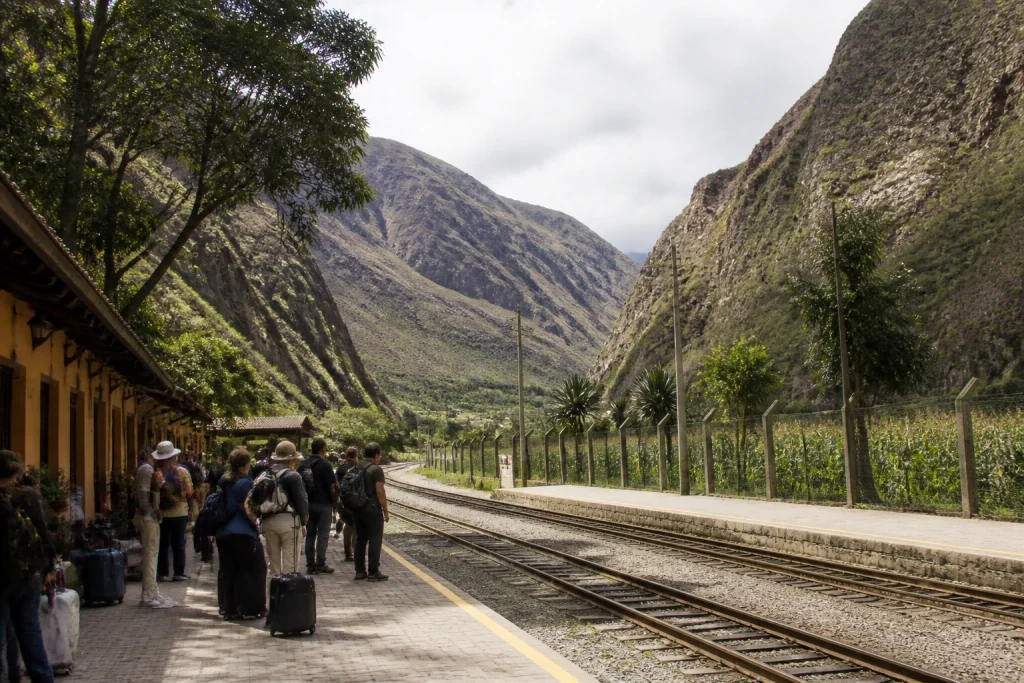
Ollantaytambo requires extra attention in 2026. PeruRail announced access changes beginning April 13 for approximately eight months because of road works. It also said passengers on Expedition 504 and Vistadome 606 would transfer to buses at Pachar. Since the completion date and current operating pattern can change, reconfirm the departure, transfer point, timing, and station-access route before arranging ground transport.
The comparison of PeruRail and Inca Rail services to Machu Picchu can help organize the wider train decision. Check the details attached to your actual ticket rather than applying one service pattern to every departure. Leave a useful connection buffer, especially while temporary access arrangements are possible.
For PeruRail purchases at its official sales points, listed payment methods include major card networks and cash within stated limits. This does not establish how widely cards are accepted elsewhere in the valley. Carry a backup payment method, and review the railway's luggage conditions before packing for the Machu Picchu leg because extra-luggage arrangements can involve designated ticket points.
Separate deep-work days from sightseeing days
A productive schedule gives work and travel their own space. Avoid attaching an important meeting to a town transfer, rail departure, or ambitious excursion. Mountain travel can face route disruption, and temporary station arrangements add another moving part. Protect deadline-heavy days by staying in one place and keeping the following morning flexible when a major connection is involved.
| Day type | Suggested focus | Planning principle |
|---|---|---|
| Deep-work day | Calls, uploads, deadlines, and focused tasks | Stay near the verified connection and avoid transfers |
| Light-work day | Email, planning, and offline tasks | Use for local exploration close to your base |
| Excursion day | A major Sacred Valley outing | Keep the calendar free of work commitments |
| Transfer day | Changing towns or connecting to rail | Allow buffer and keep essential files offline |
| Reset day | Laundry, backups, and planning | Retest the connection before the next work block |
Use the best things to do in the Sacred Valley for first-time visitors to choose a few priorities instead of trying to cover the entire region between calls. One substantial outing on a work-free day is usually easier to manage than a crowded sequence of short stops.
Choose dates around commitments, not unsupported weather promises
There is not enough dependable information here to name one universal best month for digital nomads. Your ideal dates depend on workload, route conditions, accommodation availability, and planned rail travel. Mountain routes in Peru can be disrupted by rockslides, mudslides, and snow, so monitor conditions and preserve flexibility around important journeys.
For travel during the announced 2026 Ollantaytambo works window, make connection time part of the itinerary rather than an afterthought. Avoid placing a nonrefundable onward commitment directly after a complex ground-and-rail transfer. Check the operator's current instructions shortly before departure, even if the ticket was booked months earlier.
Use sensible security precautions
Current UK advice identifies higher-risk regions elsewhere in Peru and warns about street crime in Cusco, but it does not place the main Sacred Valley circuit under its advice against all but essential travel. An older U.S. advisory likewise distinguishes Cusco city and nearby popular destinations, including the Sacred Valley and Machu Picchu, from its affected Cusco-area exclusion. These distinctions are useful context, not a guarantee against ordinary travel risks.
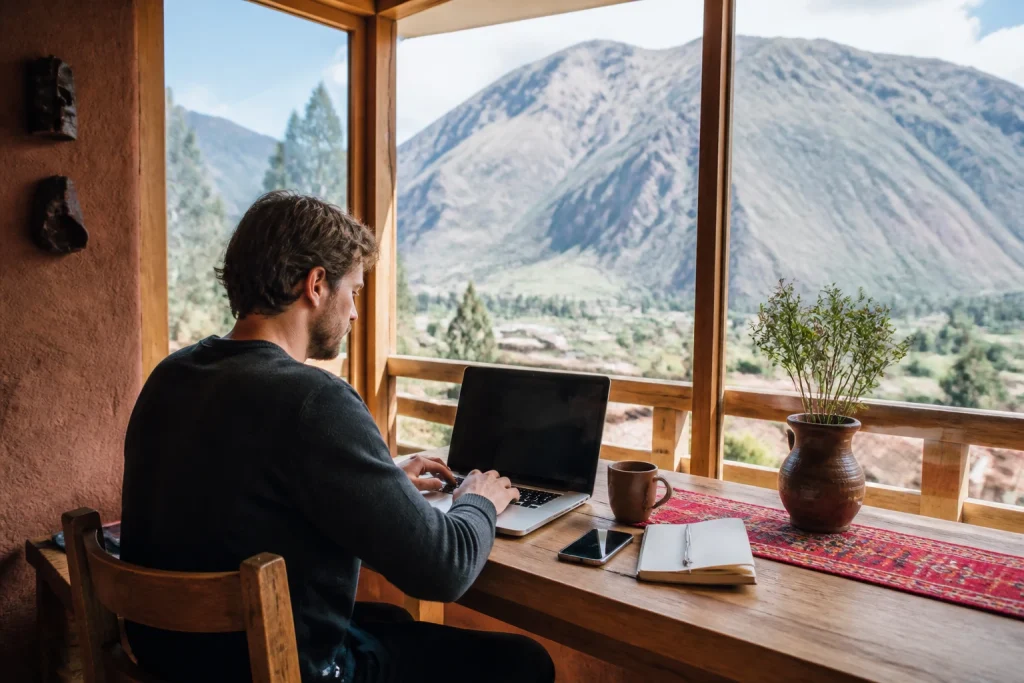
Use vetted transport, avoid isolated walks after dark, and monitor route conditions before longer journeys. Keep a laptop and other work equipment discreet during transfers. Store essential documents securely, preserve encrypted backups, and avoid carrying every payment method in the same place.
Travel advice can change quickly. Review current official guidance before departure and again if a route disruption or wider incident develops. Pay attention to the exact regions named in an advisory rather than applying a warning for a distant area to the Sacred Valley without context.
Arrange accessibility one service at a time
Accessible travel in the Sacred Valley is possible with advance arrangements, but access should not be assumed. An official accessible-tourism itinerary includes Pisac, Urubamba, Ollantaytambo, and the train toward Machu Picchu using private services. It does not establish step-free conditions, accessible toilets, vehicle lifts, or independent access at each stop.
Confirm the exact hotel room, entrance, bathroom, transfer vehicle, boarding procedure, and attraction route according to the traveler's needs. Ask for measurements or photographs when dimensions matter. A digital nomad should also check whether the desk, chair, power outlets, and workspace circulation are usable throughout the stay.
Check work, immigration, and tax rules before the trip
Do not assume that permission to enter Peru as a visitor automatically answers questions about remote work for an overseas employer. A definitive rule or dedicated digital-nomad status cannot be established from the information available for this guide. Check current Peruvian immigration requirements for your citizenship, activity, and length of stay before working from the country.
Tax obligations can depend on circumstances that a general travel guide cannot resolve. Long-stay travelers, business owners, and employees handling regulated information should obtain appropriate official or professional guidance. Complete this step before paying for a long, nonrefundable stay.
Pack a compact office and a credible fallback
The ideal remote-work kit is compact enough for transfers and complete enough to survive an interrupted connection. Keep the equipment matched to your job. A writer working mainly offline needs less than someone leading daily video calls or moving large design files.
- Laptop, charger, and any essential adapters
- Headset suitable for calls in a shared property
- Separate connectivity option that has been checked for your location
- Portable power bank for small devices
- Offline copies of critical files and travel documents
- Compact extension solution if compatible with local electrical requirements
- Protective sleeve and discreet day bag
- A lighter secondary bag for the Machu Picchu rail segment
Review the luggage conditions attached to your chosen railway service before leaving the larger bag behind or carrying extra equipment to the station. Avoid building your work setup around an item that cannot travel on the selected service without a separate arrangement.
A low-risk booking sequence for remote workers
- Choose Pisac, Urubamba, or Ollantaytambo according to your itinerary and transport priorities.
- Shortlist properties with a suitable desk, call environment, and flexible booking conditions.
- Request a recent room-level speed test and ask how the property handles power or connection failures.
- Price the full stay using current quotes, then separate living expenses from rail and sightseeing costs.
- Check current entry, remote-work, and tax rules that apply to your circumstances.
- Book a short initial stay when possible and test the setup before extending.
- Confirm rail departures, transfer points, luggage terms, and Ollantaytambo access shortly before travel.
- Keep the first full day free of critical meetings so the connection and workspace can be tested.
The best fit for a flexible remote worker
The Sacred Valley suits remote workers who value a regional base and can verify practical details before settling in. Pisac and Urubamba deserve consideration according to your lodging and off-hours plans, while Ollantaytambo has the strongest documented role for the Machu Picchu rail connection. The main limitation is the lack of dependable town-wide evidence for internet, power, coworking, and monthly costs.
Choose the town first, prove the room-level work setup second, and extend only after the arrangement performs under real working conditions. With a backup connection, a realistic transport buffer, and a budget built from live quotes, the valley becomes a much more manageable place to combine focused work with meaningful travel.
Frequently asked questions
Is the Sacred Valley good for digital nomads?
The Sacred Valley can work well for flexible remote workers who verify their accommodation, internet, workspace, and backup connection in advance. There is no reliable valley-wide standard for internet speed, mobile coverage, power stability, or coworking, so assess the exact property rather than the destination in general.
Which Sacred Valley town is best for remote work?
There is no evidence-backed winner among Pisac, Urubamba, and Ollantaytambo. Choose according to the individual property and your itinerary. Ollantaytambo has the clearest documented advantage for travelers prioritizing the Machu Picchu railway connection.
Can I depend on fast internet in the Sacred Valley?
Internet reliability should be confirmed for the exact room or workspace. Request a recent speed test, check upload performance and latency, and carry a separate connection because dependable town-level benchmarks are not available.
How much does a month in the Sacred Valley cost?
There is no dependable fixed monthly figure that applies across the valley. Build a budget from current accommodation quotes and add food, laundry, connectivity, workspace access, local transport, sightseeing, and a disruption reserve according to your plans.
Can visitors legally work remotely from Peru?
Do not assume that visitor entry permission settles the remote-work question. Check current Peruvian immigration rules for your citizenship, work activity, and length of stay, and obtain appropriate tax guidance when needed.
Do Machu Picchu tourist trains leave from downtown Cusco?
PeruRail states that its tourist trains do not depart from downtown Cusco, apart from exceptions involving the local or social service and luggage cars. Plan a separate transfer or check whether a bimodal service applies to your selected departure.
What should I confirm for an Ollantaytambo train in 2026?
Confirm the departure, transfer point, schedule, and current station-access route directly with the operator. PeruRail announced road-work changes beginning April 13, 2026, for approximately eight months, including Pachar bus transfers for specified services.
Is the Sacred Valley accessible for travelers with physical disabilities?
Accessible travel can be arranged, but conditions vary by property, vehicle, railway service, and attraction. Confirm entrances, bathrooms, room layouts, vehicle equipment, paths, and boarding assistance for the traveler's specific needs.
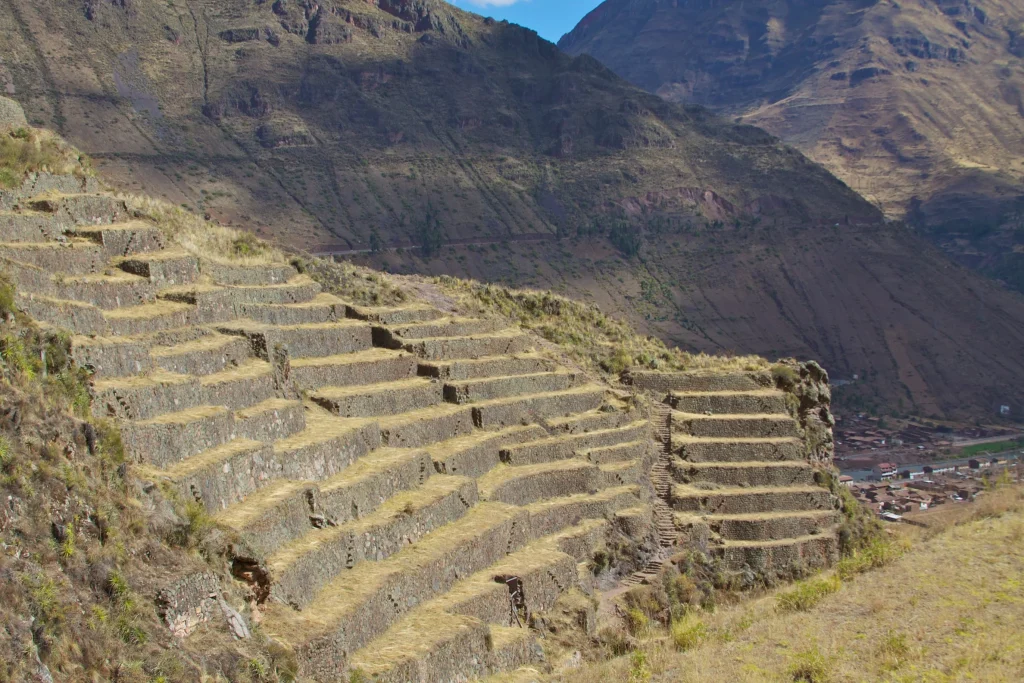
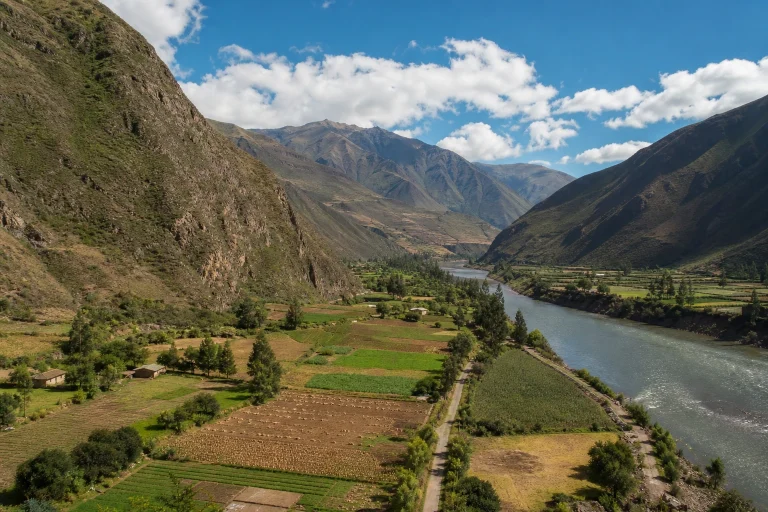
The Sacred Valley is a regional corridor with several possible remote-work bases by McKay Savage from London, UK, CC BY 2.0.
.jpg)
.jpg)