Where to Stay in the Sacred Valley for First Timers
For a first Sacred Valley trip, choose your overnight base around the next commitment on your itinerary. Ollantaytambo makes the most sense before a Machu Picchu train, Urubamba gives you a central position for a broader valley stay, and Pisac suits travelers drawn to its archaeological park and craft-market experience. The right choice is less about finding one universally best town and more about making your route feel calm and workable.
The quick answer: pick your base by your next day’s plan
The Sacred Valley is best approached as a sequence of distinct stops along the Vilcanota River corridor. First-timers often visit Pisac before continuing toward Urubamba and Ollantaytambo, so an accommodation choice can either support that flow or add an unnecessary transfer on a fixed train day.
- Stay in Ollantaytambo if catching a Machu Picchu train is the priority, especially on the following morning.
- Stay in Urubamba for a central base that can support a multi-stop Sacred Valley itinerary.
- Stay in Pisac if you want the ruins-and-market experience to shape your stay rather than train logistics.
- Check the exact departure station and train service before booking your room, since departure points are service-specific.
- Pack with rail limits in mind, or plan to use luggage storage in Ollantaytambo for a larger main bag.
- Leave buffer time before fixed rail or Machu Picchu commitments during periods of Andean weather disruption.
Compare Ollantaytambo, Urubamba and Pisac at a glance
Think of these three bases as answers to different travel styles. The trade-off is straightforward: the closer you stay to your rail departure, the easier train morning becomes; the more central or eastward you stay, the more you prioritize other Sacred Valley experiences.
| Base | Best for | Why it works | Main trade-off |
|---|---|---|---|
| Ollantaytambo | A Machu Picchu train departure | It is the strongest overnight base when rail convenience is the priority. | Less central for an itinerary focused on Pisac first. |
| Urubamba | A multi-stop, centrally placed stay | It balances access across the valley and has Vistadome departure options on selected services. | It is not the default choice for travelers who want to be beside Ollantaytambo station. |
| Pisac | Ruins and market atmosphere | It places the archaeological park and craft-market experience at the center of the stay. | A fixed Machu Picchu train the next morning requires more transfer planning. |
Stay in Ollantaytambo for the simplest Machu Picchu train morning
Ollantaytambo is the best place to stay in the Sacred Valley when a Machu Picchu train is your immediate priority. PeruRail identifies Ollantaytambo Station as the closest stop before Machu Picchu, and its Expedition service departs there. Selected Vistadome journeys also use Ollantaytambo, so this base keeps the final overnight close to a principal rail departure point.

For many first-timers, that convenience is worth organizing the rest of the itinerary around. Arrive in the valley, explore your other planned stops, then make Ollantaytambo your final Sacred Valley night before the train. You avoid treating an important rail departure as an afterthought and can focus on packing, tickets, and the station plan the evening before.
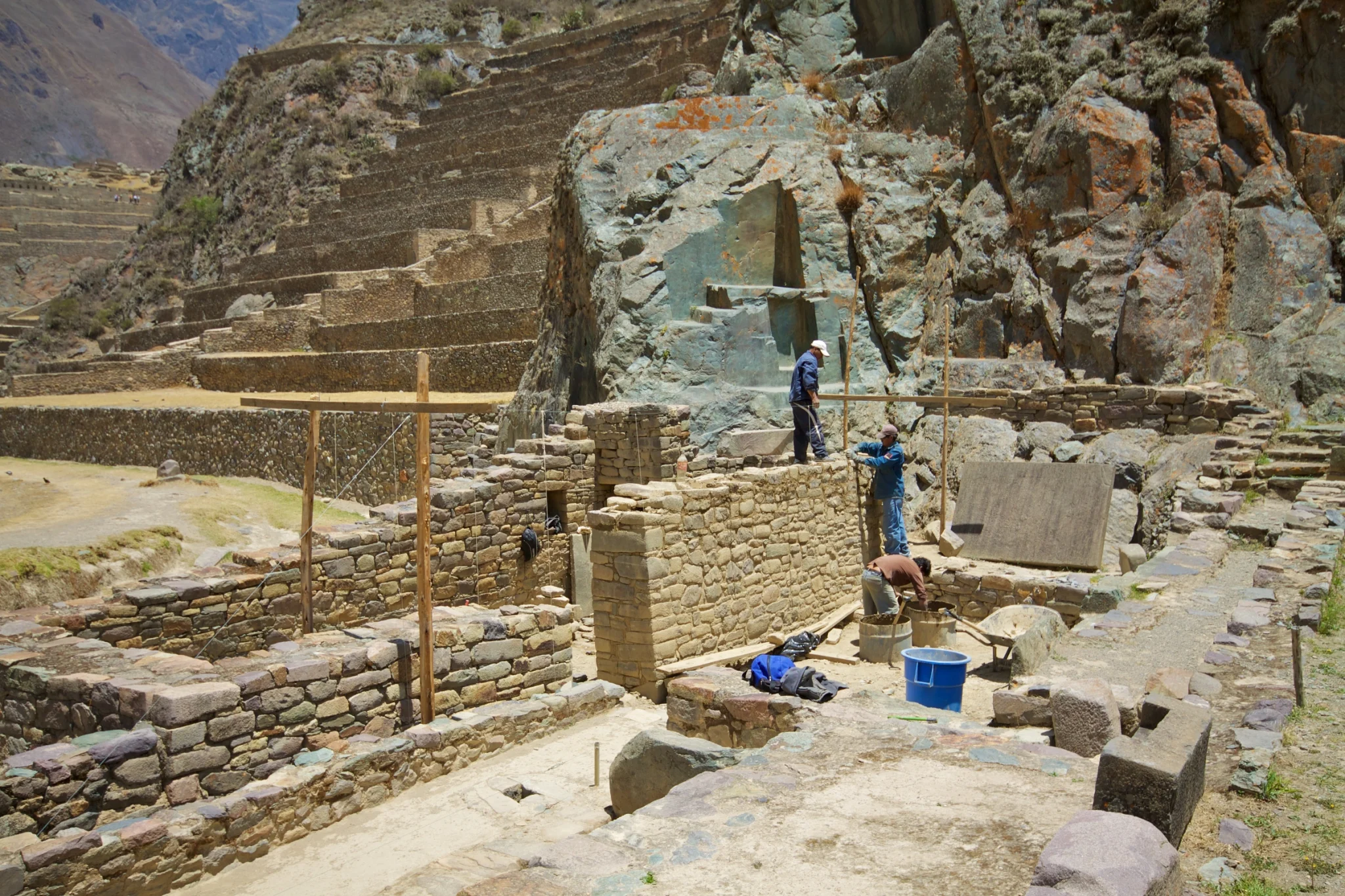
Ollantaytambo also has a fortress visit that involves substantial uphill effort for the highest views, so build that into your pacing if it is on the itinerary. For context beyond the train platform, the guide Ollantaytambo: Living Inside an Inca Town is a useful companion for planning time in the town itself.
Who should choose Ollantaytambo
- Travelers with an early or fixed Machu Picchu train departure.
- Visitors carrying limited luggage who want a cleaner train-day plan.
- First-timers who prefer to end their Sacred Valley stay near a principal rail station.
- Anyone willing to structure earlier sightseeing around a final night in Ollantaytambo.
Still comparing Sightseeing?
Ask for tour ideas, hotel suggestions, or a simple trip plan that combines both.
Trip Helper
Choose Urubamba for a central Sacred Valley stay
Urubamba is the practical middle ground. The standard valley route moves from Pisac through the towns along the Vilcanota River to Urubamba and then Ollantaytambo, placing Urubamba between the eastern and western highlights. It is a good fit when you want one central base for several stops instead of choosing a town solely for the rail departure.
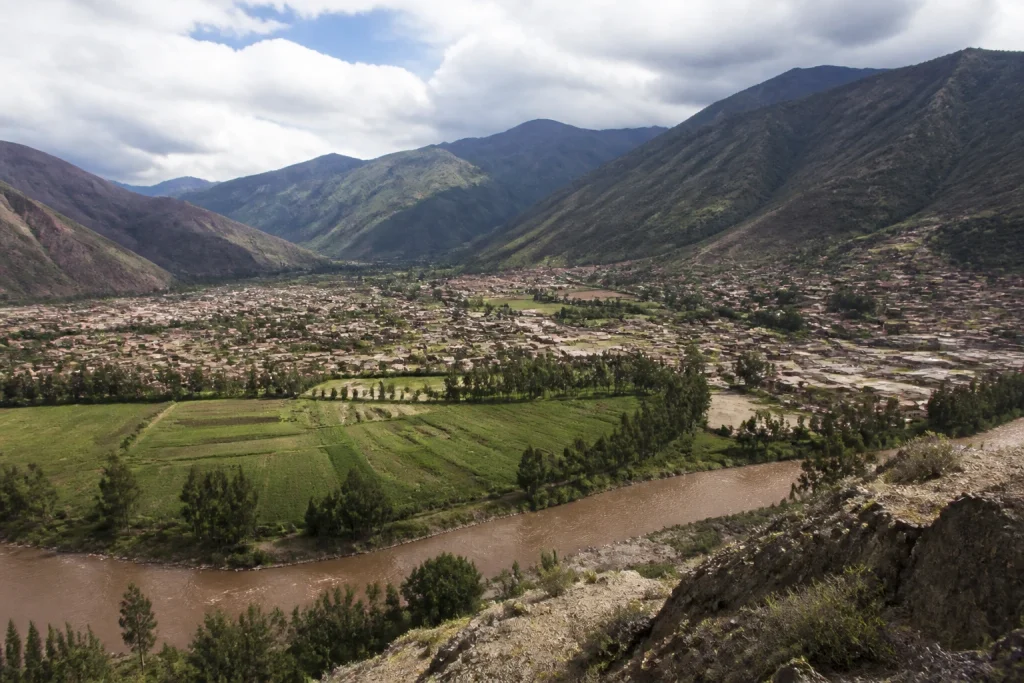
This is the option for travelers who value a broader valley rhythm, including time to arrange day trips and return to the same accommodation between outings. PeruRail’s Vistadome information includes departures from Urubamba as well as Ollantaytambo, but treat that as a service-specific option. Always match your hotel choice to the station printed on your own ticket.
Urubamba works especially well if your train day is not the next morning or if you are comfortable arranging the transfer that connects your accommodation with the correct station. It is a strategic base, not a shortcut around checking logistics. Confirm the train service, station, and collection point before locking in a nonrefundable room.
Who should choose Urubamba
- Visitors staying several nights in the Sacred Valley.
- Travelers who want a central position over immediate proximity to Ollantaytambo station.
- People building an itinerary around multiple towns and attractions.
- Guests whose selected rail service specifically fits an Urubamba departure plan.
Choose Pisac for ruins, market time and an east-valley feel
Pisac is the right choice when you want its archaeological park and craft-market experience to be the heart of the stay. It comes earlier in the usual Sacred Valley route than Urubamba and Ollantaytambo, making it a natural place to linger at the start of a valley itinerary rather than a default final stop before a fixed train departure.
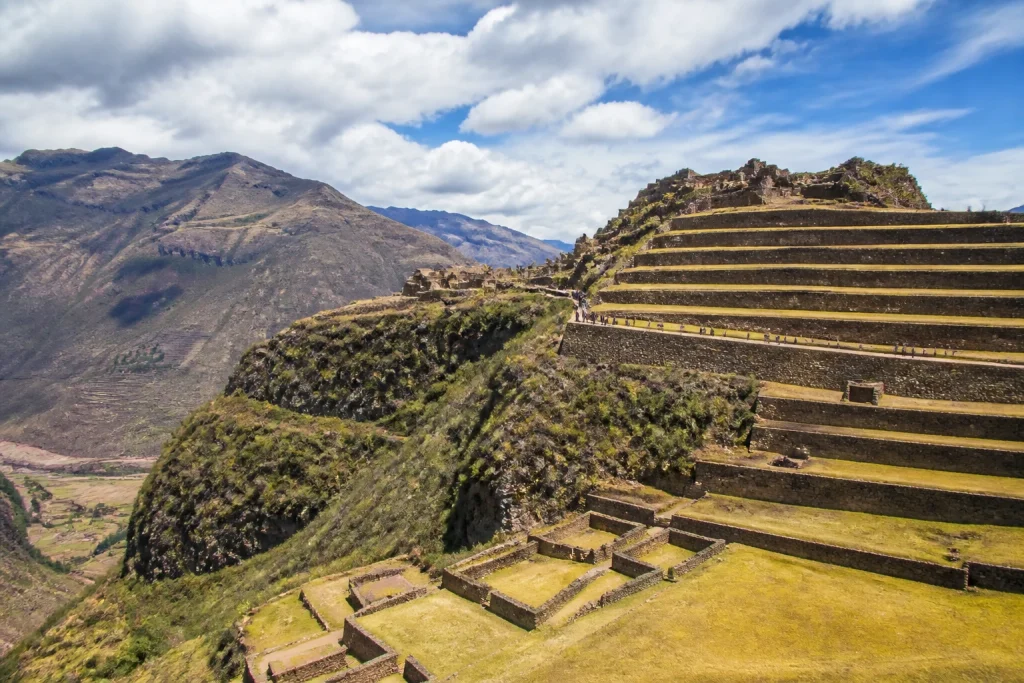
Stay here if slowing down around Pisac matters more than minimizing the logistics for the following morning’s train. Build any onward train transfer around a confirmed plan instead of a tight estimate. The companion story Pisac: A Slow Morning at the Ruins, an Afternoon in the Market can help you shape a fuller day around the two experiences that define this base.
Who should choose Pisac
- Travelers who want to prioritize the archaeological park and market experience.
- Visitors starting their Sacred Valley route from the Pisac side.
- People with enough flexibility to arrange onward transfers without rushing a rail morning.
- Travelers who prefer a place-based stay over station proximity.
Should you stay in one town or split your Sacred Valley nights?
A single base is easiest when you have limited time and want fewer hotel changes. Choose Ollantaytambo for a short stay centered on the Machu Picchu train, or choose Urubamba when the valley itself is your main focus and you are comfortable coordinating station transfers. Pisac is the single-base choice for a deliberately slower east-valley start.
Splitting nights is sensible when you want both a Pisac-focused stay and the reassurance of sleeping close to Ollantaytambo before the train. A simple approach is to begin around Pisac or Urubamba, then move west to Ollantaytambo for the final night. This gives each place a purpose instead of turning accommodation moves into a daily routine.
Do not split stays merely because you expect one town to be cheaper. Accommodation rates vary by date, room type, and property, so compare live options for the same nights and conditions. A slightly simpler route can be better value than a lower headline rate that creates an awkward transfer before a fixed departure.
Book your Sacred Valley accommodation with rail logistics in mind
Before booking, identify the exact train service and departure station on your Machu Picchu ticket. PeruRail’s Expedition information names Ollantaytambo departures, while Vistadome information includes both Urubamba and Ollantaytambo. A station named in a general travel article is less important than the station on the ticket in your hand.
Then compare current room choices by the practical details that affect your trip: cancellation terms, room layout, luggage storage, breakfast timing if offered, and the transfer plan for the rail station. For help understanding the decision between operators and departure patterns, PeruRail or Inca Rail? Sacred Valley Trains to Machu Picchu is a useful next read.
If you are still shaping the sightseeing days around your accommodation, use a list of the best things to do in the Sacred Valley to group nearby priorities before choosing a base. This prevents a familiar first-trip mistake: selecting a hotel first, then discovering that the places you most want to see are arranged in the opposite direction.
Pack for the train, not just the hotel
PeruRail says most passengers traveling between Cusco and Machu Picchu can bring one carry-on bag or backpack up to 8 kg and 115 linear cm. That limit makes luggage a real factor in where you stay, particularly if you plan to leave a larger suitcase behind while visiting Machu Picchu.
PeruRail lists free luggage storage in Ollantaytambo from 04:15 to 21:00, which can make an Ollantaytambo overnight especially practical. Its published extra-luggage charges are US$25 for checked luggage and US$15 for additional carry-on luggage, but these are operator charges that can change. Check the current policy and storage hours before building them into your train-day plan.
Allow room for changing access and weather
Rail access routes and bimodal-service arrangements can be modified, so check operator updates close to departure instead of relying on an old itinerary. This matters most when you have chosen a hotel because of its apparent convenience to the station. Keep the final morning light and follow the collection or arrival instructions in your booking confirmation.
Heavy rain and snow in the Andes, including the Cusco region, can affect travel plans. Leave buffer time before fixed rail, flight, or Machu Picchu commitments, especially when your itinerary has little flexibility. Broader Peru travel advice identifies particular risks in VRAEM and specified border areas rather than a special warning directed at the Sacred Valley, but normal precautions for crime and disruption still apply.
Choose accessibility by property and activity, not by town name
Do not assume that a hotel’s location in Pisac, Urubamba, or Ollantaytambo guarantees step-free rooms, accessible bathrooms, smooth sidewalks, or suitable transport. Accessibility needs should be confirmed directly with the specific hotel and transport provider. The same distinction applies to excursions: a suitable room does not automatically mean that every archaeological visit will be manageable.
Ollantaytambo’s fortress is a clear example of the difference between lodging access and sightseeing mobility, since the standard visit includes a substantial uphill climb to the highest point. Travelers with limited mobility should discuss viable arrangements with an accredited guide, the attraction authority, and their hotel before committing to the base or the activity.
For rail travel, PeruRail asks passengers who need luggage assistance to contact it at least 48 hours ahead, subject to available space. Build that request into the planning stage rather than leaving it until the station morning.
The best first-time Sacred Valley base depends on your final priority
Choose Ollantaytambo if the Machu Picchu train is the key event and you want the cleanest final overnight. Choose Urubamba if you want a central base for a longer, multi-stop valley stay. Choose Pisac if the ruins and market deserve unhurried time. Once you decide which of those priorities matters most, book a property that matches your train station, luggage plan, and mobility needs.
Frequently asked questions
What is the best town to stay in the Sacred Valley for first-time visitors?
Ollantaytambo is the strongest overall choice for first-timers whose itinerary continues to Machu Picchu by train. Urubamba is better for a central multi-stop stay, while Pisac is best when the ruins-and-market experience is the main priority.
Is Ollantaytambo the best place to stay before Machu Picchu?
Yes, Ollantaytambo is the most practical Sacred Valley base when train convenience is the priority. PeruRail identifies Ollantaytambo Station as the closest stop before Machu Picchu, and its Expedition service departs from there.
Should I stay in Urubamba or Ollantaytambo?
Stay in Urubamba for a more central Sacred Valley base and stay in Ollantaytambo for the simplest train-day logistics. Vistadome departures can be available from both places, but the departure station depends on the selected service.
Is Pisac a good base for visiting the Sacred Valley?
Pisac is a good base for travelers who want to spend meaningful time at its archaeological park and craft market. It is less suitable as the default final overnight before a fixed Machu Picchu train, because that plan requires an onward transfer arrangement.
Can I leave my main suitcase in Ollantaytambo before taking the train?
Yes, PeruRail lists free luggage storage in Ollantaytambo, with published hours of 04:15 to 21:00. Most Cusco-Machu Picchu passengers are limited to one carry-on bag or backpack of up to 8 kg and 115 linear cm, so check the current storage hours and luggage rules before travel.
Do I need extra buffer time in the Sacred Valley?
Yes, leave buffer time before fixed rail, flight, and Machu Picchu commitments. Andean weather can disrupt travel, and rail access or service arrangements can change, so check operator updates close to departure.
Ollantaytambo is the most convenient Sacred Valley base for many Machu Picchu train itineraries by McKay Savage from London, UK, CC BY 2.0.


.jpg)