Sacred Valley Spa and Wellness Guide
Plan a restorative Sacred Valley stay with practical advice on spa bases, treatments, current price examples, reservations, accessibility, and safety.
 Visit Sacred Valley
August 28, 2026
Visit Sacred Valley
August 28, 2026
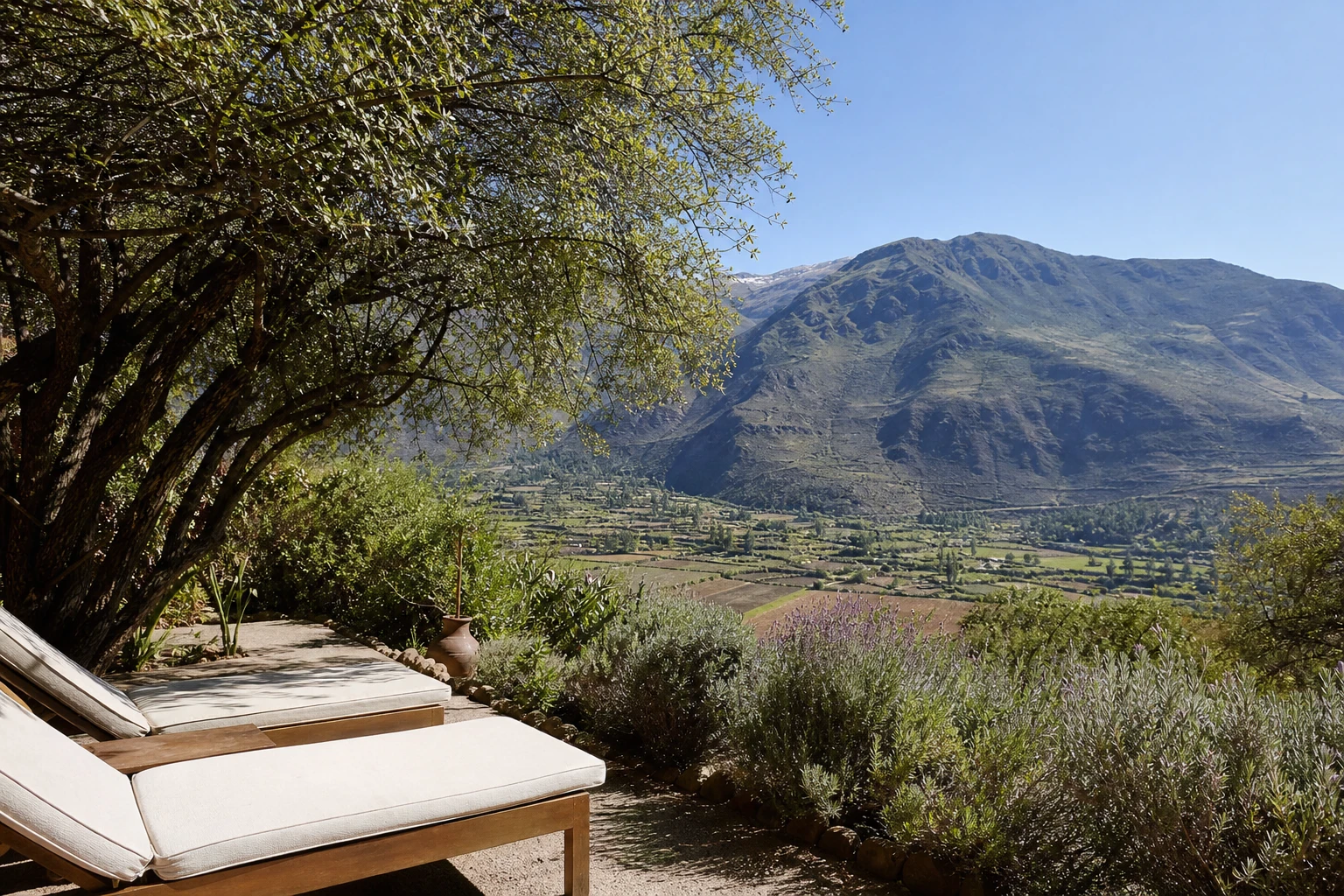
A Sacred Valley wellness stay works best when the spa is part of the itinerary rather than an afterthought. Urubamba is the most practical base for this style of trip, with multiple spa hotels and useful road connections. More secluded properties trade easy town access for a stronger sense of retreat, often placing the river and mountains at the center of the experience.
- Use Urubamba as the default base when convenient transfers and a choice of spa hotels matter most.
- Reserve treatments before arrival, especially when a specific time or couples experience matters.
- Treat published prices as property-specific examples, not a valley-wide average.
- Check age, pregnancy, cancellation, and accessibility policies before confirming a treatment.
- Keep conventional hotel spa services separate from psychoactive ceremonies marketed as spiritual cleansing.
The best plan leaves room to enjoy the spa instead of racing into a treatment between transfers. Choose the base first, compare the facilities you expect to use, and then build sightseeing around the appointment. Prices, operating schedules, treatment restrictions, and non-guest access can change, so review the current property details when booking.

Inka Deep Tissue Release Massage
Your ritual blends deep, firm tissue release with ancestral-inspired recovery stretches, making it the ultimate body reset for travelers. It is specif...

Natural Inca Hot Springs Day Trip – Soak & Relax in the Andes
The Inca thermal baths of Lares Valley are completely natural water that comes from the Andean mountains. This water...

Sacred Valley Tour: Pisac, Maras, Chinchero & Ollantaytambo
Explore the best of Peru’s Sacred Valley on a private full-day tour designed for a personalized and comfortable ex...

From Urubamba & Ollantaytambo: Sacred Valley Day tour with Lunch
Explore the best and most unique sites in the Sacred Valley on a private tour. Visit the impressive ruins of Ollanta...
Choose the right Sacred Valley wellness base
Urubamba offers the clearest balance of spa choice and practical logistics. One hotel estimates that Ollantaytambo station is about 30 minutes away by car, Cusco about one hour, and Cusco's airport about one hour and 20 minutes. These are planning estimates rather than guaranteed transfer times, so leave slack for road conditions, luggage, and hotel pickup coordination.
A resort farther from town can deliver a more immersive setting, but the spa then becomes part of a resort stay rather than a simple walk-in stop. That arrangement suits travelers who want an unhurried afternoon around a treatment. A central hotel is usually better for guests balancing restaurants, excursions, transfers, and wellness time.
Accommodation choice shapes the entire plan. The guide Where to Stay in the Sacred Valley: Lodges, Hotels and Villages provides a broader comparison of the valley's possible bases. Once you have a shortlist, compare the spa itself, transfer arrangements, room setup, and distance from the places already on your itinerary.
| Stay style | Best suited to | Main planning consideration |
|---|---|---|
| Urubamba spa hotel | Travelers balancing treatments with transfers and town access | Leave time between the appointment and any onward road journey |
| Secluded resort stay | Travelers who want the spa to anchor a slower day | Confirm meals, transportation, and non-spa activities before arrival |
| Spa appointment during a touring day | Travelers with limited time in the valley | Verify non-guest access and protect the appointment from excursion delays |
Decide how much of the trip should revolve around wellness
A single treatment fits easily into a broader cultural itinerary. A spa-led stay needs more breathing room, especially if you plan to use a water circuit, book a massage, eat at the property, or spend time enjoying the grounds. Decide which version you want before choosing a hotel, since location and available facilities matter as much as the treatment menu.
For a short visit, reserve one defined experience and protect it with a generous buffer. Avoid placing the appointment immediately after a tour or shortly before a train. Excursion return times and road transfers are vulnerable to delays, while spas commonly expect guests to arrive before the treatment begins.
For a resort-focused break, schedule the main treatment on a day without a major transfer. That leaves space to use included facilities if offered, eat without watching the clock, and return to your room afterward. Check exactly what the booking includes, since a treatment, water circuit, pool, and other facilities should not be assumed to come as one package.
Understand the treatments and facilities on offer
The documented options include individual massages, hydrotherapy, an Andean Water Circuit, and a couples ritual. These categories serve different plans. A massage is a defined appointment, while a water circuit adds time in a spa facility. A couples ritual is a longer shared experience and needs a larger opening in the day.

Read the treatment duration carefully. At Las Qolqas, the published Andean Water Circuit and massage examples last 60 minutes, while its couples ritual lasts 120 minutes. The appointment length is not necessarily the full time commitment because arrival, changing, and movement through the property add to the schedule.
Do not choose solely by an evocative treatment name. Compare duration, whether the service is individual or shared, which facilities are included, and any health or age restrictions. If relaxation is the main goal, a simple massage at a convenient time can be more satisfying than a complex package squeezed between other plans.
Wet areas deserve a separate check. Ask what the water circuit includes, whether advance reservation is required, and whether changing areas or pool access are part of the booking. Families should also verify age rules before building a shared spa afternoon around hydrotherapy.

Machu Picchu Shuttle Bus Round Trip from Aguas Calientes
Travel worry-free with the official CONSETTUR shuttle bus, the only authorized transport between Aguas Calientes and...

Machu Picchu Official Bus – Round Trip
Travel seamlessly between Aguas Calientes and the majestic Machu Picchu with this official round-trip shuttle servic...

Traditional Thai Full Body Massage Therapy
Traditional Thai Massage stands out as an active, deep-tissue recovery therapy where guests remain fully clothed, ma...
Use current prices as examples, not a Sacred Valley average
Sacred Valley spa prices vary by property, treatment, and package. A useful current example comes from Las Qolqas, where the published menu lists a 60-minute Andean Water Circuit at US$30, 60-minute massages from US$80 to US$90, and a 120-minute couples ritual at US$250. The property states that these rates include a 10 percent service charge and applicable IGV tax.
| Las Qolqas menu example | Published duration | Published price |
|---|---|---|
| Andean Water Circuit | 60 minutes | US$30 |
| Massage examples | 60 minutes | US$80 to US$90 |
| Couples ritual | 120 minutes | US$250 |
These figures are useful for understanding one property's menu, but they should not be turned into a destination-wide typical price. Hotel-led wellness experiences span a broad range, and older menus from other properties are not suitable for current comparisons. Recheck the final rate, taxes, service charges, and inclusions for the date you intend to visit.
Budget for the whole spa visit rather than the treatment alone. Transportation, meals, and a longer resort stay can matter more than a small difference between two massages. A centrally located appointment can offer better value for a touring day, while a secluded property makes more sense when its setting and facilities are part of the reason for going.
Reserve early and protect the appointment time
Pre-book spa time as soon as the hotel and travel dates are settled. Las Qolqas publishes Andean Spa hours of 11:30 to 20:30, asks guests to book ahead, and requests arrival 15 minutes before the appointment. Operating hours can change, so use the schedule shown during your own booking rather than building the trip around an old menu.
When reserving, confirm the treatment name, duration, number of guests, arrival time, final price, and included facilities. If you are not staying at the property, check that outside guests can book on your date. Review the confirmation once more before planning dinner, transportation, or an evening departure.
Cancellation terms deserve attention because spa appointments reserve both a treatment room and a therapist. Las Qolqas states that changes or cancellations must be made at least two hours before the appointment, with charges applying to late changes or no-shows. Other properties can set different terms, so follow the policy attached to your reservation.
The safest schedule places the appointment well away from a flight, train, or long road transfer. If a treatment must share a day with sightseeing, put the fixed booking first or choose an excursion with a comfortable return margin. A rushed arrival defeats the point and can shorten the usable part of the appointment.
Pair spa time with Sacred Valley sightseeing
The easiest pairing is a substantial outing on one day and a protected wellness block on the next. If both must fit into the same day, keep the sightseeing plan compact and avoid stacking multiple fixed reservations. A treatment in the late afternoon can work after a short route, provided the return buffer is generous.

A Maras and Moray half-day route is the type of compact excursion that can sit beside a spa booking more comfortably than a full touring circuit. Keep the appointment flexible enough to absorb road delays, and do not assume a nominal half-day leaves exactly half the day free.
Travelers staying near Ollantaytambo can use a separate day for the town and its stone streets. The Ollantaytambo guide to living inside an Inca town helps shape that visit without turning a treatment day into a race between stops. If the spa property is outside town, arrange both directions of transportation before leaving.
Anyone continuing toward Machu Picchu should keep the spa away from the train departure window. Use a Sacred Valley trains to Machu Picchu comparison to understand the onward journey, then reserve the treatment on a different day or with ample separation. One operator's estimated drive between Urubamba and Ollantaytambo station is about 30 minutes, but actual transfer time can vary.
Still comparing Sacred Valley Spa And Wellness Planning?
Ask for tour ideas, hotel suggestions, or a simple trip plan that combines both.
Trip Helper
Build a balanced three-day wellness itinerary
Day one: arrive and settle into the valley
Use arrival day for the transfer, check-in, and a relaxed meal. Avoid making an expensive treatment the first fixed commitment after a flight or long drive. If you want a spa introduction, choose an unfussy facility visit only after confirming that arrival timing is comfortable.
Day two: one excursion and one defined treatment
Choose either a compact sightseeing route followed by a late treatment or a morning spa appointment followed by an open afternoon. Keep lunch simple and leave enough time to return, change, and arrive before the scheduled start. This is the best day for a 60-minute massage or water circuit when cultural touring remains a priority.
Day three: make wellness the main event
Reserve the longest experience for the day with the fewest obligations. A 120-minute couples ritual requires more than two hours once arrival and changing are considered. Leave the rest of the day adaptable rather than immediately adding another reservation or a tightly timed departure.
If three days are not available, simplify instead of compressing. One well-timed treatment and one carefully chosen excursion usually produce a better trip than several bookings connected by anxious drives. The valley's practical distances reward realistic scheduling.
Check accessibility property by property
Accessibility varies across the Sacred Valley and should never be inferred from the destination as a whole. Tambo del Inka publishes accessible routes to its spa, pool, fitness center, restaurants, and main entrance. It also lists elevators and mobility-accessible room features, including grab rails and handheld shower wands.
Those details make the property a useful starting point, but they do not answer every traveler's needs. Confirm the exact room layout, route into the treatment area, treatment-table transfer setup, pool lift availability, and distance from the drop-off point. The vehicle used for a hotel transfer is another separate part of the journey.
Be specific when discussing assistance. A step-free route does not automatically mean every spa facility or treatment can be used independently. Share the dimensions or equipment requirements that matter to you, and make sure the reserved room and treatment space match the arrangements discussed.
Travel companions should also consider how far they will need to move between the room, restaurant, spa, and vehicle. A resort can publish strong accessibility features while still requiring careful coordination across a large property. Resolve those details before paying for a package tied to a particular room or treatment time.
Review age, pregnancy, and treatment restrictions
Treatment rules are property-specific. Las Qolqas states that massages are for adults only. Its hydrotherapy facilities are available to guests aged 14 and older when accompanied by a parent or legal guardian. Families should confirm the rule for every intended participant before presenting a spa afternoon as a shared activity.

The same property places restrictions around massage during pregnancy, especially in high-risk stages. Pregnancy, a recent procedure, an injury, or another health concern should be discussed before selecting a service. A different treatment or simple rest day can be the better choice when the spa's policy excludes the original plan.
Read restrictions before booking a couples package because both guests must be eligible for the selected treatment. If one person cannot participate, choose separate services or a shared non-treatment activity rather than relying on a late change. The cancellation deadline may still apply.

Ticket To Machu Picchu + Machu Picchu Mountain
This offer includes the entrance ticket to the Machu Picchu lost citadel and access to the Machu Picchu mountain hik...

Machu Picchu: Official Entrance Tickets
With this ticket you can visit the Inca city of Machu Picchu. The ticket allows you to visit most of the archaeologi...

Machu Picchu Entrance Ticket Official Circuits
Discover the wonders of Machu Picchu with an official entrance ticket that allows you to explore this ancient Inca c...
Separate hotel wellness from psychoactive ceremonies
A massage, water circuit, or hydrotherapy session at a hotel spa is not the same category as a ceremony involving ayahuasca or San Pedro. Tourist-facing spiritual cleansing experiences involving these substances are marketed in Cusco and elsewhere in Peru, and current UK travel guidance flags safety risks associated with them.
Do not treat a psychoactive ceremony as a routine spa add-on. It requires a separate safety decision, careful scrutiny, and awareness that the setting may sit outside conventional hotel wellness practices. A listing that uses words such as healing, cleansing, ancestral, or natural should not be assumed to describe an ordinary spa service.
For a straightforward restorative trip, stay with clearly described hotel services whose duration, restrictions, and cancellation terms are provided during booking. Check current Peru travel advice before departure because regional warnings and safety conditions can change.
Pack for the treatment, transfer, and property
- Booking confirmation with the treatment name, arrival time, and inclusions
- Comfortable clothing that is easy to change before and after the appointment
- Swimwear if a confirmed water or pool facility requires it
- Any personal mobility aid or health information relevant to the booking
- A transportation plan for both arrival and departure
- A small time buffer that keeps the next meal, tour, or transfer flexible
Do not assume robes, sandals, lockers, toiletries, or pool access are included unless the property says so. Ask one concise set of questions when booking, then follow the instructions in the confirmation. That keeps packing simple and avoids arriving with expectations based on another hotel.
Transportation deserves equal attention. Resort seclusion can be rewarding, but it also means planning how to leave after the treatment. Arrange a hotel transfer or other dependable pickup before the appointment, particularly when the spa is not within easy reach of your accommodation.
Make the spa support the trip, not compete with it
The strongest Sacred Valley wellness plan is simple: choose a convenient base, reserve one or two experiences that genuinely fit the schedule, and leave space around them. Urubamba is the practical choice for most spa-focused stays, while a more secluded property suits travelers who want the resort setting to become a central part of the trip.
Book early, compare inclusions instead of treatment names, and confirm restrictions before paying. The main limitation is variability between properties, especially around prices, access, and eligibility. Once those details are settled, the spa can provide a measured pause between the valley's road journeys and cultural excursions.
Frequently asked questions
What is the best base for a Sacred Valley spa stay?
Urubamba is the most practical base for most spa-focused trips. It has multiple spa hotels and useful road connections toward Cusco and Ollantaytambo, while more secluded resorts suit travelers who want the property itself to anchor the stay.
How much does a Sacred Valley spa treatment cost?
Prices vary too widely to give a reliable valley-wide average. As one current example, Las Qolqas lists a 60-minute water circuit at US$30, 60-minute massages from US$80 to US$90, and a 120-minute couples ritual at US$250, including its stated service charge and applicable IGV tax.
Should spa treatments be booked in advance?
Yes, reserve important treatments before arrival. Las Qolqas asks guests to book ahead and arrive 15 minutes early, while schedules and availability can change by date.
Can teenagers use Sacred Valley spa facilities?
Eligibility depends on the property and facility. Las Qolqas states that massages are adults-only, while hydrotherapy is available from age 14 when the guest is accompanied by a parent or legal guardian.
Can pregnant travelers book a massage?
Pregnancy policies must be checked before choosing a treatment. Las Qolqas places restrictions around massage during pregnancy, particularly during high-risk stages, so discuss the circumstances before reserving.
Are Sacred Valley spas wheelchair accessible?
Accessibility should be assessed property by property. Tambo del Inka publishes accessible routes to its spa and other main facilities, but travelers should still confirm the room, treatment area, pool equipment, vehicle, and drop-off route needed for their visit.
Are ayahuasca or San Pedro ceremonies normal spa treatments?
No, psychoactive ceremonies are separate from conventional hotel spa services. Current UK travel guidance flags risks around tourist-facing spiritual cleansing involving ayahuasca or San Pedro in Cusco and elsewhere in Peru.
How much time should I leave around a spa appointment?
Leave enough time to arrive early, change, complete the treatment, and travel onward without rushing. One documented spa asks guests to arrive 15 minutes before the appointment, and road transfer estimates should not be treated as guarantees.
Sacred Valley Tour: Pisac, Maras, Chinchero & Ollantaytambo
Explore the best of Peru’s Sacred Valley on a private full-day tour designed for a personalized and comfortable experience. With your own expert loc...
From Urubamba & Ollantaytambo: Sacred Valley Day tour with Lunch
Explore the best and most unique sites in the Sacred Valley on a private tour. Visit the impressive ruins of Ollanta...
Natural Inca Hot Springs Day Trip – Soak & Relax in the Andes
The Inca thermal baths of Lares Valley are completely natural water that comes from the Andean mountains. This water...
Inka Deep Tissue Release Massage
Your ritual blends deep, firm tissue release with ancestral-inspired recovery stretches, making it the ultimate body...