Aguas Calientes Travel Guide From the Sacred Valley
Plan the rail journey from the Sacred Valley to Aguas Calientes, including the best booking order, Ollantaytambo train logistics, overnight options, return timing, luggage limits, and Machu Picchu entry rules.
 Visit Sacred Valley
August 30, 2026
Visit Sacred Valley
August 30, 2026
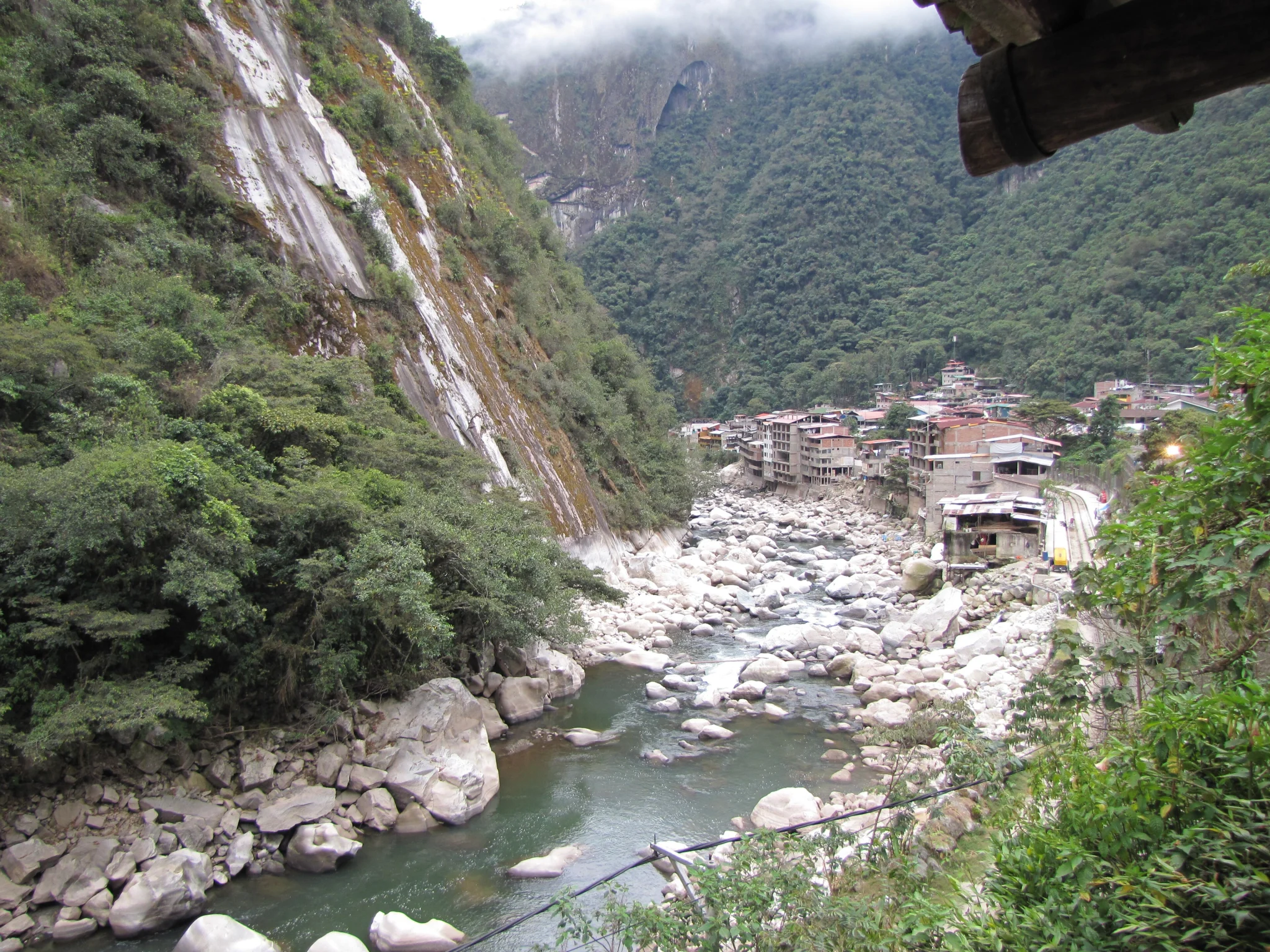
Aguas Calientes, officially called Machu Picchu Pueblo, is the rail gateway used by travelers visiting Machu Picchu. If you are already staying in the Sacred Valley, the clearest documented route starts at Ollantaytambo. The main challenge is not simply reaching town. You must coordinate a timed Machu Picchu entry, a suitable train, the transfer between town and the citadel, and any onward travel after returning to the valley.
- Reserve your exact Machu Picchu circuit and entry time before choosing a train.
- Use Ollantaytambo as the documented Sacred Valley rail departure point.
- Stay overnight in Aguas Calientes when an early or tightly scheduled entry is the priority.
- Treat in-person tickets in Aguas Calientes as a next-day contingency, not a same-day plan.
- Check live train schedules, prices, baggage rules, and assistance arrangements before purchase.
The safest planning sequence begins with admission rather than transport. Machu Picchu visits are organized by circuit, route, and entry time. A convenient train is useful only when it leaves enough time to reach the entrance assigned on your ticket. Return timing matters as well, especially if you have another hotel, transfer, or early departure waiting in the Sacred Valley.
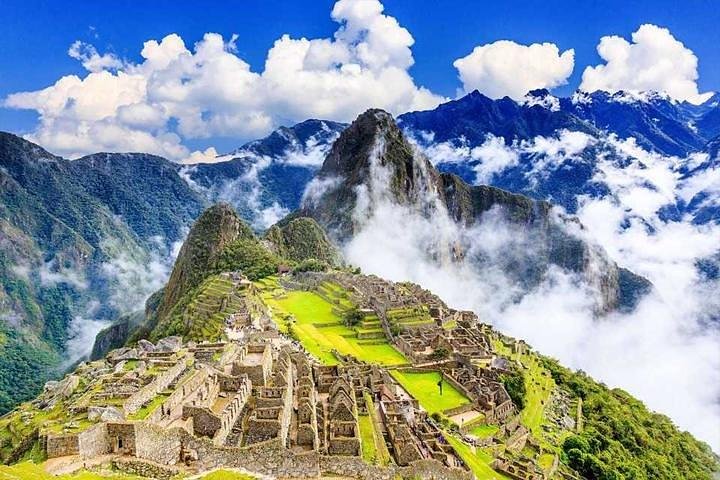
Machu Picchu Entrance Ticket
This experience gives you something most travelers can’t find: peace of mind. Whether you plan ahead or need a solution at the last moment, you’re...

Explore Machu Picchu Private Guided Tour from Aguas Calientes
Discover the secrets of Machu Picchu with a private tour guide on an unforgettable journey from Aguas Calientes. Sta...

Machu Picchu Private Tour from Aguas Calientes (Tickets included)
Discover Machu Picchu at your own pace with our exclusive Private Guided Tour from Aguas Calientes. Perfect for inde...

Machu Picchu Private Tour with Ticket, Bus from Aguas Calientes
Maximize your time at Machu Picchu with this private guided tour starting directly from Aguas Calientes. Skip the ha...
Book Machu Picchu Entry Before Building the Rail Itinerary
Machu Picchu admission and rail travel are separate bookings. The archaeological site uses timed entry organized around specific circuits and routes, while tickets are sold through the Peruvian state ticket platform. Choose the circuit and time that suit your visit before committing to a train itinerary.
This order prevents a common planning mismatch: buying an attractive early train and later finding that the remaining entrance times do not fit it. It also helps you decide whether to arrive in Aguas Calientes the previous day. An overnight stay removes the same-morning rail journey from the schedule, which can be valuable when the entry time leaves little room for delay.
- Select an available Machu Picchu circuit, route, and entry time.
- Decide whether that time calls for an overnight stay in Aguas Calientes.
- Choose an outbound train that provides a sensible margin before entry.
- Select a return train that leaves enough time after the visit and protects any onward connection.
- Review the rail operator's current check-in, luggage, and service instructions.
Advance booking matters because visitor numbers are managed within daily capacity rules. The visitor-management protocol states a regular capacity of 4,500 people per day and permits up to 5,600 in high season. Those totals do not guarantee that your preferred circuit, route, or time will be available.
Take the Train From Ollantaytambo
Ollantaytambo is the clearly documented rail departure point for a Sacred Valley-based itinerary. PeruRail's May through December 2026 timetable lists regular services between Ollantaytambo and Machu Picchu Pueblo. One early example leaves at 05:05 and arrives at 06:37, a scheduled journey of 1 hour 32 minutes.
That example is useful for understanding the route, but it should not be treated as a permanent schedule. Rail times and availability can change for operational reasons. Check the live departure for your travel date before coordinating admission, lodging, and onward transfers.
Starting in the Sacred Valley can shorten the rail day compared with beginning in Cusco. The same 2026 timetable includes bimodal bus-and-train examples from Wanchaq in Cusco taking about 4 hours 5 minutes to 4 hours 20 minutes to reach Machu Picchu Pueblo. This is why Ollantaytambo often makes practical sense as the final Sacred Valley stop before Aguas Calientes.
A detailed comparison of PeruRail and Inca Rail trains to Machu Picchu can help you evaluate the available services. If you plan to spend time near the departure point, a guide to Ollantaytambo's Inca stone streets can also help shape the Sacred Valley portion of the itinerary.
| Starting point | Documented service | Illustrative scheduled time | Planning implication |
|---|---|---|---|
| Ollantaytambo | Direct rail service to Machu Picchu Pueblo | One example: 05:05 to 06:37 | The practical rail departure point for travelers already in the Sacred Valley |
| Wanchaq, Cusco | Bimodal bus-and-train service | Examples take about 4 hours 5 minutes to 4 hours 20 minutes | A longer transport sequence than starting at Ollantaytambo |
Choose Between an Overnight Stay and a Same-Day Return
Staying overnight in Aguas Calientes is most useful when you have an early or tightly scheduled Machu Picchu entry. You arrive in town before the day of the visit and avoid depending on a same-morning train from Ollantaytambo. The tradeoff is the cost and time of an additional hotel night.
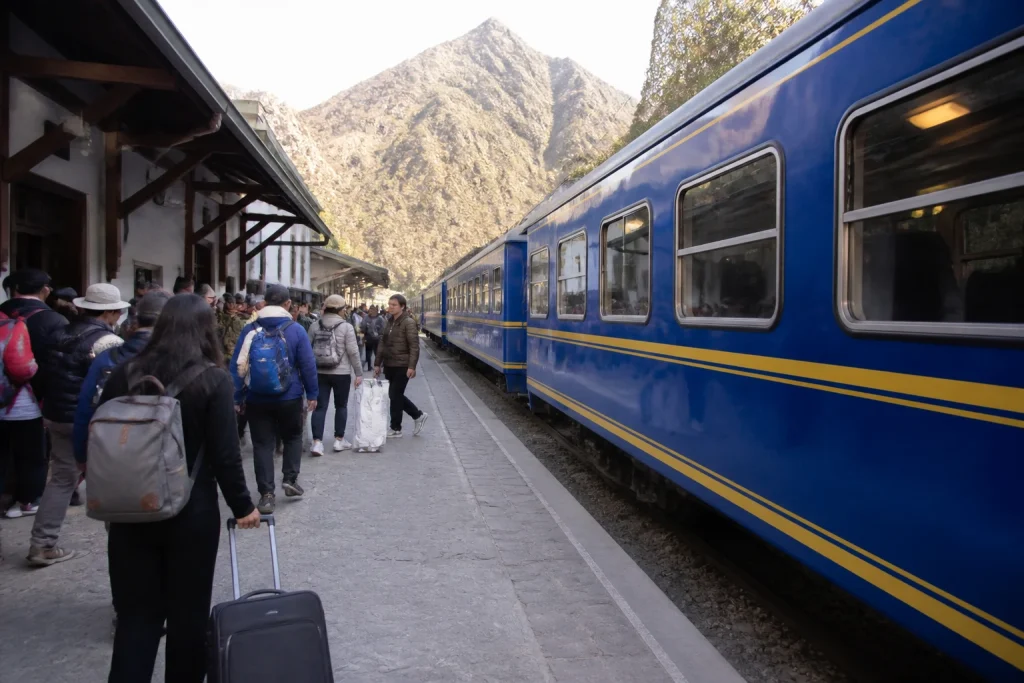
A same-day journey can work when the admission time aligns with a suitable outbound train and you have enough margin for the transfer to the citadel. It can also suit travelers who prefer to return to Ollantaytambo rather than change hotels. The itinerary is less forgiving because several separately managed parts must line up.
| Plan | Best suited to | Main advantage | Main limitation |
|---|---|---|---|
| Arrive the previous day | Early or tightly scheduled Machu Picchu entry | You begin the visit from Aguas Calientes instead of relying on a same-morning train | Requires another hotel night |
| Travel and return the same day | Later entry with compatible rail times | Avoids changing hotels | Offers less margin between transport, entry, and return arrangements |
| Visit, then stay overnight | Travelers who do not want a late return to Ollantaytambo | Removes the need for an onward transfer after the visit | Adds a night before returning to the Sacred Valley |
If you stay in the valley immediately before or after the rail trip, a guide to lodges, hotels, and villages in the Sacred Valley can help you choose a base. Ollantaytambo is the most directly connected option in this itinerary because it is the documented rail departure and return point.

Machu Picchu Guided Tour from Aguas Calientes
The Incan site of Machu Picchu is a UNESCO World Heritage Site. It is one of the most famous places in the world. It...

Machu Picchu Shuttle Bus Round-Trip Tickets from Aguas CalienteS
Travel worry-free aboard the official CONSETTUR shuttle bus, the only authorized transportation between Aguas Calien...

Machu Picchu Shuttle Bus Round Trip from Aguas Calientes
Travel worry-free with the official CONSETTUR shuttle bus, the only authorized transport between Aguas Calientes and...
When the overnight plan is worth it
Choose the overnight plan when protecting your entry time matters more than minimizing hotel changes. It is especially sensible when the available Machu Picchu ticket falls early in the day or when you do not want the archaeological visit to depend on an early rail departure operating exactly as scheduled.
An overnight stay does not remove every timing issue. You still need to coordinate the town-to-citadel transfer, your assigned entry, and the return train. It simply separates the arrival in Aguas Calientes from the morning of the visit, giving the itinerary fewer moving parts at once.
When a day trip can make sense
A day trip is a reasonable option when your entry time, outbound rail service, transfer plan, and return train form a comfortable sequence. Avoid judging the plan by rail duration alone. Arrival in Machu Picchu Pueblo is not the same as arrival at the entrance assigned on your ticket.
Also consider what happens after the return to Ollantaytambo. A late train can leave little margin for reaching another hotel, completing a separate transfer, or preparing for an early departure the next day. A workable rail return is not automatically a comfortable end to the day.
Build the Reservations in a Low-Risk Order
The most dependable itinerary is built around the least flexible reservation. In this case, that is usually the specific Machu Picchu circuit and entry time. Rail services offer multiple departures, but a train ticket cannot substitute for admission to the site.
- Check Machu Picchu availability for your intended date.
- Choose the exact circuit, route, and entry time.
- Decide whether to sleep in Aguas Calientes before or after the visit.
- Compare dated trains between Ollantaytambo and Machu Picchu Pueblo.
- Leave time between rail arrival, the citadel transfer, and timed entry.
- Select a return departure that works with your lodging and onward transport.
- Review the final confirmation for check-in instructions and baggage conditions.
Protect the return connection
The May through December 2026 PeruRail timetable shows many departures from Machu Picchu Pueblo to Ollantaytambo, ranging from 05:35 through 21:50. The last listed service arrives in Ollantaytambo at 23:37. This range makes a same-day return possible in principle, but the latest service leaves little room for plans after arrival.
Choose the return by working backward from where you need to sleep, not merely by selecting the latest available train. If another transfer is involved, allow a useful buffer and make sure the final leg still operates at the hour you expect to arrive. Operational rail changes are another reason to avoid a schedule with no spare time.
Treat Walk-Up Admission as a Next-Day Contingency
The Machupicchu authority states that up to 1,000 tickets are sold daily in person at the cultural center in Machu Picchu Pueblo, subject to capacity. An in-person purchase is for entry the following day, not later on the same day.
This makes local ticketing a contingency for travelers who can remain in Aguas Calientes, not a reliable foundation for a fixed day trip. It also does not guarantee the circuit or time you prefer. If your rail, hotel, and onward travel are already dated, advance admission gives the rest of the itinerary a firm anchor.
Daily capacity rules explain why flexibility can disappear even when in-person sales exist. Ticket allocations, seasonal capacity, and route availability are managed within the visitor system. Do not equate a published maximum for walk-up sales with guaranteed inventory on your arrival date.
Still comparing Aguas Calientes Travel From The Sacred Valley To Machu Picchu?
Ask for tour ideas, hotel suggestions, or a simple trip plan that combines both.
Trip Helper
Budget for Separate Tickets and Variable Prices
There is no useful fixed all-in price for this journey. Rail transport, Machu Picchu admission, lodging when needed, and the transfer between Machu Picchu Pueblo and the citadel are separate components. The total depends on the travel date, selected service, admission choice, traveler eligibility, and whether you stay overnight.
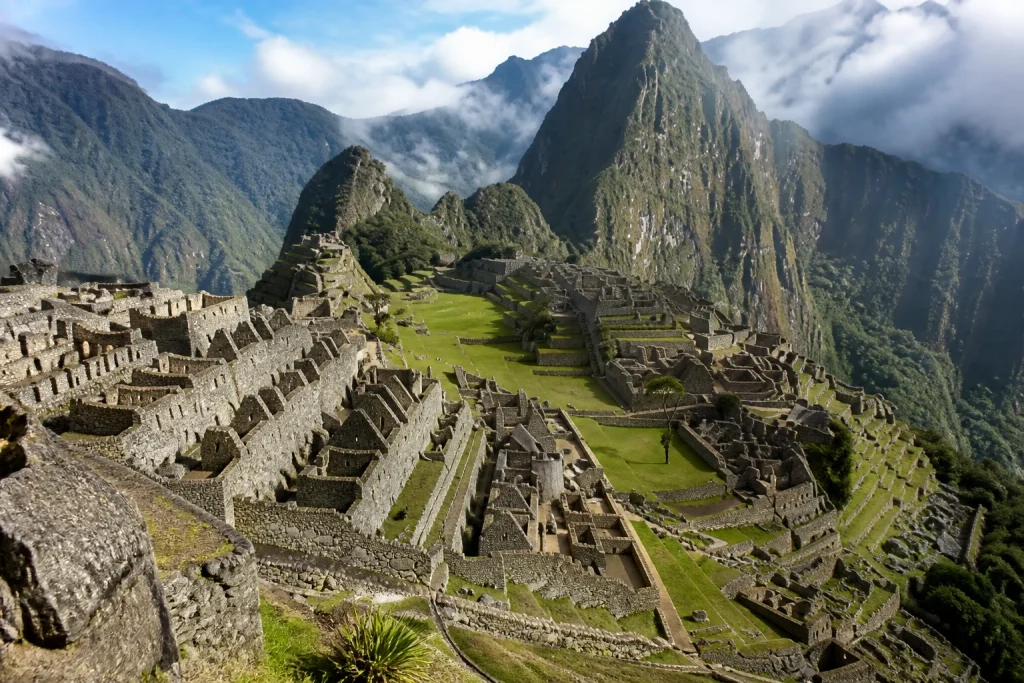
- Travel within the Sacred Valley to reach Ollantaytambo
- Outbound rail ticket to Machu Picchu Pueblo
- Machu Picchu circuit and timed admission
- Transfer between Machu Picchu Pueblo and the citadel
- Return rail ticket to Ollantaytambo
- Aguas Calientes lodging if using an overnight plan
- Onward transport and lodging after returning to the Sacred Valley
Use live operator and state-ticket checkouts for your exact date rather than relying on a generic package estimate. Compare the full sequence before paying. A lower rail fare is not helpful if its departure forces another hotel night or cannot be paired with your available entry time.
Fare rules can also depend on service and eligibility. Keep each reservation in its own line of the budget so you can see what is included and what remains separate. This is particularly important when comparing a self-planned journey with a bundled tour or transport arrangement.
Travel Light and Confirm Mobility Assistance Early
Inca Rail's published terms limit standard carry-on luggage to 8 kilograms, or 17 pounds. Do not apply that rule automatically to every operator or service. Check the allowance attached to the train you select, especially if Aguas Calientes falls in the middle of a longer Peru itinerary.
The simplest approach is to take only what you need for the rail segment and arrange larger luggage separately when required. Confirm additional-bag arrangements before purchase rather than arriving with luggage that exceeds the selected service's standard allowance.
Travelers who need mobility assistance should confirm arrangements directly with the chosen operator before booking. Do not assume step-free access across the train, stations, Aguas Calientes, the citadel transfer, or a particular Machu Picchu circuit. The complete journey involves several separately managed stages, so assistance needs to be considered across the full route.
- Check the luggage allowance for the exact rail service.
- Arrange additional bags before travel if needed.
- Confirm mobility assistance for each transport stage.
- Choose a Machu Picchu circuit appropriate to your requirements.
- Keep admission, rail, lodging, and transfer confirmations easy to access.
Sample Plans From the Sacred Valley
Plan A: Arrive in Aguas Calientes the previous day
- Begin with a confirmed Machu Picchu circuit and entry time.
- Choose a train from Ollantaytambo on the day before admission.
- Follow the operator's current check-in and luggage instructions.
- Stay overnight in Machu Picchu Pueblo.
- Complete the town-to-citadel transfer with enough time for your assigned entry.
- Return to Aguas Calientes and take a train that fits the next stage of your Sacred Valley itinerary.
This plan suits travelers who want to reduce the number of connections before a morning visit. Its main limitation is the extra hotel night. Its strength is that the rail journey and archaeological entry happen on different days, making the sequence easier to manage.
Plan B: Travel and return on the same day
- Secure a Machu Picchu entry that can be matched with a suitable train.
- Select an early enough Ollantaytambo departure without creating a tight arrival margin.
- Include time for the transfer between town and the citadel.
- Complete the circuit assigned to your ticket.
- Return to Machu Picchu Pueblo for the chosen train to Ollantaytambo.
- Leave enough time after rail arrival for the final transfer to your lodging.
This plan saves a hotel change but demands stronger coordination. It works best with a compatible entry time and dependable arrangements after the return to Ollantaytambo. If the schedule depends on the final train and an immediate onward transfer, an overnight plan is usually the more resilient choice.

Machu Picchu Entrance Ticket Official Circuits
Discover the wonders of Machu Picchu with an official entrance ticket that allows you to explore this ancient Inca c...

Official Machu Picchu Entrance Ticket
Secure your visit to Machu Picchu with this official entrance ticket to one of the New Seven Wonders of the World. E...

Machu Picchu Circuit 2 Guided Tour
Explore the wonders of Machu Picchu via the official Circuit 2 route, known for its stunning views and historical si...
Make Aguas Calientes Fit the Entry Time
The best Aguas Calientes itinerary begins with one decision: the exact Machu Picchu entry you can secure. Build outward from that reservation to the town transfer, outbound train, overnight stay, return train, and Sacred Valley lodging. This order turns a chain of separate bookings into a workable schedule.
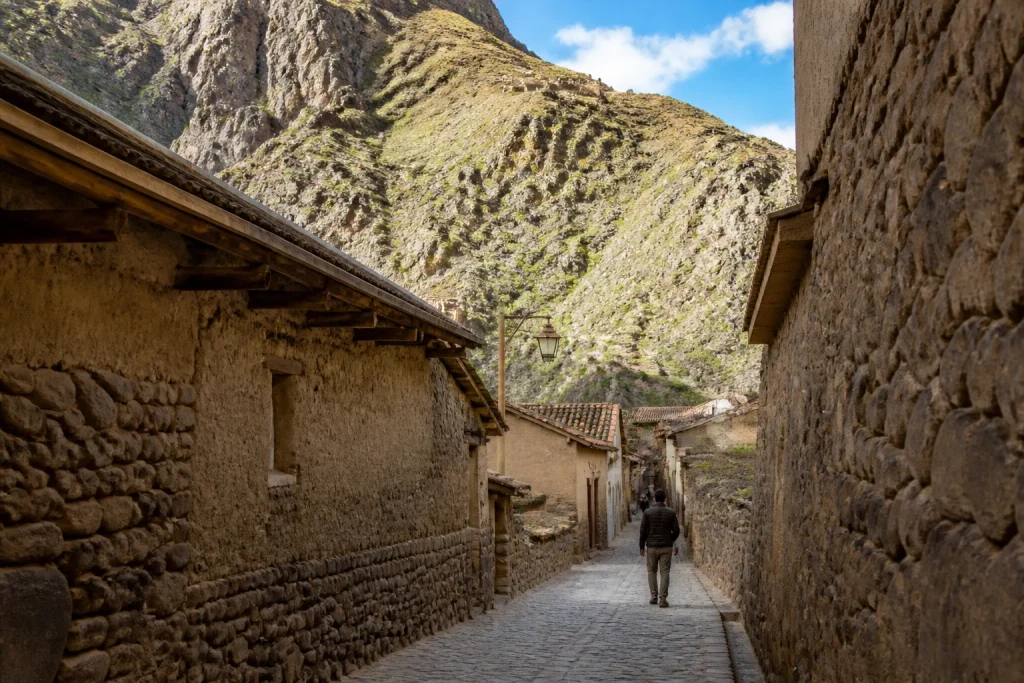
Stay overnight when an early entry or narrow connection makes timing the priority. Choose a same-day return when the admission and rail schedules leave comfortable margins on both sides. In either case, check the live timetable, travel with the correct baggage allowance, and avoid relying on next-day walk-up admission for a fixed itinerary.
Frequently asked questions
How do you get to Aguas Calientes from the Sacred Valley?
Take a train from Ollantaytambo to Machu Picchu Pueblo, the official name for Aguas Calientes. Ollantaytambo is the clearly documented Sacred Valley rail departure point, with multiple services listed in the current timetable. Check the live operator schedule because times and availability can change.
How long is the train from Ollantaytambo to Aguas Calientes?
One early service in PeruRail's May through December 2026 timetable takes 1 hour 32 minutes, departing Ollantaytambo at 05:05 and arriving at 06:37. That is an example rather than a universal duration, so use the live schedule for your selected train.
Should I stay overnight in Aguas Calientes?
Stay overnight if you have an early or tightly scheduled Machu Picchu entry. Being in town before the visit removes the same-morning rail journey from your schedule. A same-day return can work with a later compatible entry and enough margin for every transfer.
Should I book the train or Machu Picchu ticket first?
Book the Machu Picchu circuit and timed entry first. Admission is managed separately from the trains, and an available rail service does not guarantee that a compatible circuit or entrance time remains available.
Can I buy a Machu Picchu ticket in Aguas Calientes?
Yes, but an in-person ticket is for entry the following day, not the same day. The authority states that up to 1,000 tickets are sold daily at the local cultural center, subject to capacity. Treat this as a contingency rather than a guaranteed plan.
Can I visit Machu Picchu and return to the Sacred Valley on the same day?
Yes, a same-day return is possible when the entry time and rail schedule align. The current timetable lists numerous return departures to Ollantaytambo, but a late arrival can leave little margin for onward transfers or hotel check-in.
How much does the trip from the Sacred Valley to Aguas Calientes cost?
The total varies because rail tickets, Machu Picchu admission, the town-to-citadel transfer, and any lodging are separate components. Use live operator and state-ticket checkouts for the exact date, service, circuit, and traveler eligibility rather than relying on a fixed all-in estimate.
How much luggage can I take on the train?
Inca Rail's published standard carry-on limit is 8 kilograms, or 17 pounds. Allowances and additional-bag arrangements can be service-specific, so review the conditions for the exact operator and ticket before traveling.
Is the journey accessible for travelers with limited mobility?
Accessibility arrangements should be confirmed before booking. Check assistance across the complete route, including the selected train, stations, Aguas Calientes, the citadel transfer, and the Machu Picchu circuit assigned to the ticket.
Aguas Calientes serves as the rail gateway for timed visits to Machu Picchu by David Berkowitz, CC BY 2.0.
Machu Picchu Private Tour from Aguas Calientes (Tickets included)
Discover Machu Picchu at your own pace with our exclusive Private Guided Tour from Aguas Calientes. Perfect for independent travelers who prefer arran...
Machu Picchu Guided Tour from Aguas Calientes
The Incan site of Machu Picchu is a UNESCO World Heritage Site. It is one of the most famous places in the world. It...

Machu Picchu with Tickets and Lunch
This Machu Picchu tour with entrance tickets begins with a pick up from your hotel or train station. Then we will ta...

Machu Picchu Official Entry Ticket
Discover the wonder of Machu Picchu with an official entrance ticket. Choose from several official circuits, each of...