Sacred Valley Cooking Classes Guide
Plan a Sacred Valley cooking class with practical advice on Ollantaytambo and Urubamba locations, class formats, published price examples, transport, dietary needs, and booking checks.
 Visit Sacred Valley
October 4, 2026
Visit Sacred Valley
October 4, 2026
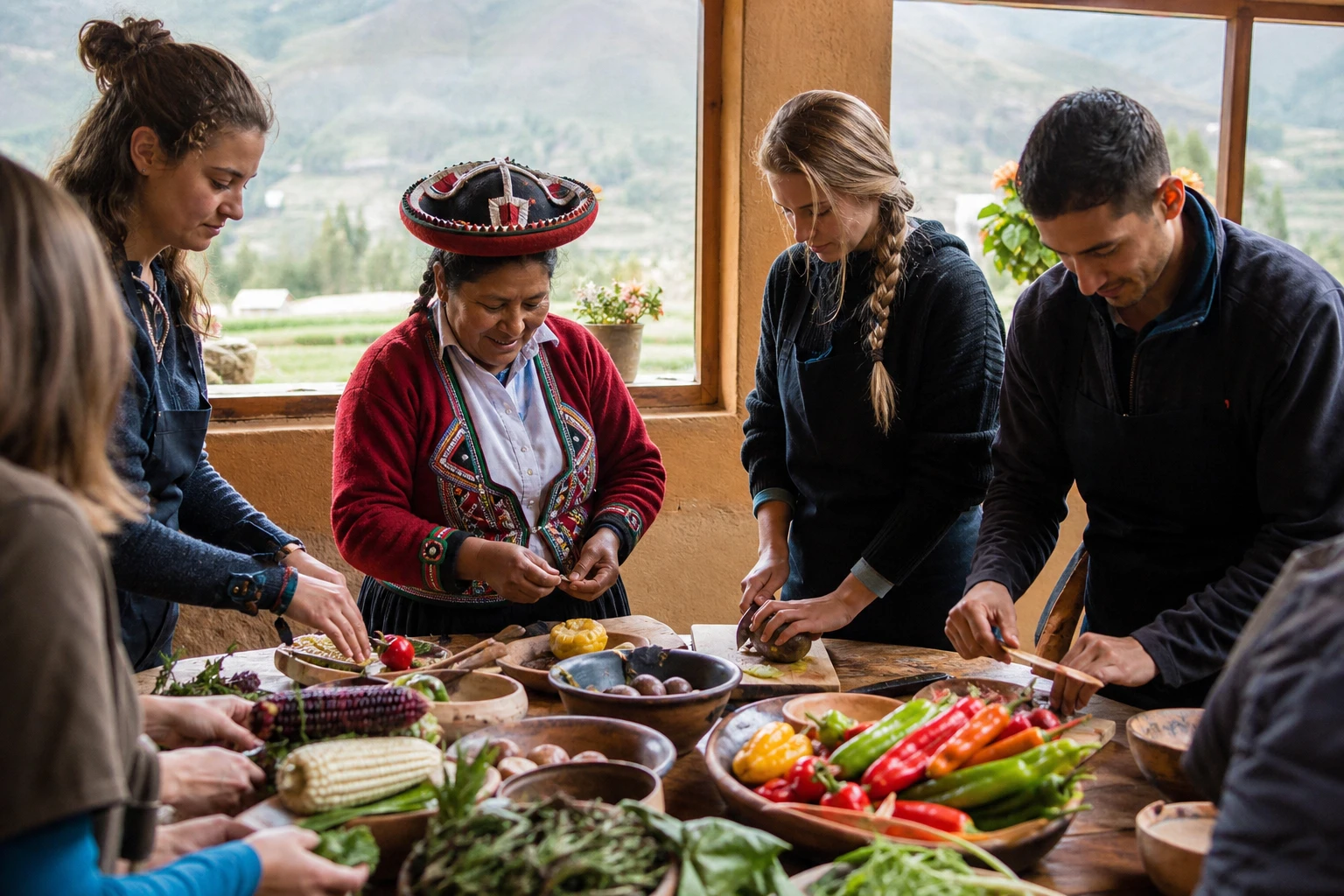
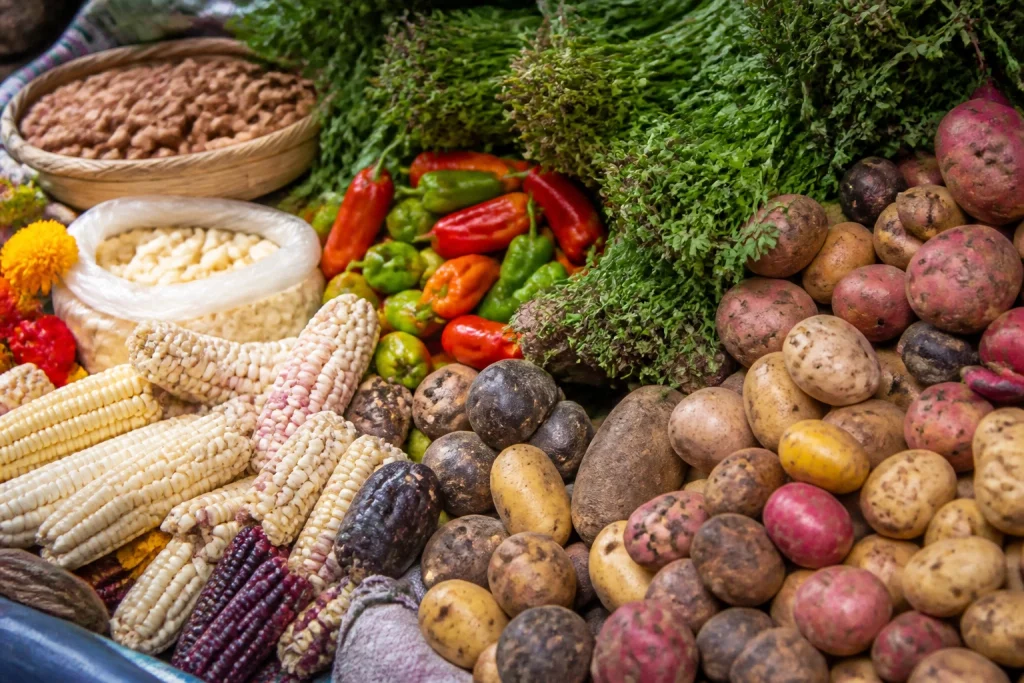
A Sacred Valley cooking class is most rewarding when it introduces the food of the Andes rather than offering a generic Peruvian menu. Corn, potatoes, cassava, cheese, peppers, peanuts and herbs are foundations of highland cuisine. Traditional techniques include cooking in earthen pots and over wood fires, though each operator sets its own menu and method.
- Choose a class near your overnight base: Ollantaytambo, Urubamba, and the road corridor between them are distinct locations.
- Pick the format first: a small-group market visit and hands-on class has a different feel from a hotel-based culinary experience.
- Compare the complete door-to-door cost, including transfers and inclusions, rather than relying on a single headline price.
- Keep the activity as a dedicated part of the day, especially if you have a train, ruins visit, or road transfer planned.
- Confirm the meeting point, market walking, menu, dietary handling, language, weather policy, and cancellation terms before paying.
Look for an Andean food story in the menu
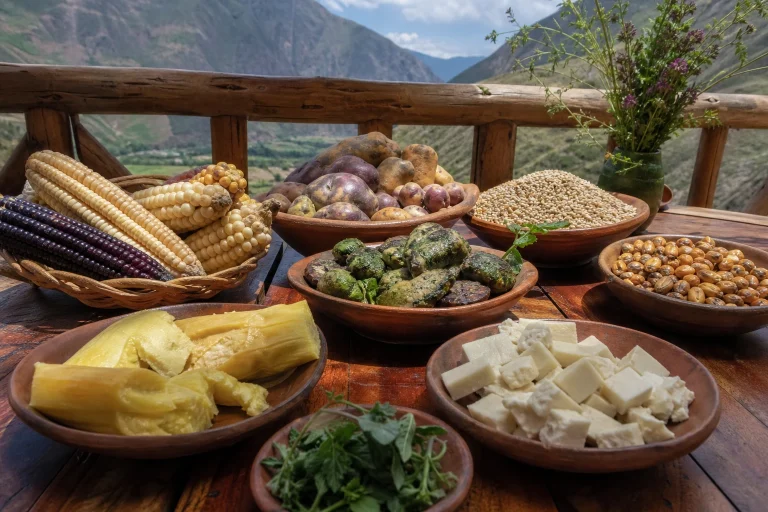
The regional reference points are useful when comparing class descriptions. Pachamanca, humitas, cancha, and highland soups belong to the wider Andean food vocabulary, while the core ingredients often appear in changing combinations. A strong class description should make clear what you will prepare and eat instead of relying on broad promises about “Peruvian cuisine.”

The Best Private Sacred Valley Tour in Cusco ( with Pisac)
We know very well each place of this tour, since we have been grown in this area and we studied over 3 years to get a guide license. as well, our vehi...

From Urubamba & Ollantaytambo: Sacred Valley Day tour with Lunch
Explore the best and most unique sites in the Sacred Valley on a private tour. Visit the impressive ruins of Ollanta...

Machu Picchu Private Tour from Aguas Calientes (Tickets included)
Discover Machu Picchu at your own pace with our exclusive Private Guided Tour from Aguas Calientes. Perfect for inde...

Machu Picchu 2Day Tour by Train from Cusco with Overnight Stay
Our tour guides at Machu Picchu are incredibly passionate about storytelling and are committed to creating unforgett...
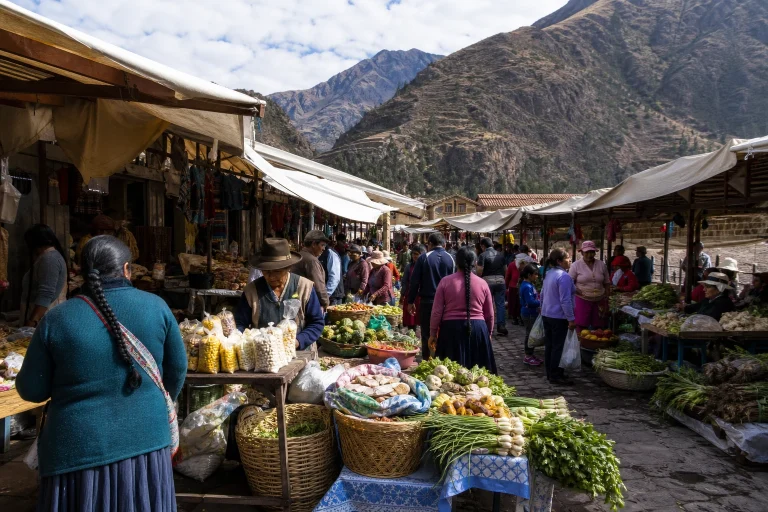
Market-focused classes add context before the chopping begins. They can connect a recipe to the produce and pantry staples used in the valley, while a kitchen-only session may suit travelers with tighter schedules or less interest in walking through a market. Ask for the planned dishes in advance if a particular regional preparation matters to you.
Choose the class format that suits your trip
The available examples point to two distinct experiences. One centers on a small group, a local market, and hands-on cooking in Ollantaytambo. Another is a participatory class at a luxury hotel along the Urubamba-Ollantaytambo road. Neither format is automatically better. The useful choice depends on how much you value market context, setting, service level, and transport simplicity.
Small-group market and kitchen experience in Ollantaytambo
Awamaki presents its Ollantaytambo cooking class as a hands-on, small-group experience that starts with a local-market visit and continues with a local chef and guide. This format is a strong fit for travelers who want food shopping and cultural exchange to be part of the activity, not simply a meal prepared in a hotel kitchen.
A premium hotel-based class near Urubamba
Belmond's Rio Sagrado lists its participatory Roots cooking class at kilometer 75.8 on the Urubamba-Ollantaytambo road. It is offered daily on request at 12:00, requires advance booking and at least two participants, and is weather-dependent. The published rate is US$130 per person. Ask before booking if the class is available to non-hotel guests and what transfers, drinks, substitutions, and cancellation terms include.
| Format | Best for | Known details to compare |
|---|---|---|
| Market and hands-on class in Ollantaytambo | Travelers who want a market visit and small-group instruction | Awamaki includes a local-market visit, local chef, and guide; confirm timing, price, and transport. |
| Hotel-based Roots class near Urubamba | Travelers seeking a premium setting and a fixed published benchmark | Advance booking, noon on request, two-person minimum, weather-dependent, US$130 per person. |
| Marketplace-listed cooking class | Travelers comparing lower displayed prices | Read the current listing for duration, group size, meeting point, and inclusions before booking. |
Book close to your overnight base
Treat Ollantaytambo and Urubamba as separate bases when choosing a cooking class. A booking that looks convenient on a map can become awkward if it starts in Ollantaytambo while you are sleeping in Urubamba, or the other way around. One marketplace listing for Awamaki specifically says it does not transfer guests to Ollantaytambo from Cusco or Urubamba.
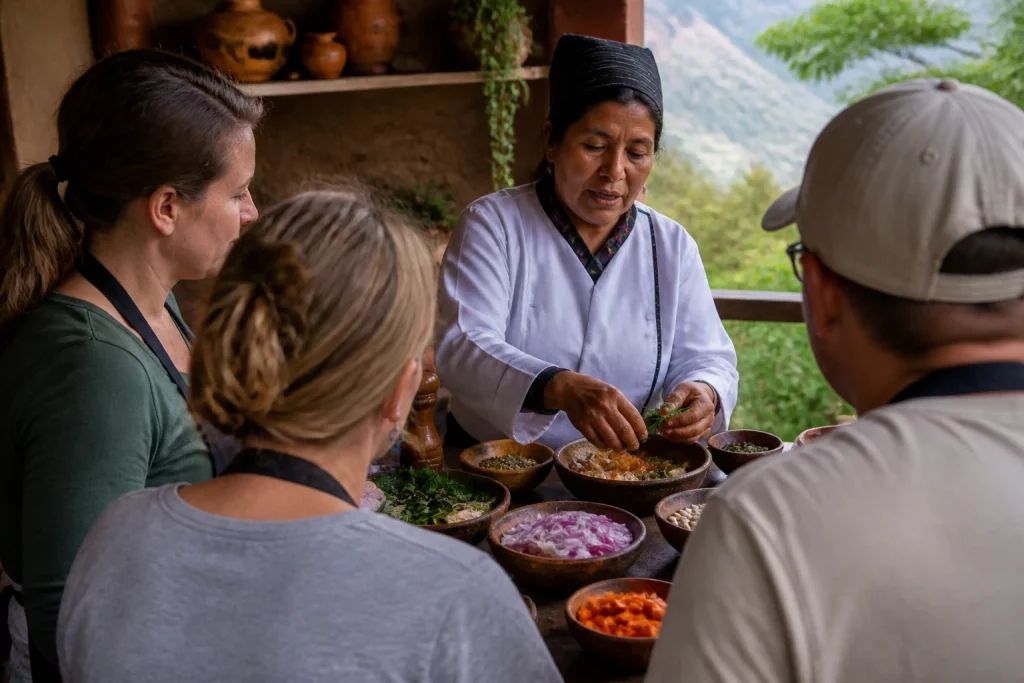
Start with the place you will sleep, then find the class nearby. A guide to Sacred Valley lodges, hotels and villages can help shape that decision before you commit to an activity. Confirm both the meeting point and return point, rather than assuming a hotel pickup or a drop-off somewhere else in the valley.
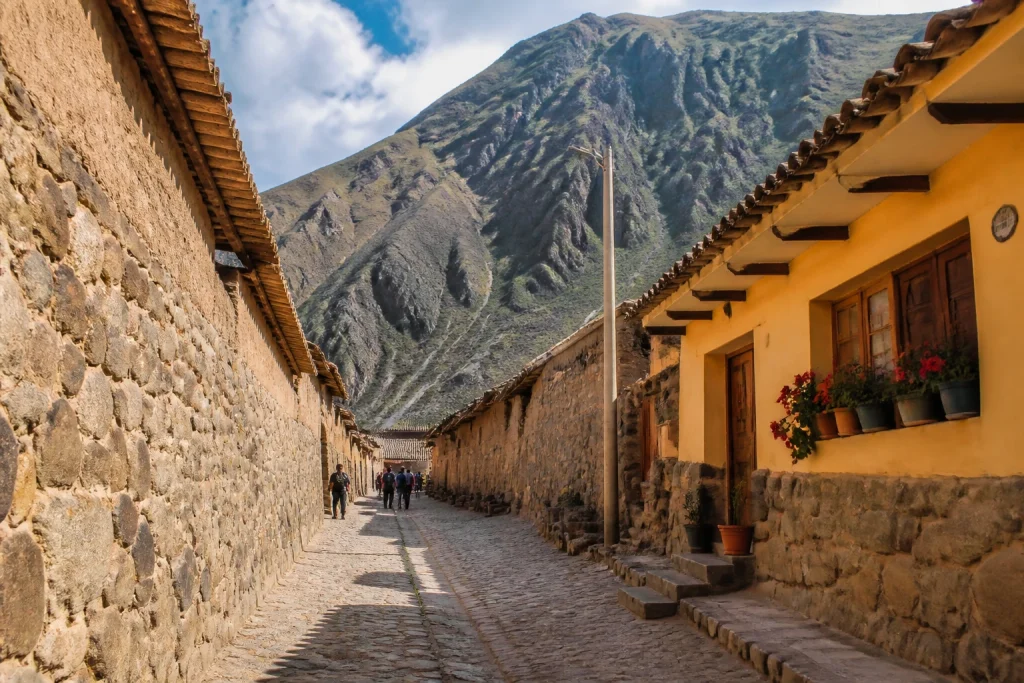
For travelers based in Ollantaytambo, a class can sit neatly beside time in Ollantaytambo's living Inca town. Keep the two experiences in the same part of the valley instead of treating a cooking class as a quick detour from a different base. This approach preserves time for the activity itself and reduces dependence on road transfers.
Protect time for the class and the journey around it
Reserve a cooking class as a dedicated half-day activity until the operator confirms the exact schedule. Belmond's noon session is the only specifically published start time among the sourced examples. Other classes may have different schedules, market sequences, and durations, so avoid building a tightly timed plan around an unconfirmed start or finish.
Do not schedule a class too close to a fixed departure. This matters especially for travelers using Sacred Valley trains to Machu Picchu, where an activity running late can affect the rest of the day. Check the class confirmation before locking in transport, archaeological visits, or a change of hotel.
Compare prices by inclusions, not by one advertised number
Sacred Valley cooking class prices do not support a single “typical” rate. Published examples include a three-hour Ollantaytambo listing from US$68, a displayed Awamaki marketplace price of S/240.58 per adult, and Belmond's US$130-per-person Roots class. These are listing examples, not a market average, and availability, dates, and inclusions can change.
| Published example | Displayed price | Important context |
|---|---|---|
| Ollantaytambo cooking class listing | From US$68 | Listed as a three-hour class; check the current date, inclusions, and meeting arrangements. |
| Awamaki marketplace listing | S/240.58 per adult | The displayed listing noted a maximum of six travelers and no transfer from Cusco or Urubamba. |
| Belmond Roots class | US$130 per person | Advance booking, two-person minimum, noon on request, and weather-dependent. |
The difference can reflect more than the food on the plate. Location, group size, a market component, setting, service level, and transfers all affect value. Compare what it takes to reach the class, what happens during it, and what is included afterward. A lower price loses its advantage if it adds a costly or time-consuming transfer.
Still comparing Food Tours?
Ask for tour ideas, hotel suggestions, or a simple trip plan that combines both.
Trip Helper
Use this booking checklist before paying
A few focused questions prevent most avoidable surprises. Exact inclusions vary by provider, and the essential details are often more useful than a polished menu description. Check the confirmation once you book, particularly if a train, hotel move, or privately arranged driver is part of the same day.
- Confirm the exact meeting point, return point, and whether pickup from Cusco, Urubamba, or your hotel is included.
- Ask for the start time, total duration, market visit details, walking requirements, and language used for instruction.
- Check the minimum and maximum group size. Belmond lists a two-person minimum, while one Awamaki marketplace listing stated a maximum of six travelers.
- Request the planned menu and discuss vegetarian, vegan, allergy, and cross-contact needs before committing.
- Review the weather policy, cancellation cutoff, non-hotel guest access, and any transfer conditions.
Address dietary needs and mobility requirements early
Do not assume a cooking class is allergy-safe, vegan-ready, or step-free. Ask for practical details in writing: the menu substitutions possible, cross-contact procedures, number of steps, kitchen-counter height, seating during cooking, transport access, market walking distance, toilet access, and whether the market portion can be skipped. These specifics matter more than a broad claim of flexibility.
Market visits deserve particular attention for travelers who tire easily or use mobility aids. A provider may be able to adapt an experience, but that decision depends on the actual route, surfaces, kitchen layout, and planned menu. Make the request before payment, when there is still time to choose a class that fits your needs.
Leave flexibility for weather and road disruptions
Build a buffer around any class that requires a road transfer. Peru's transport ministry maintains a road-status map for national routes, including routes affected by disruptions such as huaicos and landslides. Protests, demonstrations, and strikes can also disrupt transport in Peru, including journeys connected with Machu Picchu. Check current road conditions shortly before traveling and avoid a schedule with no recovery time.
Use normal city and road vigilance while traveling around the valley, and avoid protests. U.S. travel advice rates Peru at Level 2 because of crime, civil unrest, and kidnapping risk, while noting that Cusco city, the Sacred Valley, the Inca Trail, and Machu Picchu sit outside its specified affected Cusco areas. Australian advice separately recommends a high degree of caution across Peru.
Who will get the most from a Sacred Valley cooking class?
This experience suits travelers who want to slow their itinerary long enough to understand local ingredients and cooking traditions. The market-and-kitchen format is especially appealing if you are staying in Ollantaytambo, while the hotel-based option offers a more structured premium benchmark near Urubamba. The main limitation is logistics: location, pickup, and timing can matter as much as the recipe.
Choose your base, select the class format that fits it, and confirm the practical details before paying. A cooking class works best when it has room to breathe between road transfers and fixed departures. With that simple planning, it can become one of the most grounded ways to engage with the Sacred Valley's food culture.
Frequently asked questions
Are there cooking classes in Ollantaytambo?
Yes. Awamaki offers a hands-on small-group cooking experience in Ollantaytambo that begins with a local-market visit and continues with a local chef and guide. Confirm the current start time, duration, price, and meeting arrangements when booking.
How much do Sacred Valley cooking classes cost?
Published examples vary considerably. Marketplace listings have shown an Ollantaytambo class from US$68 and an Awamaki listing at S/240.58 per adult, while Belmond's Roots class is published at US$130 per person. Compare current inclusions and transport before deciding.
Do cooking classes include transport from Cusco or Urubamba?
Do not assume transfers are included. One Awamaki marketplace listing specifically states that it does not transfer guests to Ollantaytambo from Cusco or Urubamba. Confirm the exact pickup and return points with every provider before booking.
How long should I allow for a Sacred Valley cooking class?
Allow a dedicated half-day until the provider confirms the schedule. Belmond publishes a noon session on request, but the other sourced options do not have a confirmed universal duration or start time, and market visits or transfers can add time.
Can a Sacred Valley cooking class accommodate dietary or mobility needs?
Accommodation depends on the individual provider and should be arranged before booking. Ask about menu substitutions, allergens and cross-contact, steps, seating, counter height, market walking distance, transport access, and the option to skip a market visit.
Can I combine a cooking class with travel to Machu Picchu?
Yes, but leave a generous buffer around any fixed departure. Confirm the class start and finish time first, then plan your transport around it. Road disruptions and strikes can affect travel, so avoid packing the day too tightly.

Machu Picchu Private Archaeological and Historical Guided Tour
Explore Machu Picchu, one of the Seven Wonders of the World, in the company of a private guide. Enjoy the undivided attention of your professional tou...

Machu Picchu Guided Tour with Local Expert – 2 or 3 Hour Service
Discover Machu Picchu with a professional local guide who will bring the Inca citadel to life through history, cultu...

Machu Picchu Private Guided Tour (No Ticket)
The guide will be exclusively for you or your group, the tour is along the circuit indicated on your ticket. The gui...

From the Sacred Valley: Salt Mines & Moray - Private tour
As a company based in the Sacred Valley, we are true specialists in the region, enabling us to provide a more person...