Sacred Valley by Night Guide
Plan a smooth Sacred Valley evening with daylight ruin hours, Ollantaytambo train connections, overnight base advice, road cautions, tickets, and access tips.
 Visit Sacred Valley
August 16, 2026
Visit Sacred Valley
August 16, 2026
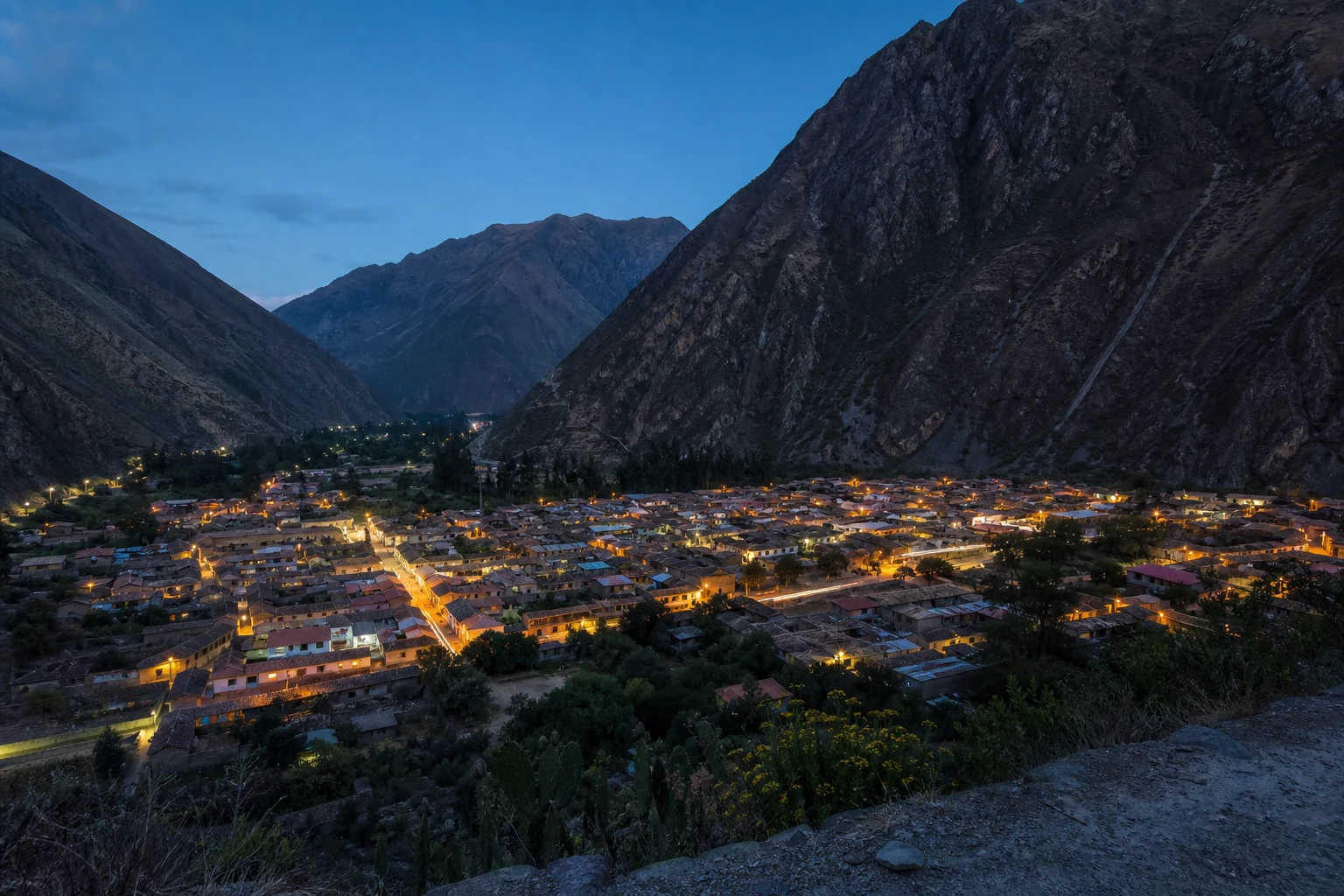
A Sacred Valley evening is best planned as an overnight strategy, not as a hunt for archaeological sites after dark. The valley’s headline ruins close before night, but a well-timed stay can simplify a train connection, remove a late road transfer, and give the next day a calmer start. Ollantaytambo is the key decision point for many Machu Picchu itineraries because it combines lodging with rail access.
Build the night around one fixed plan
Choose the one evening commitment that cannot move, usually a lodging check-in or a rail departure, then build the rest of the day backward from it. This approach keeps daylight for archaeological visits and gives you room to respond if road access or station connections take longer than expected.

From Urubamba & Ollantaytambo: Sacred Valley Day tour with Lunch
Explore the best and most unique sites in the Sacred Valley on a private tour. Visit the impressive ruins of Ollantaytambo, an ancient Inca fortress...

Sacred Valley Tour: Pisac, Maras, Chinchero & Ollantaytambo
Explore the best of Peru’s Sacred Valley on a private full-day tour designed for a personalized and comfortable ex...

Machu Picchu 2Day Tour by Train from Cusco with Overnight Stay
Our tour guides at Machu Picchu are incredibly passionate about storytelling and are committed to creating unforgett...
- Treat Ollantaytambo and Moray as daytime visits, since their normal visiting hours end before nightfall.
- Use Ollantaytambo as an overnight base when a rail connection makes a late transfer unnecessary.
- The published May to December 2026 PeruRail timetable includes evening departures from Ollantaytambo, but operational changes can affect connections.
- Leave substantial buffer time for Ollantaytambo access, especially on a day with a train or Circuit III archaeological parks.
- Avoid treating a long after-dark road transfer as a casual default; make the last road leg before dark where practical.
Keep archaeological visits in daylight
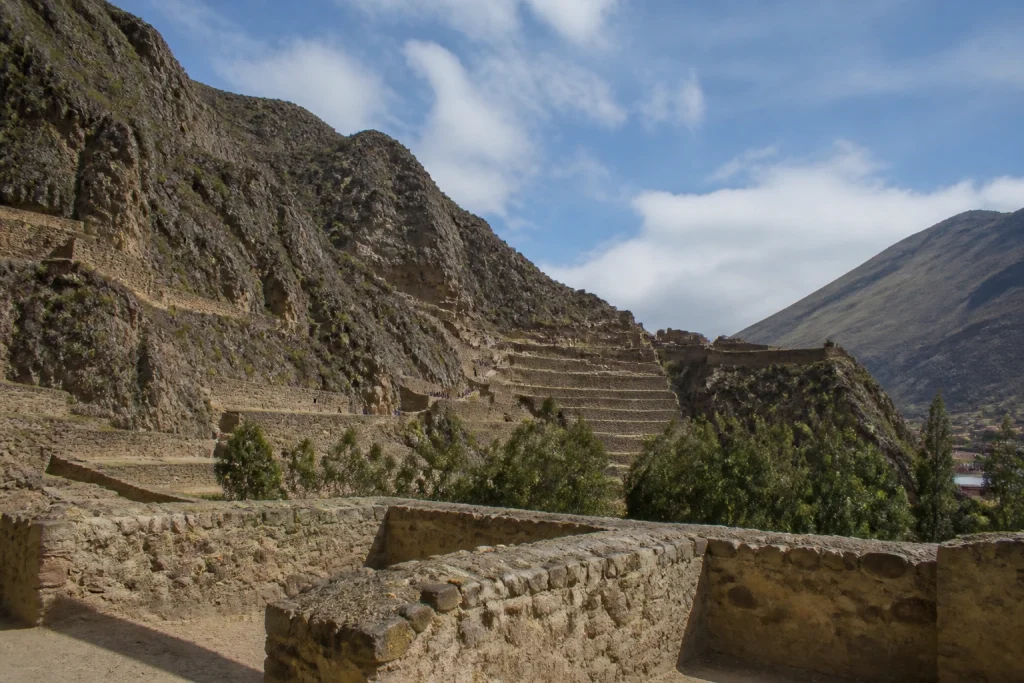
Ollantaytambo’s normal visiting hours are 07:00 to 16:30, while Moray’s are 07:00 to 17:00. Put either stop in the daytime portion of your route and do not confuse an evening train connection with nighttime access to the archaeological park. The night begins after the sightseeing plan is finished.
This simple distinction improves the whole itinerary. A day that tries to squeeze in a late ruin visit, a long transfer, dinner, check-in, and a train leaves little room for normal travel friction. Finish the site that has the earliest closing time first, then let the evening serve your overnight and onward-travel plan.
Choose an overnight base that reduces evening road time
Ollantaytambo is a strong overnight base for travelers using its station, particularly when the alternative is an extra road journey late in the day. Staying there puts the night’s focus on lodging and rail timing rather than another transfer. It also gives travelers time to appreciate Ollantaytambo’s living Inca town as part of the trip, rather than treating it only as a transport stop.
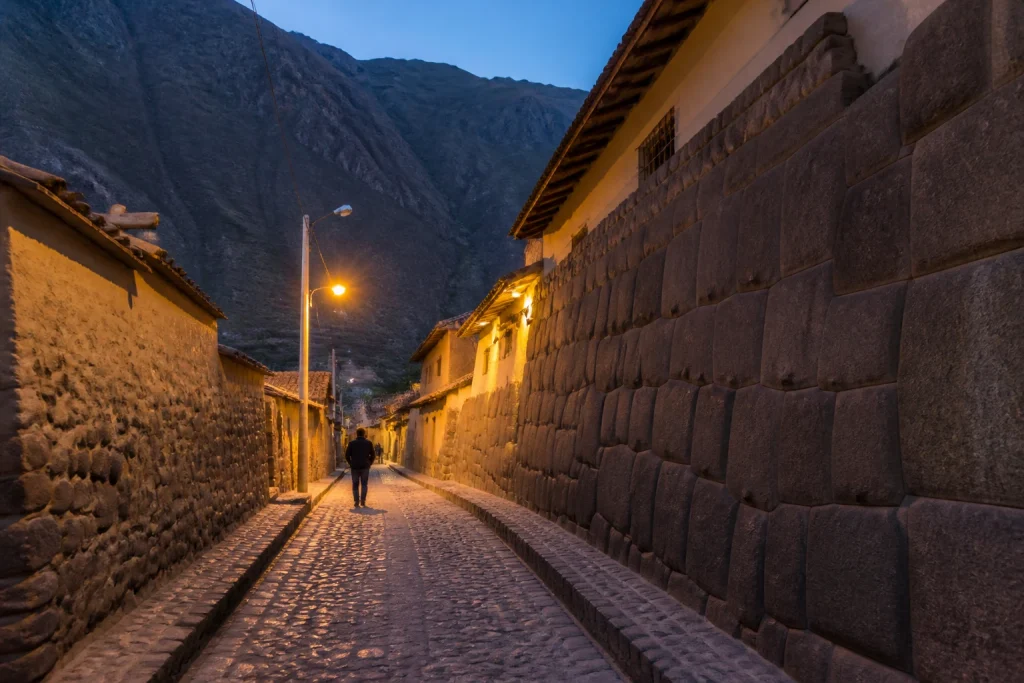
A Cusco-based plan brings access to a wider range of city services, but it can add travel along a corridor where congestion and mobility problems have recently affected visitors headed toward Circuit III sites. For an early or tightly timed onward connection, weigh the convenience of your preferred accommodation against the value of removing a final evening road leg.
Select accommodation according to the following morning’s departure point, not only the day’s sightseeing map. A guide to where to stay in the Sacred Valley, covering lodges, hotels and villages, can help narrow the choice once you know whether your trip ends near Ollantaytambo station or returns to Cusco.
Use evening trains from Ollantaytambo as connections, not sightseeing
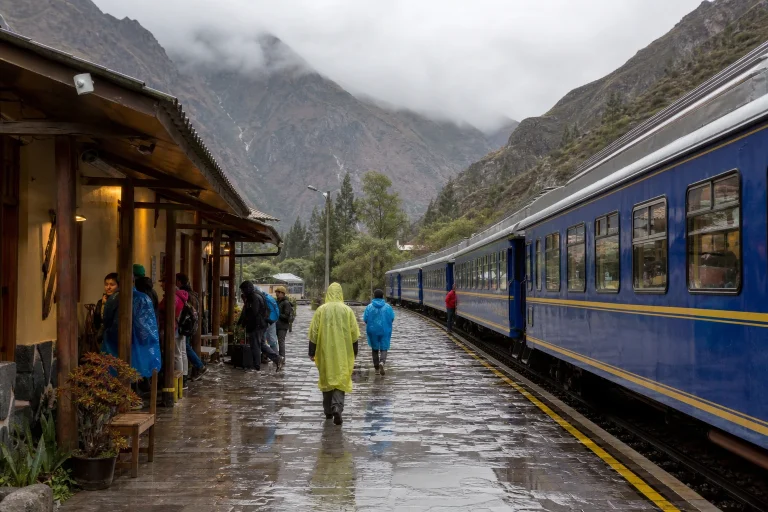
PeruRail’s published May to December 2026 timetable lists two evening departures from Ollantaytambo to Machu Picchu Pueblo: 19:04, arriving at 20:45, and 21:00, arriving at 22:45. These services can make an Ollantaytambo overnight especially useful for travelers continuing toward Machu Picchu, but rail schedules can change for operational reasons.
Keep the hours before departure deliberately light. Have your ticket details, luggage, lodging checkout plan, and station journey settled before the evening. For help comparing operators, consult a PeruRail or Inca Rail comparison of Sacred Valley trains to Machu Picchu, then follow the instructions attached to the ticket you actually hold.
Station access deserves the same attention as the train time. From April 13, 2026, PeruRail announced modifications to bimodal-service schedules and routes used to reach Ollantaytambo station for approximately eight months. Recheck the current departure and access details before travel, and avoid scheduling a close connection between a road arrival and a train.

Machu Picchu Circuit 2 Entry Ticket and Private Official Guide
Can't find Circuit 2 tickets? We have you covered! We exclusively provide the highly-coveted Circuit 2 (Classic Rout...

Machu Picchu Private Archaeological and Historical Guided Tour
Explore Machu Picchu, one of the Seven Wonders of the World, in the company of a private guide. Enjoy the undivided...

Private Guided Tour in Machu Picchu
The guide will be exclusively for you or your group, the tour is along the circuit indicated on your ticket. The gui...
Treat after-dark road travel with care
A long road transfer after dark should not be the casual default in a Sacred Valley itinerary. The U.S. Department of State cites road-safety risks in Peru and restricts nighttime driving by U.S. government employees outside specified exceptions. That policy is not a visitor ban, but it is a useful signal to plan conservatively and complete substantial road travel before dark when possible.
The Sacred Valley is outside the Cusco areas named in that advisory’s do-not-travel notice, yet normal road-risk considerations still apply. Avoid an improvised late transfer after a packed sightseeing day. If a night arrival is unavoidable, keep the plan simple, allow extra time, and make your lodging and transport arrangements clear before you set out.
- Set the final timed event first, such as a train departure or lodging check-in.
- Schedule archaeological parks early enough to respect their daytime closing hours.
- Choose one overnight base instead of adding an unnecessary late transfer.
- Build a buffer before Ollantaytambo station and before any fixed reservation.
- Check current rail access instructions and keep an uncomplicated fallback evening at your accommodation.
Give the daylight itinerary a clear endpoint
The most satisfying Sacred Valley nights follow a day with a defined finish. Visit the archaeological parks while they are open, then stop chasing extra stops once the evening transfer or check-in window begins. For inspiration on structuring the daytime portion, explore the best things to do in the Sacred Valley for first-time visitors, then choose only the stops that fit your fixed overnight plan.
| Part of the day | Best use | Planning priority |
|---|---|---|
| Morning and afternoon | Ollantaytambo, Moray, and other ticketed sightseeing | Work around daytime site hours and avoid a late final stop. |
| Late afternoon | Final transfer or arrival at your overnight base | Leave room for congestion and changing access conditions. |
| Evening | Check-in, a meal, packing, and rail preparation | Keep the schedule light if you have an onward train. |
| Late evening rail | Travel from Ollantaytambo to Machu Picchu Pueblo if booked | Follow the current ticket and station-access instructions. |
Pack for an uncomplicated evening
- Keep train tickets, identification, and accommodation details easy to reach.
- Carry a charged phone and the contact details for your lodging or arranged transport.
- Use a small daypack for essential overnight items if your route involves transfers.
- Bring the clothing you need for the evening forecast rather than relying on a last-minute stop.
- Keep the next morning’s essentials separate so a late arrival does not turn into a luggage search.
Understand which daytime ticket covers the main sites
The Cusco Tourist Ticket is relevant to the daytime part of this itinerary, not to nighttime ruin entry. COSITUC lists the partial Circuit III ticket at S/70, valid for two days and covering Ollantaytambo, Pisaq, Chinchero, and Moray. It also lists a 10-day comprehensive ticket at S/130 for foreign visitors and S/70 for eligible students. Confirm current prices and eligibility when purchasing.
Confirm accessibility arrangements before booking
Do not assume that a particular Sacred Valley site, vehicle, station connection, or lodging has step-free access, wheelchair-ready transfers, accessible toilets, or adapted nighttime transport. Travelers who need specific accommodations should confirm the route and services directly with the attraction, lodging, and transport operator before booking. This is especially important when an itinerary includes a late arrival or a train connection.
Still comparing Sacred Valley Evening Planning?
Ask for tour ideas, hotel suggestions, or a simple trip plan that combines both.
Trip Helper
Keep buffer time for changing access conditions
Ollantaytambo deserves more buffer than a map-based schedule often suggests. On July 16, 2026, Cusco’s regional tourism authority reported vehicle congestion in Ollantaytambo and other mobility problems affecting access to Circuit III archaeological parks. Pair that with the ongoing rail-access modifications and the case for a simple evening becomes clear: avoid stacking tightly timed transfers.
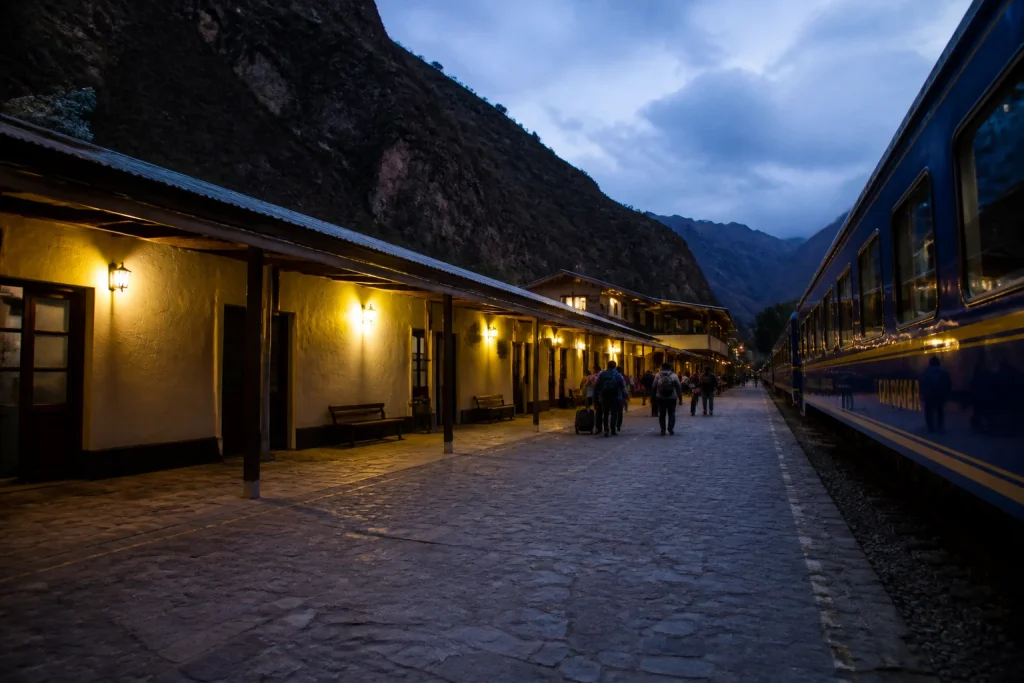
A night in the Sacred Valley works best for travelers who value a smoother connection over squeezing in one more attraction. Finish the ruins in daylight, stay close to the next day’s departure when it makes sense, and leave the evening free for arrival, rest, and rail preparation. Ollantaytambo is particularly compelling when it helps replace a late road journey with an overnight already built around the station.
Frequently asked questions
Can I visit Sacred Valley ruins at night?
No, plan the main archaeological sites for daylight. Ollantaytambo’s normal visiting hours are 07:00 to 16:30, and Moray’s are 07:00 to 17:00, so evening time is better used for lodging, transfers, or rail connections.
Can I take an evening train from Ollantaytambo to Machu Picchu Pueblo?
Yes, PeruRail’s published May to December 2026 timetable lists departures at 19:04 and 21:00, arriving in Machu Picchu Pueblo at 20:45 and 22:45. Check the current timetable and station-access instructions before travel because operations can change.
Should I stay in Ollantaytambo before a Machu Picchu connection?
Ollantaytambo is often the practical choice when your trip uses its station, because it can remove a separate late road transfer. The best option still depends on your lodging preferences, train time, and the rest of your route.
How much is the Sacred Valley tourist ticket?
COSITUC lists the partial Circuit III ticket at S/70 for two days, covering Ollantaytambo, Pisaq, Chinchero, and Moray. It also lists a 10-day comprehensive ticket at S/130 for foreign visitors and S/70 for eligible students, so confirm the current price and eligibility rules when purchasing.
Is driving in the Sacred Valley after dark recommended?
A late road transfer should not be your casual default. Road-safety risks call for a conservative plan, so complete major road travel before dark where practical and avoid packing a long evening drive into an already tight schedule.
Are Sacred Valley attractions and transfers accessible?
Accessibility arrangements need to be confirmed individually before booking. Do not assume step-free access, adapted transport, accessible toilets, or wheelchair-ready evening transfers at every site, lodging, or connection.
From Urubamba & Ollantaytambo: Sacred Valley Day tour with Lunch
Explore the best and most unique sites in the Sacred Valley on a private tour. Visit the impressive ruins of Ollantaytambo, an ancient Inca fortress...
Sacred Valley Tour: Pisac, Maras, Chinchero & Ollantaytambo
Explore the best of Peru’s Sacred Valley on a private full-day tour designed for a personalized and comfortable ex...
Machu Picchu 2Day Tour by Train from Cusco with Overnight Stay
Our tour guides at Machu Picchu are incredibly passionate about storytelling and are committed to creating unforgett...