Moray Archaeological Site Guide
Plan a visit to Moray in Peru’s Sacred Valley with clear advice on tickets, opening hours, transport, altitude, access, site rules, and fitting the remarkable sunken terraces into a Circuit III itinerary.
 Visit Sacred Valley
August 16, 2026
Visit Sacred Valley
August 16, 2026

Moray is one of the Sacred Valley’s most striking archaeological stops: a set of sunken, elliptical terrace complexes in the Mullak’as Misminay community, northeast of Maras. At 3,480 metres above sea level, it combines highland air, bold geometry and a compelling question about how people shaped land for cultivation centuries ago. Go with a little planning and the visit feels far more rewarding than a quick photo stop.
- Moray is open daily from 7:00 a.m. to 5:00 p.m.; plan to arrive with time to spare before closing.
- Admission is through the Cusco Tourist Ticket. For foreign visitors, Circuit III costs S/70 and is valid for two days.
- Buy the Tourist Ticket in person, carry identification, and remember that transport and guiding are separate.
- Moray lies roughly 7 to 9 km from Maras, reached most simply by a drive, pre-arranged transport or an organized Sacred Valley tour.
- The entrance approach is level and offers a view of the site, but a fully step-free archaeological circuit is not confirmed.
Why Moray’s terraces deserve unrushed time
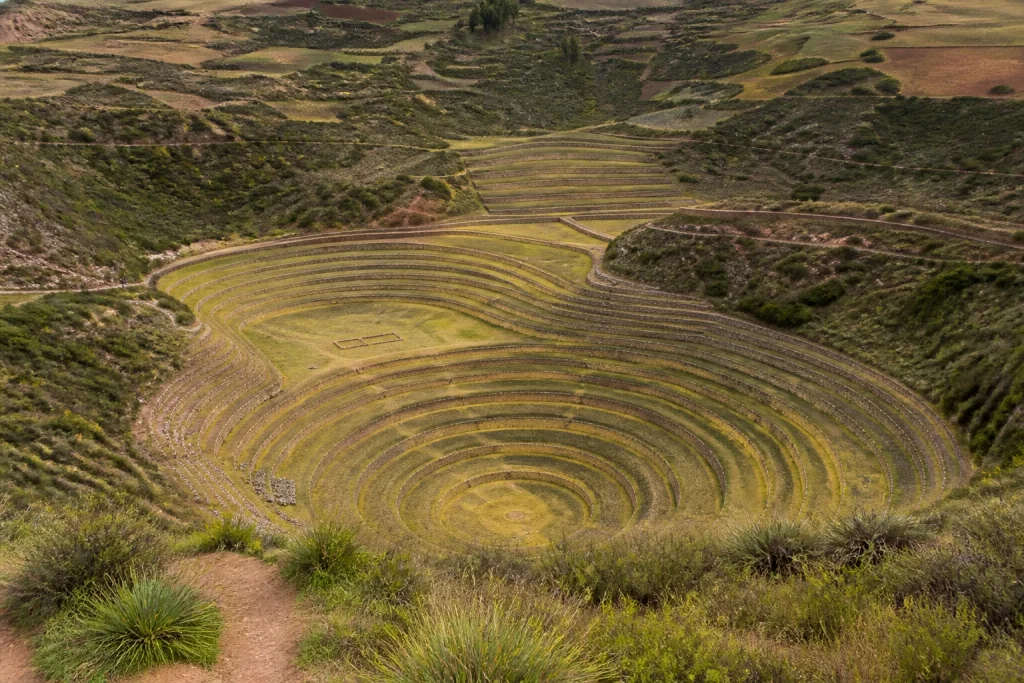
The defining sight at Moray is its sequence of sunken, elliptical terraces. Their shape makes the site easy to recognize, yet it also rewards a slower look. Start from the entrance viewpoint, take in the full pattern, then notice how the terraces organize the landscape into carefully measured bands. The official access information confirms that visitors can see the attraction from this entry point.

From Urubamba & Ollantaytambo: Sacred Valley Day tour with Lunch
Explore the best and most unique sites in the Sacred Valley on a private tour. Visit the impressive ruins of Ollantaytambo, an ancient Inca fortress...

Sacred Valley Tour: Pisac, Maras, Chinchero & Ollantaytambo
Explore the best of Peru’s Sacred Valley on a private full-day tour designed for a personalized and comfortable experience. With your own expert loc...
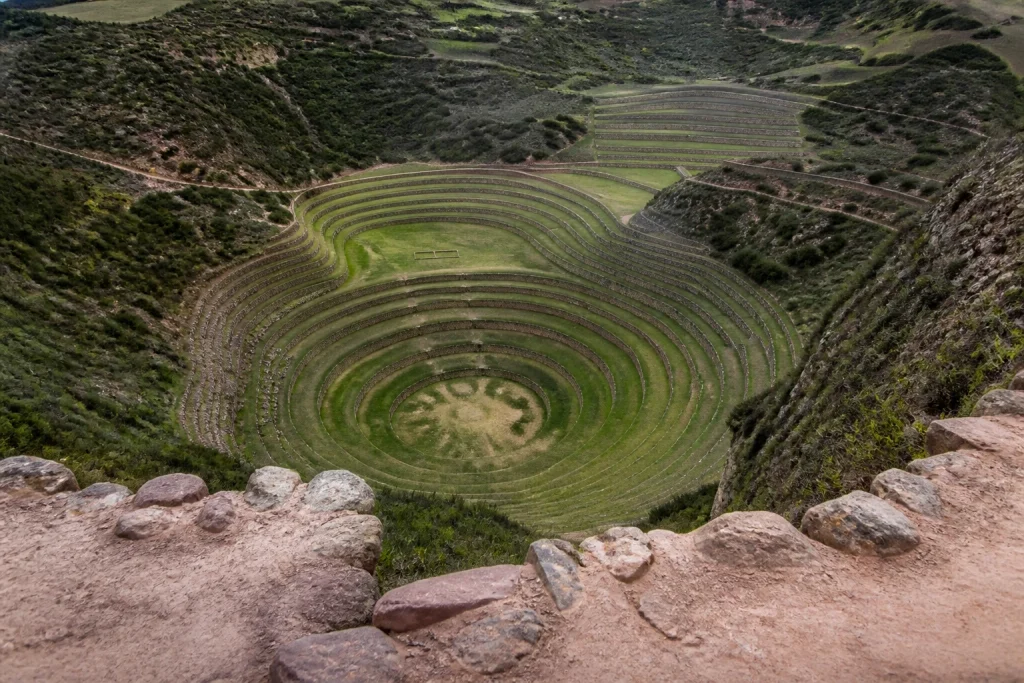
Peru’s tourism authorities describe Moray as an agricultural research and adaptation centre. That interpretation gives the terraces their real fascination: this was a place associated with understanding how cultivation could respond to differing conditions. Treat it as a well-supported official reading of the site, rather than reducing Moray to a single, settled story. For a closer exploration of that theme, our Moray: Reading the Inca Agricultural Laboratory guide offers useful context.
Moray suits travellers who enjoy archaeology, landscape and design in the same frame. Its appeal is visual but also intellectual. Instead of racing through, pause long enough to trace the terraces’ elliptical form and consider the practical ingenuity behind an agricultural landscape built at high altitude.
Buy the right Cusco Tourist Ticket for Moray
Moray is included in Circuit III of the Cusco Tourist Ticket, so admission is not sold as a separate Moray-only entry. For foreign visitors, the official tariff lists a S/70 Partial Circuit III ticket valid for two days and a S/130 full ticket valid for 10 days. The same Circuit III ticket also covers Ollantaytambo, Pisac and Chinchero.
| Ticket for foreign visitors | Price | Validity | Moray access |
|---|---|---|---|
| Partial Circuit III | S/70 | 2 days | Included, along with Ollantaytambo, Pisac and Chinchero |
| Full Cusco Tourist Ticket | S/130 | 10 days | Included as part of the ticket’s circuits |
Choose Circuit III when Moray and its three companion sites fit naturally into a two-day Sacred Valley plan. The full ticket makes more sense when you will use its other included circuits during its 10-day validity. This is an itinerary choice, not a universal bargain: buy the ticket that matches the places you genuinely intend to visit.
Tourist Tickets are purchased in person, including at Moray, rather than online. They are personalized, so bring the identification you will show with the ticket. The ticket pays for site admission only. A guide, driver, tour pickup or other transport arrangement is separate, which is worth remembering when comparing organized excursions with independent plans.
How to reach Moray from the Sacred Valley
Moray is reached via Maras. Official directions place the turnoff to Maras at kilometre 65 of the paved Cusco to Urubamba road, followed by a rural approach to the archaeological site. Moray is roughly 7 to 9 km from Maras, depending on the route description used. Treat the final leg as a drive, pre-arranged transfer or tour segment rather than a fixed public-transport connection.
An organized Sacred Valley tour is the simplest option for travellers who do not want to manage rural connections and ticket logistics themselves. A private driver or pre-arranged transport gives more control over the pace of the day. In either case, build your plan around the 7:00 a.m. to 5:00 p.m. visiting window rather than leaving Moray until the end of an overfull itinerary.
Leave extra transfer time when combining Moray with other Circuit III sites. Recent regional notices have reported mobility issues across the circuit, including congestion in Ollantaytambo, although they do not announce a closure at Moray. Check local conditions shortly before travel and keep some flexibility in a multi-stop day.
What to expect during a visit
Moray is an outdoor archaeological visit at a serious elevation, so give yourself permission to move at an unhurried pace. Begin by orienting yourself at the entry viewpoint, where the official site information confirms a view across the attraction. This is also a sensible moment to decide how much of the visit feels comfortable for your group.
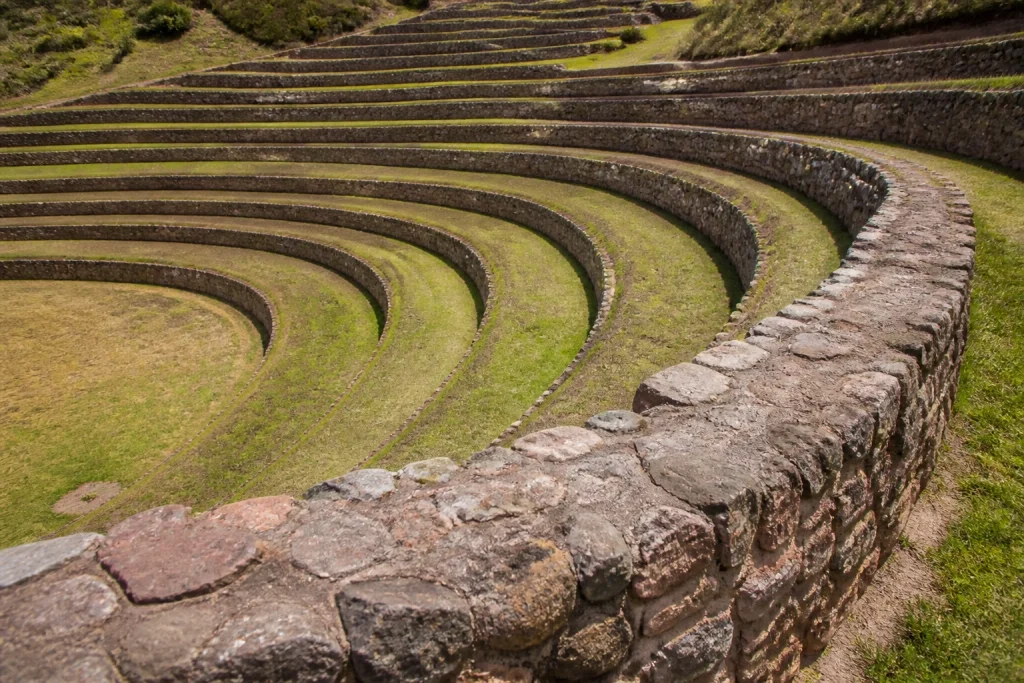
The best visit has a clear focus: take in the entire terrace pattern first, then spend time with the details that distinguish each level. Moray’s design is the story. There is no need to turn it into a race between photo angles, especially when you are also accounting for the elevation and a rural transfer schedule.
Aim for a daytime arrival that leaves a comfortable margin before the 5:00 p.m. closing time. This keeps the experience relaxed and allows room for traffic or a slower-than-expected transfer. Confirm the day’s operating arrangements as part of your final travel check, since visitor schedules can change.

Machu Picchu Circuit 2 Guided Tour
Explore the wonders of Machu Picchu via the official Circuit 2 route, known for its stunning views and historical si...

Machu Picchu Circuit 2 Entry Ticket and Private Official Guide
Can't find Circuit 2 tickets? We have you covered! We exclusively provide the highly-coveted Circuit 2 (Classic Rout...

Machu Picchu Entrance Ticket Official Circuits
Discover the wonders of Machu Picchu with an official entrance ticket that allows you to explore this ancient Inca c...
Accessibility and respectful site rules
Moray offers limited confirmed accessibility. The approach to the entrance is level, and visitors can view the site from that point. That is helpful for travellers who need a straightforward arrival and a broad view, but it does not confirm a wheelchair-accessible full circuit, step-free access through the terraces, accessible toilets or equipment. Travellers who need a full accessible route should check arrangements with the site or Tourist Ticket authority before committing to the visit.
The published rules protect a fragile archaeological place. Food, animals, alcohol and drugs are prohibited. Do not climb on or mark archaeological walls, camp at the site or fly a drone without authorization. Commercial photography and filming also require authorization from the Cusco culture authority. These are simple limits that help preserve the terraces for the next visitor.
Before leaving for Moray, make a quick practical check: Tourist Ticket, identification, transport plan and enough time to return without rushing. The details are modest, but each one matters more here than at an urban museum because the site sits in a rural area at 3,480 metres.
Build Moray into a worthwhile Circuit III itinerary
Circuit III can give Moray a useful place in a broader Sacred Valley itinerary. The same two-day partial ticket includes Pisac, Chinchero and Ollantaytambo, so it is possible to spread those visits across two days rather than forcing every stop into one long outing. Let route direction, accommodation location and current road conditions set the rhythm.
Chinchero makes a particularly complementary companion for travellers interested in culture as well as archaeology. Our guide to Chinchero, where Andean weaving still holds the day together, can help shape that stop. Pisac and Ollantaytambo are also part of Circuit III, while the guide to Ollantaytambo: Living Inside an Inca Town is useful when you plan to spend more time there rather than treating it as a brief ticket stop.
If Maras is already on your route, a Maras and Moray half-day itinerary is often an efficient way to structure the journey. Keep expectations grounded: transport, guide services and timing vary by the arrangement you choose, while the Tourist Ticket itself covers admission only. A well-paced plan leaves time to appreciate Moray instead of arriving just to check it off.
Is Moray worth visiting?
Moray is worth visiting for travellers drawn to the Sacred Valley’s archaeological landscapes and the practical intelligence behind them. The site’s elliptical, sunken terraces are visually memorable, and the official agricultural adaptation interpretation gives them extra depth. Its main limitations are the high altitude, rural logistics and the need for a Tourist Ticket. Arrange the transfer, bring identification and give the terraces more than a hurried glance.
Frequently asked questions
What is Moray in the Sacred Valley?
Moray is an archaeological site defined by its sunken, elliptical terrace complexes in the Mullak’as Misminay community, northeast of Maras. Peru’s tourism material interprets it as an agricultural research and adaptation centre.
Is Moray included in the Cusco Tourist Ticket?
Yes. Moray is part of Circuit III of the Cusco Tourist Ticket, together with Ollantaytambo, Pisac and Chinchero. For foreign visitors, the partial Circuit III ticket is listed at S/70 and is valid for two days.
Can I buy a Tourist Ticket at Moray?
Yes. Tourist Tickets are bought in person, and Moray is among the included sites where purchase is available. Bring identification because the ticket is personalized and must be shown with ID.
What are Moray’s opening hours?
Moray is listed as open daily from 7:00 a.m. to 5:00 p.m. Plan an arrival with plenty of time before closing and recheck operating arrangements shortly before your visit.
How do I get to Moray?
Moray is reached from Maras, using the Maras turnoff at kilometre 65 of the paved Cusco to Urubamba road. An organized tour, private driver or pre-arranged transfer is the most practical way to handle the rural approach.
Is Moray wheelchair accessible?
Visitors can reach Moray’s entrance by a level approach and see the attraction from that point. A fully wheelchair-accessible circuit through the site is not confirmed, so travellers needing a complete accessible route should check arrangements before visiting.
From Urubamba & Ollantaytambo: Sacred Valley Day tour with Lunch
Explore the best and most unique sites in the Sacred Valley on a private tour. Visit the impressive ruins of Ollantaytambo, an ancient Inca fortress...

The Best Private Sacred Valley Tour in Cusco ( with Pisac)
We know very well each place of this tour, since we have been grown in this area and we studied over 3 years to get...
Sacred Valley Tour: Pisac, Maras, Chinchero & Ollantaytambo
Explore the best of Peru’s Sacred Valley on a private full-day tour designed for a personalized and comfortable ex...

Machu Picchu Private Tour from Aguas Calientes (Tickets included)
Discover Machu Picchu at your own pace with our exclusive Private Guided Tour from Aguas Calientes. Perfect for inde...