Best Sacred Valley Hikes for First Timers
Planning a first hike near the Sacred Valley? Compare the documented Inca Trail routes to Machu Picchu, from the one-day Km 104 trek to longer guided itineraries, with practical advice on rail access, permits,…
 Visit Sacred Valley
August 16, 2026
Visit Sacred Valley
August 16, 2026

First-time hikers looking at Sacred Valley options should begin with an important distinction: the routes with the clearest current access rules are in the Historic Sanctuary of Machupicchu and its Inca Trail network. They are reached through the Sacred Valley–Machu Picchu travel corridor, including rail connections via Ollantaytambo. This guide focuses on those documented Inca Trail choices, giving first-timers a realistic way to choose between a one-day hike and a multi-night trek.
- For one hiking day, Route 5 from Chachabamba, often called the Km 104 route, is the strongest first-timer choice at 10.5 km.
- Routes 1 and 2 are genuine multi-day commitments: 33.7 km over four days and 29.9 km over three days, respectively.
- Arrange the dated trek and entry requirements before committing to nonrefundable trains, hotels, or onward transport.
- November through March is the rainy season in the Historic Sanctuary of Machupicchu, so conditions demand extra flexibility.
- Use an authorized tourism operator, stay on marked trails, and treat tickets as date- and area-specific.
Best first-timer pick: the Km 104 hike from Chachabamba
Route 5 is the clear starting point for travelers who want to hike an Inca Trail route without turning the experience into a camping expedition. The documented route runs 10.5 km in one recommended day, beginning at Chachabamba and continuing via Wiñaywayna and Intipunku to Machu Picchu. Rail access is available from Cusco or Ollantaytambo to Chachabamba, followed by the hike.

The Best Private Sacred Valley Tour in Cusco ( with Pisac)
We know very well each place of this tour, since we have been grown in this area and we studied over 3 years to get a guide license. as well, our vehi...

From Urubamba & Ollantaytambo: Sacred Valley Day tour with Lunch
Explore the best and most unique sites in the Sacred Valley on a private tour. Visit the impressive ruins of Ollanta...

Machu Picchu Private Tour from Aguas Calientes (Tickets included)
Discover Machu Picchu at your own pace with our exclusive Private Guided Tour from Aguas Calientes. Perfect for inde...

Machu Picchu 2Day Tour by Train from Cusco with Overnight Stay
Our tour guides at Machu Picchu are incredibly passionate about storytelling and are committed to creating unforgett...
That combination matters for a first visit. You get a full day on a historic pedestrian route and reach Machu Picchu on foot, yet avoid the added logistics of several nights outdoors. It still requires sensible conditioning for 10.5 km of trail walking and a willingness to adapt to changing mountain weather. An organized trek is the practical format, since visits in the protected area require authorized tourism operators.
Compare the documented Inca Trail options near the Sacred Valley
| Route | Published distance | Recommended itinerary | Access described for the route | Best planning fit |
|---|---|---|---|---|
| Route 5: Chachabamba / Km 104 | 10.5 km | 1 day | Rail from Cusco or Ollantaytambo to Chachabamba, then hike | First-timers with one hiking day |
| Route 1: Piscacucho / Km 82 | 33.7 km | 4 days / 3 nights | Tourist transport from Cusco to Piscacucho | Fit first-time trekkers seeking a classic multi-night route |
| Route 2: Qoriwayrachina / Km 88 | 29.9 km | 3 days / 2 nights | Rail from Cusco or Ollantaytambo to the start | Fit travelers with less time than Route 1 but room for a trek |
| Route 6: Mollepata–Soraypampa area | 25.9 km | Not specified in the route summary | Starts in the Mollepata–Soraypampa area | Consider only after obtaining route-specific itinerary and entry details |
The distances are useful, but the number of days is the bigger planning divider. Route 5 is a single-day hike. Routes 1 and 2 include camping and require a multi-day commitment. Route 6 is listed as a 25.9 km option beginning in the Mollepata–Soraypampa area, but it should not be chosen casually for a first trip. Confirm its specific itinerary and access arrangements before building a holiday around it.

What the Km 104 route delivers in a single day
An archaeological route with a clear finish line
The appeal of Km 104 is its sequence. The route begins at Chachabamba, passes through Wiñaywayna, and reaches Intipunku before Machu Picchu. For hikers who want the feeling of arriving along an Inca Trail rather than simply visiting the citadel, that progression gives the day a satisfying shape. It also keeps the trip focused: hike, archaeological sites, and a direct Machu Picchu finale.
Who should choose it
Choose Km 104 if you have one available day for hiking, prefer a guided itinerary, and want to keep accommodation and packing simple. It is also the best fit for travelers who would rather minimize exposure to the coldest high-elevation sectors and the extra variables of a multi-day trek. It is not a low-mobility outing, but it is the most contained documented hiking option in this comparison.
Pack for changing conditions, not for a casual stroll
Use the operator’s packing list as the final word, then keep your own kit practical: supportive trail footwear, sun protection, insect repellent, layers for changing temperatures, and a reusable water container. Rangers ask visitors to avoid single-use plastics, respect wildlife and vegetation, and remain on marked trails. The goal is to stay comfortable without carrying more than the route requires.
When a longer Inca Trail trek makes sense
Route 1 from Piscacucho, also known as Km 82, covers 33.7 km and is recommended over four days and three nights. It is the longer choice for fit first-time trekkers who have the time and specifically want a classic camping-based Inca Trail experience. Tourist transport from Cusco is the stated access method for the trailhead, so it needs a different travel plan from the rail-linked Km 104 route.

Route 2 from Qoriwayrachina, or Km 88, covers 29.9 km over three days and two nights. It is shorter on the calendar than Route 1, but it remains a trek rather than a day hike. Rail access from Cusco or Ollantaytambo is used for this starting point. Select it when a two-night trail itinerary fits your schedule and you are prepared for the demands of camping and consecutive hiking days.
For a first trek, do not choose between Routes 1 and 2 on distance alone. Think about the number of nights outdoors, the time needed around the trek, and your comfort with a structured group itinerary. A shorter timetable does not turn Route 2 into a casual alternative. Both routes are far larger commitments than the Km 104 day hike.

Machu Picchu Private Archaeological and Historical Guided Tour
Explore Machu Picchu, one of the Seven Wonders of the World, in the company of a private guide. Enjoy the undivided...

From the Sacred Valley: Salt Mines & Moray - Private tour
As a company based in the Sacred Valley, we are true specialists in the region, enabling us to provide a more person...

Machu Picchu Guided Tour with Local Expert – 2 or 3 Hour Service
Discover Machu Picchu with a professional local guide who will bring the Inca citadel to life through history, cultu...
Book permits, operators, and rail travel in the right order
Secure the dated official trek and entry arrangements before buying nonrefundable accommodation or onward transport. Inca Trail tickets are tied to a specific date and area, visitor identity can be checked, and entry times must be observed. Closures can also occur because of unforeseen events. Build a little flexibility into the itinerary and check the live official arrangements before finalizing the rest of the trip.
Rail is central to Routes 2 and 5, especially for hikers approaching through Ollantaytambo. For a service-level decision, the PeruRail or Inca Rail? Sacred Valley Trains to Machu Picchu comparison is useful reading before locking other bookings. Keep the trek confirmation, rail details, and required identification together so the travel day stays orderly.
Understand entry fees versus total trek costs
The sanctuary lists entry-fee references of S/292 for adults, S/147 for students, and S/135 for schoolchildren for Routes 1 and 2. Those figures are not an all-in trek budget. Depending on the itinerary, the total can also include an authorized operator, guiding, transport, food, camping arrangements, and rail travel. Confirm the applicable eligibility category and final checkout total when booking.
Plan around rain, cold, and mountain conditions
November through March is the rainy season in the Historic Sanctuary of Machupicchu. Rain does not remove the appeal of the trail, but it raises the value of waterproof layers, reliable footwear, and a schedule with some room for disruption. Weather and trail conditions can change, so make the current trail briefing part of your pre-departure routine rather than assuming a fixed mountain forecast.
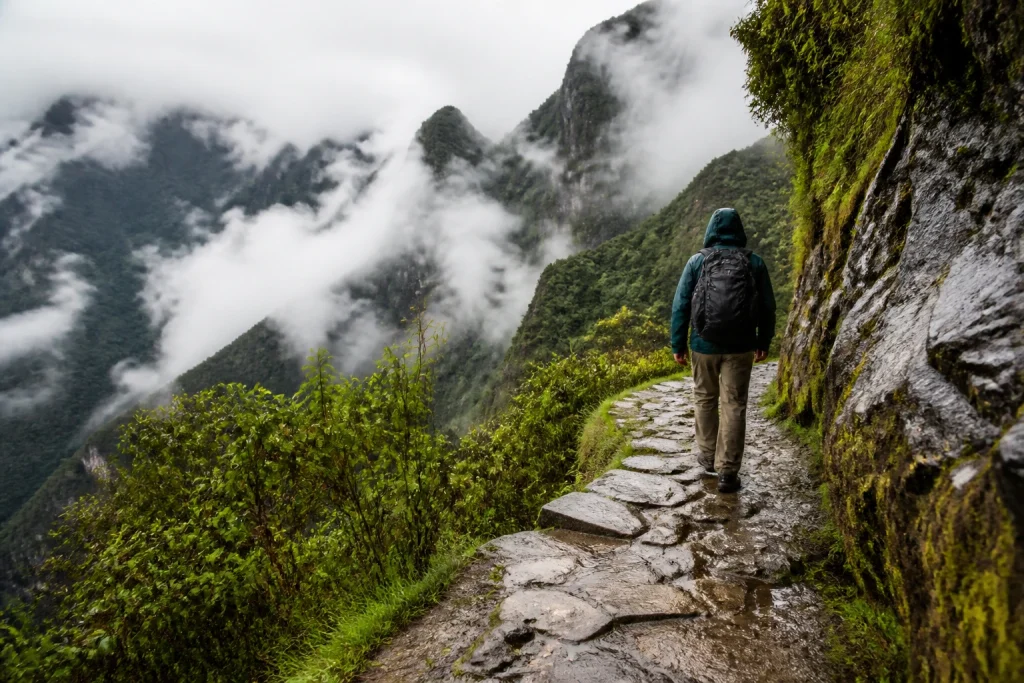
Temperature varies sharply with elevation on the Inca Trail, and sectors above 4,350 m are much colder. Travelers aiming to reduce prolonged exposure to high-elevation, multi-day conditions should favor the Km 104 route over the longer trekking options. That does not make it weather-proof, but it keeps the itinerary to a single hiking day instead of several nights on the trail.
Trail rules and accessibility need to shape your choice
These are protected-area hikes, not independent rambles. Use an authorized tourism operator, follow marked trails, listen to rangers, and leave plants and wildlife undisturbed. The straightforward approach is also the responsible one: carry sun protection and repellent, limit single-use plastics, and keep to the route assigned to your ticket. These rules protect both the experience and the landscape that makes it worthwhile.
Do not plan any of these routes as wheelchair-accessible or low-mobility outings. Every option involves a pedestrian trail approach, while the longer routes include camping. Travelers with mobility, cardiac, respiratory, or altitude-related concerns should get route-specific advice from an authorized operator and the relevant site authority before committing to permits and travel.
Choose the hike that matches your first Peru itinerary
- Choose Route 5 from Chachabamba if you want the best documented one-day hike, rail access, and an arrival at Machu Picchu via Wiñaywayna and Intipunku.
- Choose Route 1 from Piscacucho if you are fit, have four days available, and genuinely want a camping-based Inca Trail trek.
- Choose Route 2 from Qoriwayrachina if a three-day, two-night trekking schedule suits your itinerary better than the four-day route.
- Pause before choosing Route 6 until you have route-specific itinerary, access, and entry details from the appropriate authorities and operator.
Still comparing Day Trips?
Ask for tour ideas, hotel suggestions, or a simple trip plan that combines both.
Trip Helper
The best first Sacred Valley hike is the one-day Inca Trail route
For most first-time hikers, Km 104 is the sensible choice. It offers a documented 10.5 km Inca Trail day with rail access and major archaeological stops, without requiring a multi-night camping commitment. Routes 1 and 2 are rewarding options for fit travelers seeking a fuller trek, but they deserve more time and preparation. Start by securing the dated trek arrangement, then shape the rest of your Sacred Valley itinerary around it.
Frequently asked questions
What is the best Sacred Valley hike for first-time visitors?
The Km 104 route from Chachabamba is the best documented first-timer choice. It covers 10.5 km in one recommended day, uses rail access from Cusco or Ollantaytambo, and passes Wiñaywayna and Intipunku before reaching Machu Picchu.
Do I need an authorized operator for an Inca Trail hike?
Yes. Visits within the Historic Sanctuary of Machupicchu require authorized tourism operators. Your dated entry arrangements, operator itinerary, and identification should be organized before you travel to the trailhead.
How do hikers reach the Km 104 trailhead?
Hikers reach Chachabamba by rail from Cusco or Ollantaytambo, then begin the Route 5 hike. Keep your trek and rail arrangements coordinated because trail access is tied to dated entry planning.
Can a first-time trekker do the classic four-day Inca Trail?
Yes, Route 1 can suit fit first-time trekkers who are ready for a 33.7 km trek over four days and three nights. It is a camping-based, multi-day commitment, not a substitute for the one-day Km 104 hike.
When is the rainy season near Machu Picchu?
The rainy season in the Historic Sanctuary of Machupicchu runs from November through March. Plan for changing trail conditions and follow the current guidance provided with your authorized trek arrangements.
Are these Sacred Valley hikes accessible for wheelchair users?
No, these documented Inca Trail routes should not be planned as wheelchair-accessible or low-mobility outings. They require pedestrian trail travel, and the longer routes include camping.

Full Day Sacred Valley of the Incas Private Tour
REQUEST A FREE TRANSFER IN OR OUT WITH THE BOOK OF THIS TOUR Embark on an unforgettable adventure with our tour. Discover the Sacred Valley of the In...

Two days Machupicchu private tour
We recommend making reservations at least 20 days in advance, if is last minute, contact us as soon you book this to...
MachuPicchu Private Full Day Tour by Vistadome train from Cusco
Experience the awe-inspiring legacy of the Incas with our premier, Machu Picchu private Full-Day Tour. Travel in unr...

Machu Picchu by Train: A Once in a Lifetime Day Trip from Cusco
See Machu Picchu in a day without the stress of organizing it yourself. From your Cusco pickup to the train, shuttle...