How to Get Around the Sacred Valley Without a Car
Plan a car-free Sacred Valley trip with practical advice on choosing a base, arranging transfers, using local shared transport, and catching the train to Machu Picchu.
 Visit Sacred Valley
October 24, 2026
Getting around the Sacred Valley without a car is manageable when you plan around your fixed connections. Choose a base that suits your next stop, arrange dependable transport when timing matters, and leave locally arranged shared rides for days with room to adapt. If you are continuing to Machu Picchu, treat Ollantaytambo as the rail gateway and plan the rest of your valley itinerary around the train you book.
- Choose a base town around your next fixed commitment, especially a train departure from Ollantaytambo.
- Use a prearranged transfer or a tour with transport when a delay could affect your train, lodging, or onward journey.
- Treat local shared transport as a flexible option, not a service with a timetable or fare you can count on in advance.
- Book the specific Ollantaytambo to Machu Picchu train before finalizing the surrounding itinerary.
- Reconfirm Ollantaytambo station access and pickup details before travel because arrangements have been affected by roadworks and congestion.
The most reliable no-car plan is not to connect every stop with a separate ride. Keep the route simple: identify the journeys with a deadline, arrange those first, then leave your sightseeing days flexible. This approach makes it easier to enjoy the valley without putting a rail departure or hotel change at the mercy of an unconfirmed connection.

From Urubamba & Ollantaytambo: Sacred Valley Day tour with Lunch
Explore the best and most unique sites in the Sacred Valley on a private tour. Visit the impressive ruins of Ollantaytambo, an ancient Inca fortress...
Plan around fixed connections first
Start with the parts of your trip that cannot easily move: a Machu Picchu train, a hotel check-in, or an onward connection after returning to Cusco. Those are the days to choose a prearranged transfer, a tour that includes transport, or an overnight close to your departure point. Keep shared local transport for an open-ended day when a wait or change of plan will not cause a missed booking.
This distinction matters most when crossing between towns. Local shared rides can be a useful way to move around, but there is no basis here for planning around a fixed public timetable. If you need to arrive at a specific hour, choose a transport option with confirmed arrangements instead of relying on an assumed departure.
Choose a base that fits your next day
Staying in one place for more than one night reduces the number of checkouts, bags, and timed transfers in your itinerary. Choose your base by asking where you need to be first the next morning. If you are taking the train to Machu Picchu, an overnight in Ollantaytambo is a straightforward way to avoid depending on a same-day transfer across the valley.
For a wider valley stay, match your lodging to the pace and transport help you want. Our guide to where to stay in the Sacred Valley covers lodges, hotels, and villages, and can help you decide whether to settle into one base or move closer to a later departure.
- Stay near Ollantaytambo before a train departure if you want to simplify the morning connection.
- Use one base when your plans focus on local sightseeing rather than changing towns each day.
- Ask your lodging about arranging transport if you have luggage or a time-sensitive journey.
- Keep the night before a major connection simple, with as few separate transport links as possible.
Getting from Cusco to Ollantaytambo
Treat the Cusco to Ollantaytambo journey as a substantial transfer, not a quick hop. A Ministry of Foreign Trade and Tourism inventory gives a tourist-bus planning benchmark of 61.5 kilometers and about 1 hour 29 minutes to Ollantaytambo station. Use that figure to understand the scale of the journey, not as a guaranteed travel time or public-bus schedule.
If you arrive in Cusco and plan to continue directly to a train, arrange the connection in advance and allow a generous buffer. A safer, less rushed option is to reach the valley the night before your departure. That gives you more room to handle changing pickup or station arrangements without turning the day into a race.
On an untimed arrival day, you have more flexibility to choose a private transfer, a tour that includes transport, or locally arranged shared transport. Your luggage, group size, and need to arrive at a particular hour should guide the choice. Do not treat the route benchmark as proof of a fixed public service or departure pattern.
Use local shared transport for flexible trips
Locally arranged shared vans, often called colectivos, are best treated as a flexible option. They may suit travelers with a loose plan who are comfortable confirming arrangements locally. Shared transport links towns such as Pisac, Urubamba, and Ollantaytambo, but do not assume a specific schedule, departure point, or fare before checking on the day.
Before boarding, confirm the destination, departure point, fare, and whether there is room for your luggage. If the answers do not give you confidence that you will reach a fixed commitment, switch to a prearranged transfer. This is especially important when a train or other timed departure is involved.
Keep some cash available for locally arranged rides, but do not build your budget around an old online fare estimate. Local prices and operating details are not set out in a dependable current fare table here. Confirm the price before you travel and leave room in your budget for transport to cost more than an outdated post suggests.
- Good fit: a sightseeing day with no tight arrival time.
- Less suitable: a same-day connection to a train or other fixed departure.
- Before you go: confirm the destination, pickup point, fare, and luggage space.
- If the details do not work for your schedule, arrange a transfer instead.

Machu Picchu Private Guide Service With Hotel Pickup
Discover the magic of Machu Picchu with your own private guide. Uncover the secrets of the "Lost City of the Incas."...

Private Machu Picchu Full Day: All-Inclusive from Sacred Valley
Start your journey from the serenity of the Sacred Valley. Dispensing with the exhausting transfer from Cusco, you a...

Machu Picchu Circuit 2 Entrance Ticket with Guided Tour
Explore the wonders of Machu Picchu via the official Circuit 2 route, known for its stunning views and historical si...
When a prearranged transfer or tour makes sense
Prearranged transport is the practical choice when timing matters more than spontaneity. Consider it after a late arrival, before an early train, when you are carrying several bags, or when a hotel change needs to happen at a set time. It also means you do not have to find a local departure point while working out the route on the spot.
An organized tour can simplify a day built around several sights, provided its transport plan fits your itinerary. Check what the booking includes, where pickup and return take place, and whether the timing works with your lodging or train. Keep transport costs separate from attraction admission when you compare options.
Neither option needs to replace every local ride. You can arrange the important transfers in advance, then use a locally confirmed shared ride on a separate day when the schedule is open. That mix preserves some flexibility without making every part of the trip depend on a last-minute connection.
Take the train from Ollantaytambo to Machu Picchu
Ollantaytambo is the key rail connection for a car-free journey to Machu Picchu. PeruRail publishes departures from Ollantaytambo to Machu Picchu Pueblo. A Ministry of Foreign Trade and Tourism inventory lists the rail leg at about 1 hour 32 minutes, while one PeruRail schedule example is 1 hour 30 minutes.
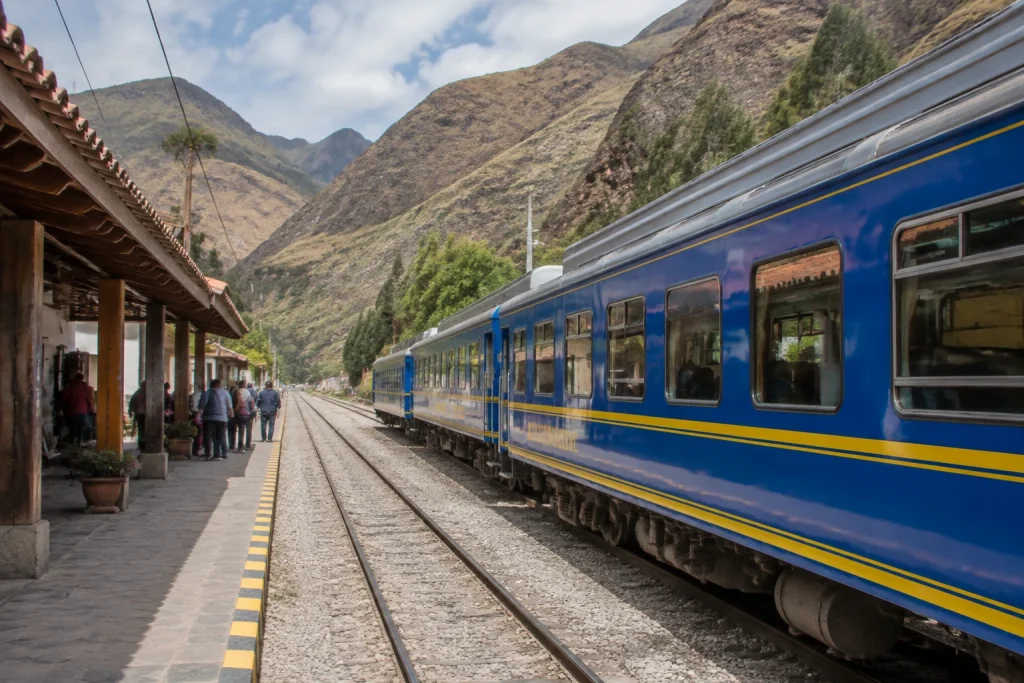
Use those times as service-specific planning references, not as a universal duration. PeruRail and Inca Rail list different services and connections, so select the exact departure before committing to hotels, tours, or a return transfer. Our comparison of PeruRail or Inca Rail trains to Machu Picchu can help you think through the choice; check the operator’s current schedule and ticket conditions before booking.
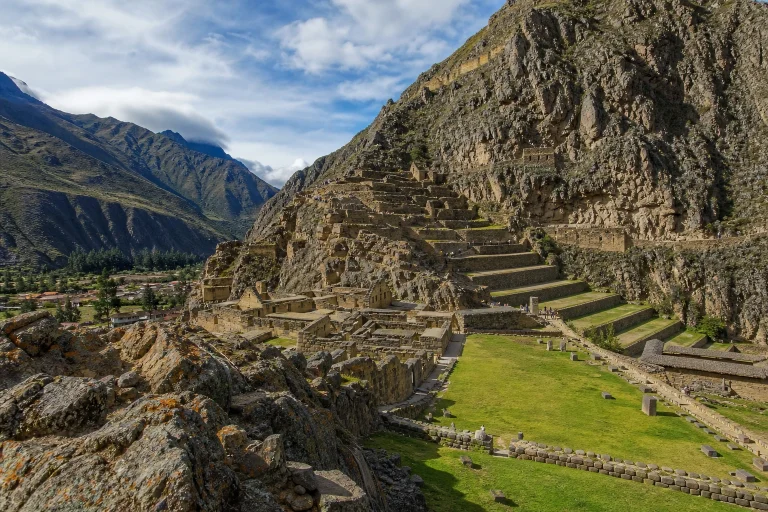
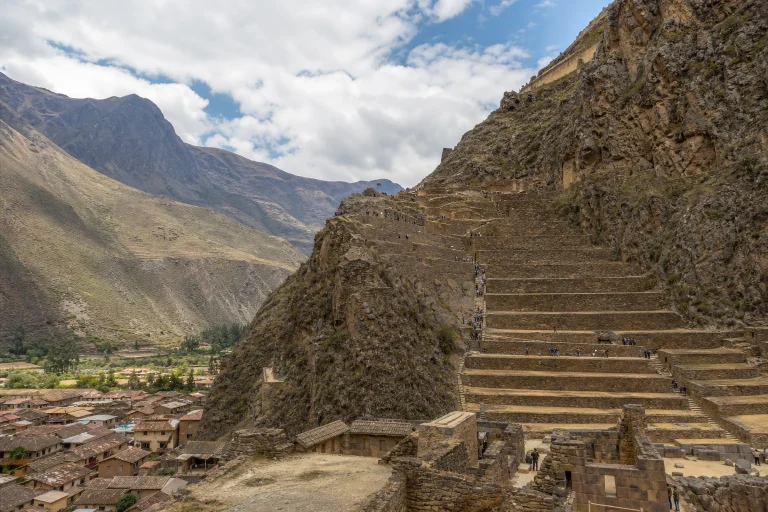
An overnight in Ollantaytambo before the train is the simplest way to reduce same-day transfer risk. If your schedule permits, the town can be more than a rail stop. Our guide to Ollantaytambo’s stone streets and living Inca-town character offers a starting point for planning an evening there.
Read the service-specific boarding and access instructions for your date, and keep the confirmation details handy. Station access and pickup arrangements are especially important to check in 2026, when changes around Ollantaytambo have affected how some rail connections operate.
Leave extra time around Ollantaytambo in 2026
Give Ollantaytambo more breathing room than a routine station transfer. PeruRail announced access changes and modified bimodal schedules related to municipal roadworks beginning April 13, 2026, with some services transferring passengers at Pachar. In July, Cusco’s regional tourism authority also reported congestion affecting access toward the archaeological parks.
The announced roadwork period was approximately eight months, so travelers in August 2026 should not assume that the changes have ended or that an older pickup point still applies. Reconfirm station access, your pickup location, and the exact train timing immediately before travel. Follow the arrangements in your current service information rather than relying on a past itinerary.
Car-free itinerary patterns for the Sacred Valley
The number of days you have should determine how many stops you attempt. A useful rule is to arrange transport for critical connections and keep the rest of the day flexible. A route with fewer transfers leaves more room to enjoy each stop and less chance of watching the clock.
Still comparing Sacred Valley Car Free Transport And Ollantaytambo Rail Connections?
Ask for tour ideas, hotel suggestions, or a simple trip plan that combines both.
Trip Helper
If you have one day
Choose one area or use a tour that includes the day’s transport. Trying to combine several independent local rides can leave little margin if a connection takes longer than expected. If you want to visit Pisac, decide in advance how the archaeological site and town fit into your day. Our guide to Pisac ruins and the market can help you shape that stop without assuming that local transport will run to a fixed timetable.
If you have two or three days before Machu Picchu
Arrange a confirmed arrival transfer, use a middle day for local exploration, and move to Ollantaytambo before your train. That sequence gives you a chance to use shared transport when the schedule is flexible while protecting the rail connection at the end. Select your train first, then fit the valley days around its departure.
If you want a slower stay
Settle into one base and plan one focused outing at a time. A day centered on Maras and Moray, for example, is easier to manage when it is not squeezed between a hotel move and a fixed onward connection. Arrange transport for the outing, then leave the remaining time free rather than trying to link every stop independently.
Budget transport separately from attraction admission
Keep transport and site admission in separate budget categories. COSITUC describes the Cusco Tourist Ticket as covering admission to sites including Pisaq, Ollantaytambo, Moray, and Chinchero. It is not a transport ticket, so plan separately for trains, transfers, tours, and locally arranged rides.
Avoid relying on old online posts for exact shared-ride or train prices. Check rail costs through the operator’s booking process and confirm local fares before boarding. If you book a tour, read its transport inclusions so you know whether pickup and return arrangements match your plans.
Consider luggage and mobility needs before booking
Do not assume that shared transport, stations, lodging, and archaeological sites form a step-free route. If you need mobility accommodations, contact your chosen rail operator and lodging before purchasing, and avoid a plan that depends on an unconfirmed same-day transfer. Accessibility arrangements should be confirmed for the specific services you intend to use.
For luggage, check space when arranging a transfer and ask before boarding a shared ride with larger bags. An overnight near your next departure point reduces the number of journeys where luggage and a tight schedule must line up at once. Keep the route simple if carrying bags between towns is a concern.
The simplest way to travel car-free
A car-free Sacred Valley itinerary suits travelers who are happy to plan the important connections and leave some sightseeing time open. Choose a practical base, prearrange transport for fixed commitments, and use locally confirmed shared rides when a flexible day allows. For Machu Picchu, book the specific train from Ollantaytambo and reconfirm access details before departure. That simple structure keeps the trip manageable without trying to control every ride.
Frequently asked questions
Can you visit the Sacred Valley without renting a car?
Yes. Choose a base, arrange transfers or tours for time-sensitive days, and use locally arranged shared transport only after confirming the day’s details. Ollantaytambo is the rail gateway for continuing to Machu Picchu.
How long does it take to get from Cusco to Ollantaytambo?
A Ministry of Foreign Trade and Tourism inventory gives a tourist-bus planning benchmark of about 1 hour 29 minutes for the 61.5-kilometer journey to Ollantaytambo station. Allow extra time for a fixed train connection; the benchmark is not a public-bus timetable.
Should I stay overnight in Ollantaytambo before Machu Picchu?
Yes. An overnight in Ollantaytambo reduces the risk of relying on a same-day transfer and gives you time to follow the access and boarding instructions for your specific train.
How long is the train from Ollantaytambo to Machu Picchu?
Plan for roughly an hour and a half. The Ministry of Foreign Trade and Tourism inventory lists about 1 hour 32 minutes, while one PeruRail service example is 1 hour 30 minutes. Check the exact service you book.
Do colectivos in the Sacred Valley have a fixed timetable?
Do not plan around an assumed timetable. Confirm the departure point, destination, fare, and luggage space locally, and use a prearranged transfer when you have a time-sensitive connection.
Does the Cusco Tourist Ticket include transportation?
No. The ticket covers admission to sites including Pisaq, Ollantaytambo, Moray, and Chinchero. Trains, transfers, tours, and local rides are separate transport costs.
Are Sacred Valley colectivos wheelchair accessible?
Do not assume they are. Confirm mobility arrangements with your specific rail operator and lodging, and avoid relying on an unverified same-day local transfer if you need accommodations.