
Sacred Valley Summer Travel Guide
For the upcoming Southern Hemisphere summer, treat a Sacred Valley trip as a December 2026 through February 2027 plan with two priorities: secure the capacity-controlled Machu Picchu visit, then build rail days around the base you choose. December and January are high-demand months for rail travel, so this is a season for a deliberate calendar rather than last-minute swaps.
Plan the summer calendar before choosing hotels
The currently published PeruRail timetable covers May through December 2026. It is useful for December planning, including comparing departure points and journey lengths, but January and February 2027 departures need a fresh timetable check before you commit to a hotel, transfer, or attraction entry time.
- Reserve Machu Picchu admission and rail travel early. December and January are high-demand periods, and admission is controlled by date, circuit, and entry time.
- Use Ollantaytambo as the leading rail-focused base if a shorter train journey to Machu Picchu Pueblo is your priority.
- Price rail travel and Machu Picchu admission separately, since a train ticket does not include entry to the site.
- Arrive at Ollantaytambo or Urubamba station at least 30 minutes before departure, and pack within the rail luggage allowance.
- Recheck rail times, admission availability, and your saved confirmations shortly before travel because schedules can change for operational reasons.
A sound sequence is simple: choose the day and entry time for Machu Picchu, reserve the matching rail journey, then book accommodation around those fixed points. This prevents a common planning tangle, where a well-located hotel is followed by a train or admission time that does not fit the rest of the day.
Choose Ollantaytambo for the most streamlined rail day
Ollantaytambo is the strongest rail-oriented base in the available timetable. Regular trains listed for May through December 2026 reach Machu Picchu Pueblo in roughly 1 hour 22 minutes to 1 hour 59 minutes, depending on the service. That shorter rail segment creates a more contained Machu Picchu day than starting with a longer bimodal journey from Cusco.
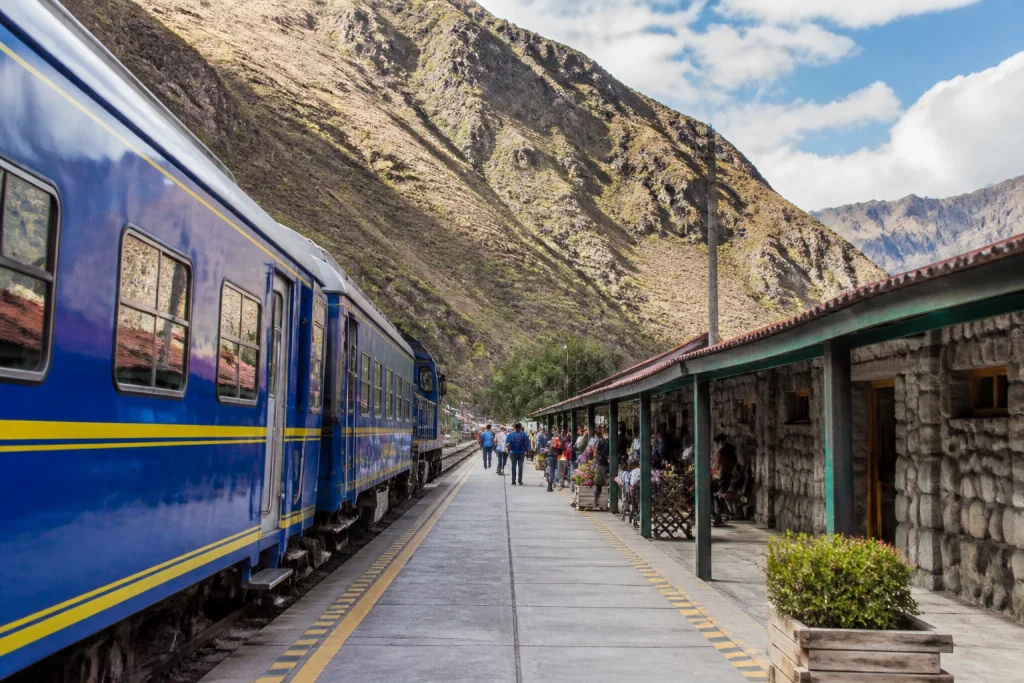
There is still an arrival-and-departure decision to solve. PeruRail describes Ollantaytambo as about a 1 hour 30 minute drive from Cusco’s main square, so allow for that first or last transfer when setting flight-night and hotel-night plans. Request a live transfer quote for your exact hotel and travel date rather than trying to budget from a generic city-transport figure.
Cusco and Wanchaq can work for travelers who prefer to sleep there, but PeruRail’s listed options are bimodal bus-and-train services of about four hours. That adds more connections to a day already shaped by an entry time at Machu Picchu. Pick this arrangement for the overall trip you want, not because it is the quickest route to the rail destination.
A stay in Ollantaytambo is especially practical when the Machu Picchu rail segment is central to the trip. For a closer sense of the base itself, read our guide to Ollantaytambo’s Inca stone streets. For the larger accommodation decision, our guide to Sacred Valley lodges, hotels and villages can help match overnight stops to the rest of your route.
Lock Machu Picchu entry and train seats as separate bookings
Machu Picchu admission is managed by date, circuit, and entry time. Decide which entry option suits your visit before selecting a train, then choose rail times that leave enough room for the journey and the rest of the arrival process. In high-demand summer dates, treat both reservations as core trip bookings rather than details to settle later.

Do not look for one all-in Machu Picchu day price. Rail fares change with service, travel date, route, and availability, while rail tickets do not include Machu Picchu admission. Price each component for the exact day you intend to travel, then add the separate costs of lodging, transfers, and any guiding you choose.
For rail travel, the decision is partly about service and partly about the budget available on your chosen date. Expedition and Vistadome-family services operate on the same corridor, but live availability is the right place to compare the current service details and fares. Our comparison of PeruRail and Inca Rail trains to Machu Picchu can help frame that choice.
Keep the train and attraction confirmations together in a single trip folder. Save copies on your phone and carry an offline backup, then check the details again before leaving for the station. A clear confirmation set makes it easier to spot a mismatch between the travel date, rail departure, admission circuit, and entry time.
Make rail day orderly with light luggage and station time
Build station time into the plan, especially on a fixed-entry day. PeruRail asks passengers to board 30 minutes before departure at Ollantaytambo and Urubamba. Aim to arrive with time to locate the station, organize documents, and settle bags rather than treating the published departure time as the moment to appear at the platform.
For Expedition, Vistadome, and Vistadome Observatory services, the stated onboard allowance is one hand bag or backpack of up to 8 kilograms and 115 linear centimeters. Pack the rail segment as a short, self-contained journey. Travelers carrying larger suitcases should arrange storage or forwarding before the train day instead of relying on oversized luggage at the station.
The train is only one timed piece of the day. Your plan also needs a transfer to the station, the rail journey, the connection onward from Machu Picchu Pueblo, and the matching attraction entry. Leave enough open time around those pieces to absorb ordinary movement through each stage without putting the entry reservation under pressure.
Still comparing Sightseeing?
Ask for tour ideas, hotel suggestions, or a simple trip plan that combines both.
Trip Helper
Arrange accessibility details individually
Do not assume that stations, trains, transfers, hotels, or archaeological visits will meet a particular mobility need. Before booking, obtain written confirmation from each hotel, transfer provider, train operator, and attraction covering the assistance, step-free access, toilet access, vehicle arrangements, and space required for your trip. This is particularly important when a rail departure and timed admission are linked.
Give Sacred Valley days room to breathe
Protect at least one or two non-rail days in the valley instead of turning every morning into a transfer. This gives the itinerary a useful rhythm: fixed reservations sit on the Machu Picchu day, while local exploration can remain flexible. It also keeps a small scheduling issue from forcing you to rewrite the whole trip.
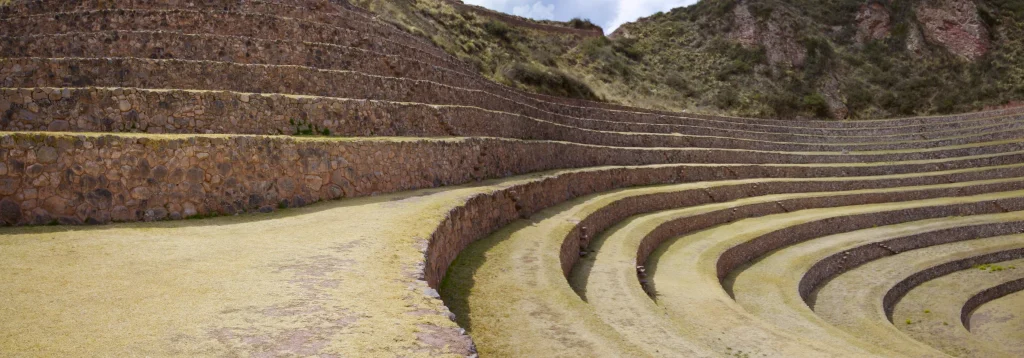
Use the open days to follow the subjects that interest you most. Our collection of the best things to do in the Sacred Valley is a broad starting point. For more focused ideas, consider a half-day through Maras and Moray, a deeper look at Moray’s circular terraces, or a slow morning at Pisac’s ruins followed by an afternoon in the market.
Keep these valley plans separate from the rail ticket whenever possible. The value of an overnight base is not only proximity to a departure point. It is also the freedom to place local days before or after the fixed Machu Picchu reservation, rather than squeezing every landmark into the narrow margins around a train.
Use live checks for January and February logistics
December travelers can use the currently published May through December 2026 timetable as a planning reference. January and February 2027 travelers should wait for the applicable schedule before treating a particular departure as fixed. Once the correct calendar is available, recheck it after booking and shortly before travel, since PeruRail notes that schedules can vary for operational reasons.
Set final packing and daily timing close to departure using current local conditions and the details in your booked services. Keep the flexible parts of the itinerary genuinely flexible: avoid adding nonrefundable commitments immediately before a timed rail departure or immediately after a return journey that could be affected by a schedule adjustment.
The most useful summer habit is a final itinerary review. Check every date, passenger name, station, service, circuit, and entry time together. A five-minute review is more valuable than a complicated plan built on assumptions carried over from an earlier timetable or a different ticket type.
Sketch a simple Sacred Valley trip sequence
- Arrival day: travel to your chosen valley base, settle in, and keep the schedule light enough to accommodate the Cusco-to-valley transfer.
- First valley day: choose one local area or a paired half-day plan, leaving the rail ticket and Machu Picchu admission untouched for the following day.
- Machu Picchu day: arrive at the departure station early, travel with the matching rail and attraction confirmations, and keep other reservations off the critical path.
- Return or second valley day: use this as the natural place for a flexible local plan, a hotel change, or the transfer back toward Cusco.
This sequence is not a rule about how long to stay. It is a way to give the fixed reservation day the space it needs. Add more nights for additional valley interests, but keep the booking order intact: Machu Picchu entry first, rail second, then hotels and transfers around those anchors.
The best summer plan is the one with fewer tight connections
A Sacred Valley summer trip suits travelers who are happy to plan key reservations early and let the smaller choices stay flexible. Ollantaytambo is the practical pick for a rail-centered itinerary, while a Cusco-based option can suit a different overnight preference at the cost of a longer bimodal journey. Reserve the timed essentials, pack light for the train, and let the valley days unfold around them.
Frequently asked questions
When should I book rail travel for a Sacred Valley summer trip?
Book rail travel at least 2 to 4 weeks ahead, with earlier reservations strongly advised for December and January high-demand dates. Reserve Machu Picchu admission early as well, because entry is controlled by date, circuit, and time.
Is Ollantaytambo a good base for visiting Machu Picchu?
Yes, Ollantaytambo is the most practical rail-focused base in this guide. The published May through December 2026 timetable shows regular journeys to Machu Picchu Pueblo of roughly 1 hour 22 minutes to 1 hour 59 minutes, depending on service.
Does a train ticket include Machu Picchu admission?
No, a train ticket does not include Machu Picchu admission. Price and reserve rail travel and Ministry of Culture entry separately for the same date, circuit, and entry plan.
How much luggage can I take on PeruRail services?
Expedition, Vistadome, and Vistadome Observatory passengers can take one hand bag or backpack up to 8 kilograms and 115 linear centimeters. Arrange storage or forwarding before the rail segment if you are traveling with larger luggage.
Do the published train times apply throughout summer?
Do not assume one timetable will apply throughout the full December-to-February season. The timetable currently available covers May through December 2026, and January and February departures should be checked against the applicable live schedule before booking.
Can I assume Sacred Valley transport and attractions will meet accessibility needs?
No, accessibility arrangements should be confirmed individually before booking. Ask each hotel, transfer provider, train operator, and attraction about the exact assistance and facilities required for your trip.


.jpg)