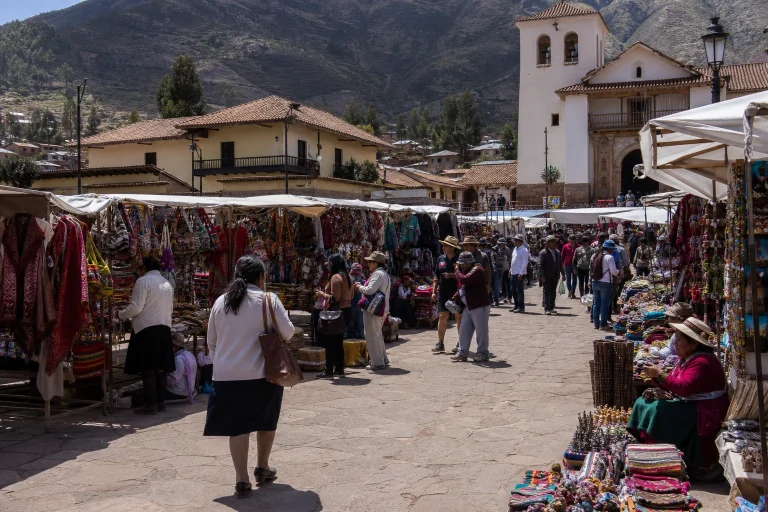
Sacred Valley Shopping Guide
Plan a thoughtful shopping trip through the Sacred Valley, with practical advice on Pisac, Chinchero, textiles, ceramics, market timing, budgets, accessibility, and responsible buying.
 Visit Sacred Valley
September 3, 2026
Visit Sacred Valley
September 3, 2026
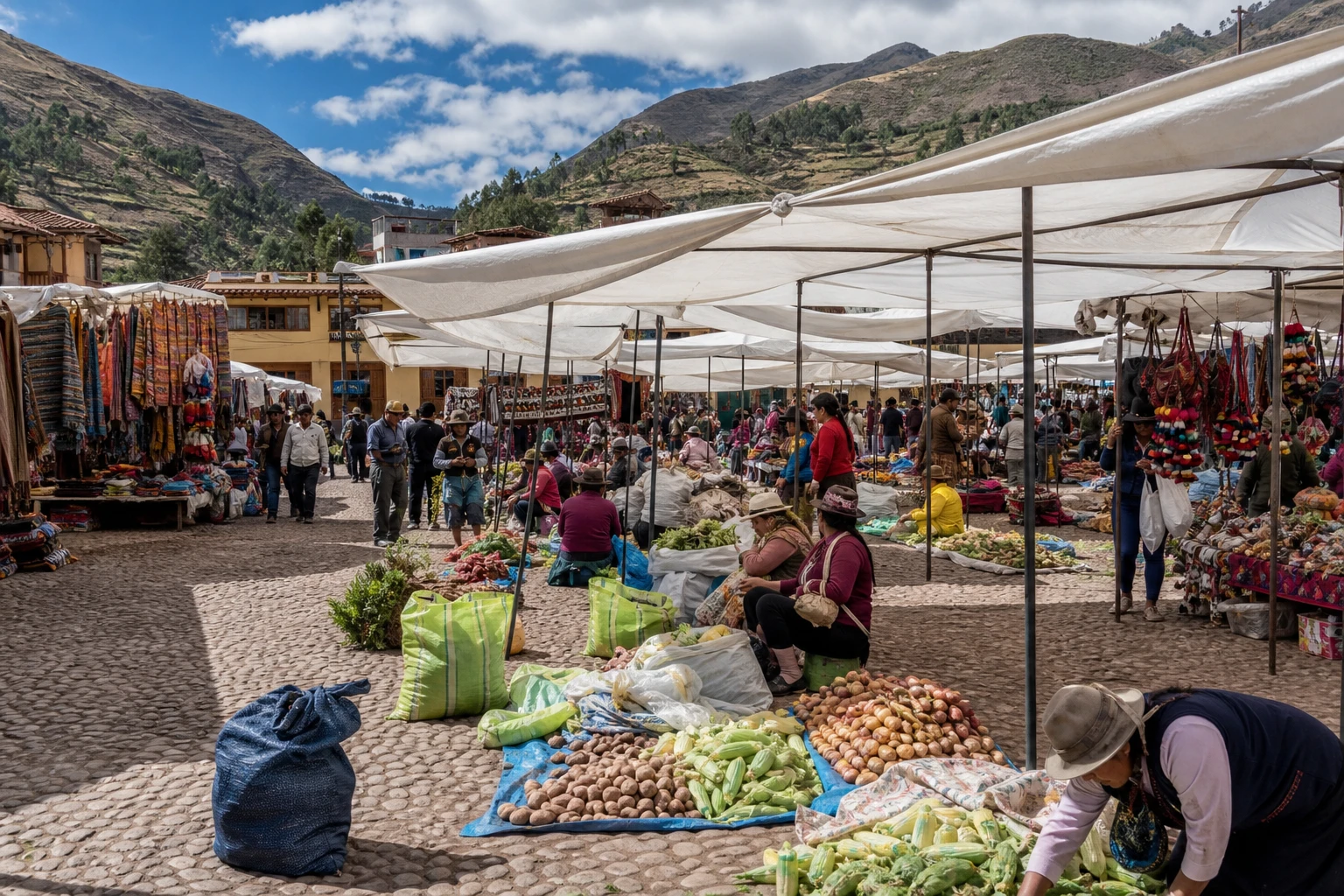
Shopping in the Sacred Valley is most rewarding when you choose a destination that matches your interests. Pisac offers the clearest Sunday market plan, with local produce and other market goods gathered around Plaza Constitución. Chinchero is the stronger choice when textiles and artisan context are the main focus. Urubamba and Ollantaytambo can broaden the trip, but their current market details should be checked locally.
- Choose Pisac for a Sunday market experience that combines local produce with general shopping.
- Choose Chinchero when weaving traditions and artisan goods are your main interests.
- Confirm current market days and hours shortly before travel, especially outside Sunday in Pisac.
- Set a personal spending limit because there is no dependable valley-wide price guide.
- Ask about materials, the maker, and the community of origin before buying a textile or craft.
- Plan transport, payment, and step-free access around your chosen stop instead of making assumptions.
The choice between Pisac and Chinchero is about emphasis rather than a contest over which market is more authentic. Pisac makes sense for a lively Sunday visit built around a mixed traditional market. Chinchero suits travelers who want to place textiles and artisan work at the center of the day. Neither distinction guarantees a particular vendor, product, quality level, or price.

From Urubamba & Ollantaytambo: Sacred Valley Day tour with Lunch
Explore the best and most unique sites in the Sacred Valley on a private tour. Visit the impressive ruins of Ollantaytambo, an ancient Inca fortress...
Market arrangements are changeable. Older directories contain schedules that are not sufficiently current for planning a 2026 trip, while newer municipal information clearly confirms Sunday activity in Pisac without establishing a complete weekly timetable. Ask your lodging, guide, or the relevant municipality to confirm the day, hours, and current market area shortly before you go.
Decide between Pisac, Chinchero, and the valley’s smaller shopping stops
Pisac for a mixed Sunday market
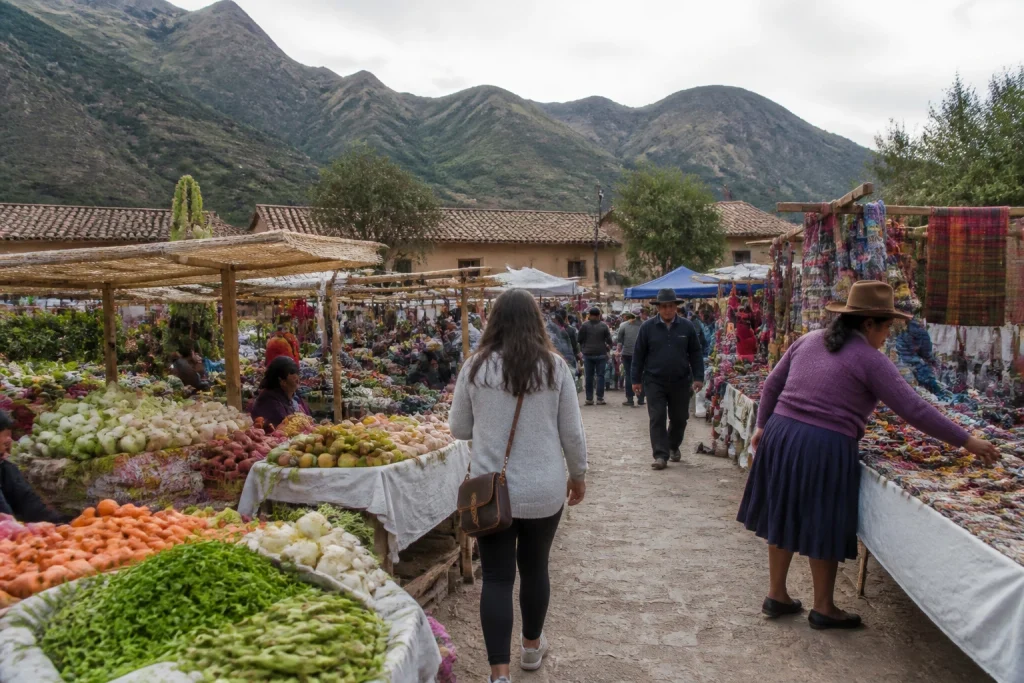
Pisac is the easiest shopping stop to anchor to a specific day. The municipality identifies Plaza Constitución as the setting for its Sunday traditional market, where producers and sellers bring goods from local farms and nearby communities. Treat it as a mixed agricultural and cultural market rather than expecting every stall to sell handicrafts.
That mix is part of the appeal. Produce and local commerce give the market a purpose beyond souvenir shopping, while the central setting makes it possible to browse without committing to a narrowly focused craft visit. Travelers building a fuller day can use detailed Pisac Sunday Market tips or a Pisac ruins and market guide to decide how much time to reserve for each activity.
Chinchero for textiles and artisan context
Chinchero has documented artisan-fair activity involving artisans, agricultural producers, and sellers from the valley. It also belongs to a group of communities recognized in Peruvian craft literature for weaving traditions. This makes it a logical destination for travelers who want to ask detailed questions about fibers, techniques, makers, and community origin.
Do not rely on an old map or timetable for the exact setup. Municipal planning information identifies activity on Simacucho and Cahuide streets, while an older directory used a different location description. A guide to Chinchero textiles and its market can provide useful cultural context, but the current fair area and operating day still deserve a local check.
Urubamba, Yucay, and Ollantaytambo as secondary options
An official craft guide historically identified artisan-market activity in Pisac, Chinchero, Ollantaytambo, and the Yucay and Urubamba area. It also associated ceramics with Urubamba. These references are useful for choosing what to investigate, but they are not current schedules. Add these stops only after confirming what will be operating on your travel date.
Ollantaytambo works especially well as a shopping possibility when it is already part of the itinerary. Check the current market situation before assigning it a large block of time, then leave room to explore the town itself. An Ollantaytambo stone streets guide can help place that visit in a broader historical setting without turning the day into a market-only excursion.
Know what to look for in each destination
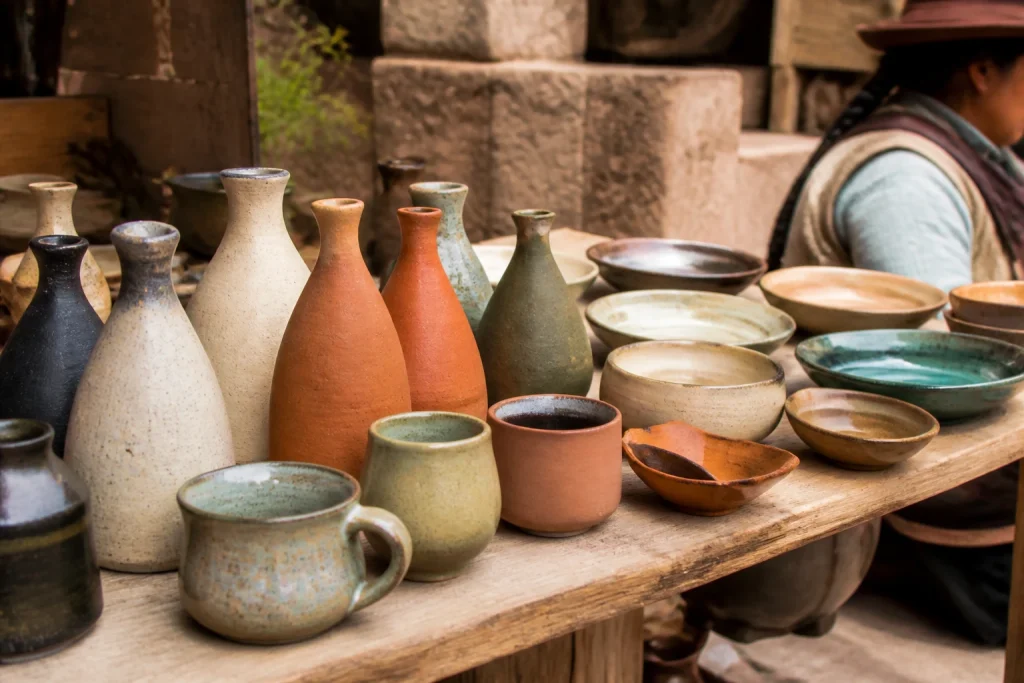
Textiles have the strongest documented connection with Chinchero, Willoq, and Patacancha, while an official craft guide associates ceramics with Urubamba. Pisac’s Sunday market adds agricultural products and goods brought by nearby communities. Selection changes with the sellers present, so use these categories as a planning framework rather than a promise of specific inventory.
| Shopping interest | Best documented starting point | What to ask |
|---|---|---|
| Mixed Sunday market | Pisac | Which goods are local, and who produced them? |
| Textiles and weaving context | Chinchero | Who made the piece, where was it made, and what materials were used? |
| Community weaving traditions | Chinchero, Willoq, or Patacancha | Is the maker or community of origin identified? |
| Ceramics | Urubamba area | Where was the piece made, and how should it be packed? |
| General artisan browsing | Pisac, Chinchero, Ollantaytambo, or Yucay and Urubamba | Is the market operating on the planned day? |
A short shopping list keeps the experience focused. Decide whether you want a wearable textile, a decorative piece, a practical household item, food for immediate use, or simply a chance to understand local craft traditions. Measurements and color notes are useful if the purchase must fit a particular space or wardrobe.
Machu Picchu Entrance Ticket
This experience gives you something most travelers can’t find: peace of mind. Whether you plan ahead or need a sol...

Machu Picchu: Official Entrance Tickets
With this ticket you can visit the Inca city of Machu Picchu. The ticket allows you to visit most of the archaeologi...

Machu Picchu Entrance Ticket Official Circuits
Discover the wonders of Machu Picchu with an official entrance ticket that allows you to explore this ancient Inca c...
Evaluate textiles through questions and close inspection
Begin with provenance. Ask who made the textile, which community it comes from, what fibers were used, and how the color was produced. If technique matters to you, ask how the piece was woven and how long its production involved. A clear conversation is more informative than judging quality by color or pattern alone.
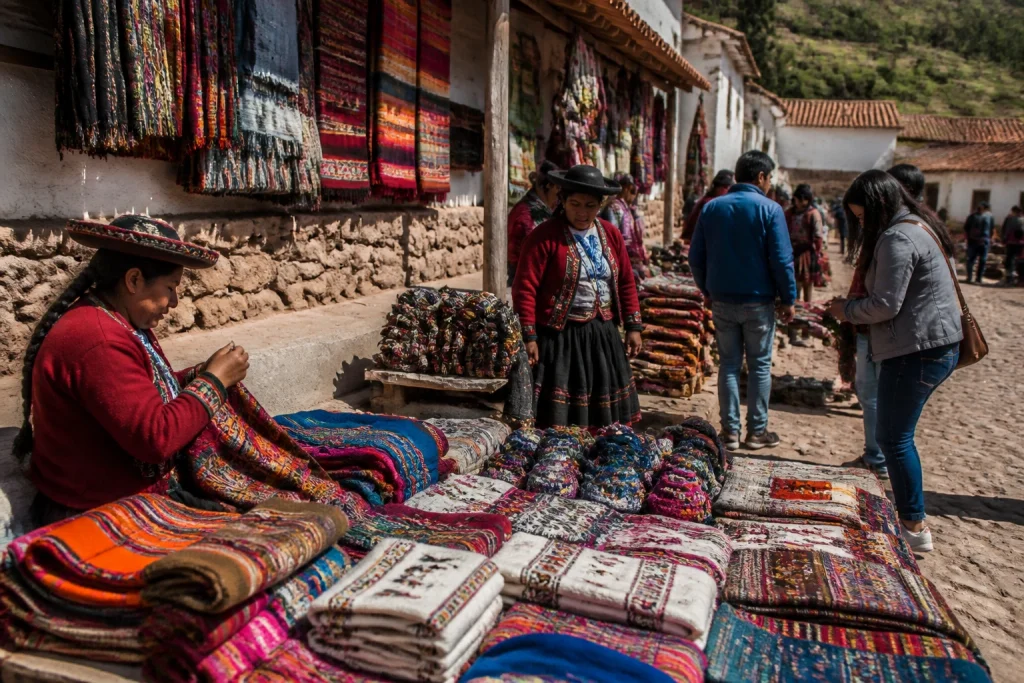
- Ask whether the seller is also the maker or represents another artisan.
- Confirm the fiber and any care instructions before buying.
- Look closely at edges, joins, fastenings, and the reverse side.
- Check dimensions rather than estimating by eye.
- Ask whether natural or synthetic dyes were used if that distinction matters to you.
- Request the final price before agreeing to the purchase.
Small irregularities do not tell the full story of a handmade piece. Focus on whether the construction, materials, appearance, and explanation match what you want. Compare a few items slowly, but avoid handling delicate work roughly or unfolding a large stack without the seller’s help.
If a demonstration is offered, listen for practical details that connect the finished textile to its production. A demonstration can deepen the visit, but it does not replace questions about the exact item you are considering. Confirm that its maker, materials, and origin apply to that particular piece.
Set a budget without relying on a generic price list
There is no useful single price table for Sacred Valley textiles, ceramics, food, or shipping. Materials, dimensions, workmanship, seller, and provenance can all affect what a buyer is willing to pay. Set a total personal budget and reserve part of it for an unexpected find instead of assigning an assumed price to every category.
Ask for the final price before committing. If you are comparing similar pieces, make sure they are actually similar in material, size, construction, and stated origin. A lower number is not automatically better value, especially when the explanation of who made an item is important to you.
Do not assume every seller accepts the same payment methods. Check before the transaction begins and choose a payment option you understand. Keep a simple note of larger purchases, particularly if several people in your group are buying at once.
Buy respectfully and keep the maker’s story attached to the object
The most useful version of “authentic” is specific rather than romantic. Look for a clear account of the maker, community, materials, and process. Avoid treating an entire town or market as automatically superior. Pisac and Chinchero serve different shopping interests, and neither destination guarantees quality, provenance, or value at every stall.
Write down the maker’s name and community if the seller shares them. That small step preserves context once the item is home and separated from the market conversation. It also helps when giving the purchase as a gift.
Ask permission before photographing a seller, artisan, demonstration, or close view of someone’s work. A busy market is still a workplace. If you do not plan to buy, be direct and courteous rather than beginning a long negotiation for entertainment.
Plan the shopping day around confirmed schedules and transport
Sunday in Pisac is the strongest documented scheduling anchor. Beyond that, avoid building a tightly timed route from historical market directories. Confirm the day and operating hours, then arrange transport around the stop that matters most. Current fares, pickup points, public-transport timetables, and door-to-door journey times should be checked locally.
| Priority | Primary plan | Confirm before departure |
|---|---|---|
| Sunday market atmosphere | Make Pisac the main shopping stop | Market hours, current access, and return transport |
| Textiles and weaving context | Make Chinchero the main shopping stop | Fair day, current location, and transport |
| Ceramics | Investigate the Urubamba area | Current sellers, opening pattern, and packing options |
| Shopping during an Ollantaytambo stay | Browse only after confirming local activity | Market location and operating day |
| Several valley towns | Use flexible private transport or a locally planned route | Travel times, waiting arrangements, and total cost |
A driver or guide can simplify a multi-stop day, especially when market activity needs to be checked as plans change. Agree on the intended stops, waiting arrangement, and total transport cost before departure. If shopping is only one part of the trip, protect time for the main attraction instead of squeezing several uncertain market stops into the route.
For a combined Pisac day, decide in advance whether the market or the archaeological visit is the priority. The Pisac ruins and market guide can help structure both without assuming that market schedules will fit every itinerary. Confirm the market first, then build the remaining plan around it.
From Urubamba & Ollantaytambo: Sacred Valley Day tour with Lunch
Explore the best and most unique sites in the Sacred Valley on a private tour. Visit the impressive ruins of Ollantaytambo, an ancient Inca fortress...
Check before you go: market hours, road access, closures, and local operating conditions can change. Reconfirm the plan with your accommodation, driver, guide, or municipality shortly before departure.
Still comparing Sacred Valley Shopping And Artisan Markets?
Ask for tour ideas, hotel suggestions, or a simple trip plan that combines both.
Trip Helper
Arrange accessibility around a specific route
Do not label an entire Sacred Valley market accessible or inaccessible. Conditions can differ between the drop-off point, surrounding streets, individual stalls, restrooms, and the return pickup area. Travelers who need step-free access should arrange a current check of the exact route with their accommodation, driver, or local operator.
- Confirm the closest practical drop-off and pickup points.
- Ask about steps, curbs, steep sections, and uneven surfaces along the planned route.
- Check whether seating and suitable restrooms are available nearby.
- Allow extra time instead of combining several uncertain stops.
- Share mobility-device dimensions when arranging transport.
- Create a shorter browsing route with an easy return option.
A precise question produces a more useful answer than asking whether a whole town is accessible. Describe the distance you can manage, the barriers that matter, and any assistance required. Recheck if roadworks, temporary market layouts, or event closures could alter the route.
Pack for browsing, carrying, and protecting purchases
Bring a lightweight reusable bag, a few notes with required dimensions, and a phone photo of the room or outfit a purchase must match. A soft layer of clothing can provide temporary padding for sturdy objects, though fragile ceramics deserve proper wrapping from the seller.
- Foldable reusable shopping bag
- Written measurements for textiles or household pieces
- Phone or notebook for maker and community details
- Soft packing material for sturdy purchases
- Secure day bag that leaves both hands free
- Space in your luggage for the planned purchase
Think about luggage space before buying a large or rigid item. Check the object’s measurements and weight, then consider how it will survive the rest of the trip. If a seller offers shipping, review the total charge, packaging, tracking, and delivery terms before using the service.
Use one of three realistic shopping plans
- Sunday in Pisac: Confirm the market hours, make Plaza Constitución the central stop, browse produce and general goods, and add another Pisac activity only if the timing remains comfortable.
- Textile-focused Chinchero visit: Confirm the current fair location and schedule, allow time for questions about makers and materials, and avoid adding distant stops until transport has been arranged.
- Flexible multi-town browsing: Choose one primary destination and treat Urubamba, Yucay, or Ollantaytambo as optional additions. Confirm each stop locally rather than depending on an old weekly market circuit.
The single-stop plan is usually the simplest. It leaves enough attention for conversation, comparison, and careful packing. A multi-town route suits travelers with flexible transport and a strong interest in regional craft, but it should not depend on every market operating exactly as expected.
If the wider journey includes major sites, review the best things to do in the Sacred Valley before assigning an entire day to shopping. That broader view helps keep markets, archaeological visits, village walks, and travel days in balance.
Avoid the most common shopping mistakes
- Planning around old market hours without checking them locally
- Assuming Pisac is exclusively a craft market
- Treating Chinchero as a guarantee of specific vendors or products
- Using price alone to compare objects made from different materials
- Buying before confirming dimensions, care needs, and final price
- Expecting transport, payment methods, or step-free routes to be uniform across the valley
The best defense against disappointment is a short set of priorities. Know which town matters most, which category you want, and what questions you will ask. Then leave enough flexibility for a changed market layout or a piece that deserves more careful consideration.

Machu Picchu Circuit 2 Guided Tour
Explore the wonders of Machu Picchu via the official Circuit 2 route, known for its stunning views and historical si...

Official Machu Picchu Entrance Ticket
Secure your visit to Machu Picchu with this official entrance ticket to one of the New Seven Wonders of the World. E...

Machu Picchu Official Entry Ticket
Discover the wonder of Machu Picchu with an official entrance ticket. Choose from several official circuits, each of...
Choose the market that fits your trip
Choose Pisac when you can visit on Sunday and want a mixed market connected with local produce and community commerce. Choose Chinchero when textiles, weaving traditions, and artisan conversations are the main purpose. Consider Urubamba, Yucay, or Ollantaytambo when those places already fit the itinerary or when current local information confirms an appealing market opportunity.
A good Sacred Valley purchase carries more than color home. It should fit your budget, meet your practical needs, and come with a clear understanding of what it is and who made it. Confirm the schedule, ask specific questions, and give the shopping stop enough time to be a conversation rather than a dash between attractions.
Frequently asked questions
What is the best market for shopping in the Sacred Valley?
Pisac is the clearest choice for a mixed Sunday market, while Chinchero is better suited to a textile-focused visit. This is a practical distinction based on each market’s documented emphasis, not a ranking of quality, authenticity, or value.
What day should I visit Pisac Market?
Sunday is the strongest currently documented choice. Pisac’s municipality identifies Plaza Constitución as the setting for the Sunday traditional market, but travelers should confirm current hours shortly before visiting.
What should I buy in the Sacred Valley?
Textiles are closely associated with Chinchero, Willoq, and Patacancha, while an official craft guide links ceramics with Urubamba. Pisac’s Sunday market also includes agricultural products brought by local producers and nearby communities.
Are market hours the same throughout the week?
No dependable valley-wide schedule should be assumed. Older directories contain weekly timetables, but current arrangements should be confirmed with your lodging, guide, or the relevant municipality shortly before travel.
How much do Sacred Valley textiles and crafts cost?
Prices depend on the item, seller, materials, dimensions, construction, and stated provenance. Set a personal budget, ask questions about the piece, and confirm the final price before buying rather than relying on a generic price chart.
Can I pay by card at Sacred Valley markets?
Payment methods can differ between sellers, so ask before beginning the transaction. Do not assume that every market or stall accepts the same options.
Are Pisac and Chinchero markets wheelchair accessible?
Accessibility should be checked for the exact route you plan to use. Confirm the drop-off point, steps, curbs, surfaces, restrooms, seating, and return pickup with an accommodation, driver, or local operator.
Can I shop in Ollantaytambo or Urubamba?
Yes, both have historical documentation as artisan-shopping locations, and Urubamba has been associated with ceramics. Current vendors, locations, and schedules should be checked locally before making either town the focus of a shopping trip.