Sacred Valley Hidden Gems Guide
Plan a slower Sacred Valley journey through Pisac, Chinchero, Moray, and Ollantaytambo, with practical advice for rail connections, luggage, costs, accessibility, and current 2026 access changes.
 Visit Sacred Valley
September 8, 2026
Visit Sacred Valley
September 8, 2026

The best Sacred Valley hidden gems are often hiding in plain sight. Pisac, Chinchero, Moray, and Ollantaytambo are established destinations, but hurried itineraries can reduce them to brief photo stops. Give them more time and the experience changes. Markets, weaving, circular terraces, stone lanes, and mountain scenery become the heart of the journey rather than scenery viewed through a vehicle window.
- Treat Pisac, Chinchero, Moray, and Ollantaytambo as places for focused visits, not undiscovered attractions.
- Stay in or near Ollantaytambo when protecting a Machu Picchu train connection is the main priority.
- Avoid combining a full valley sightseeing day with a tightly timed train departure during the 2026 Ollantaytambo access works.
- Check current admission arrangements and temporary closures before fixing the daily route.
- Pack lightly for the train and follow the luggage allowance shown for the specific service booked.
- Confirm terrain, toilets, transport, and assistance directly if anyone in the group has limited mobility.
This guide takes a practical definition of “hidden gem.” The places themselves are known, but the rewarding details can be missed when every day becomes a race between stops. A better plan selects fewer anchors, leaves room for unhurried exploration, and protects any fixed rail departure. That approach is especially valuable for travelers continuing to Machu Picchu through Ollantaytambo.

From Urubamba & Ollantaytambo: Sacred Valley Day tour with Lunch
Explore the best and most unique sites in the Sacred Valley on a private tour. Visit the impressive ruins of Ollantaytambo, an ancient Inca fortress...
What “hidden gem” means in the Sacred Valley
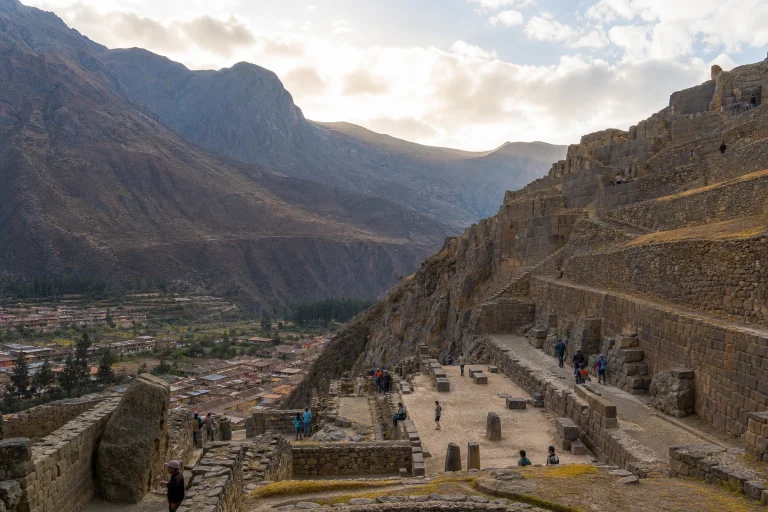
Pisac, Chinchero, Moray, and Ollantaytambo should not be presented as secret discoveries. Peru's tourism authority has previously identified all four as visitor-ready archaeological centers. Their appeal for a hidden-gems itinerary comes from how they are experienced: one at a time, with enough space to look beyond the standard circuit.
Current opening conditions, admission arrangements, and temporary restrictions still require a local check. Older destination listings are useful for choosing possible stops, but they should not be treated as a live operating calendar. Ask your accommodation, guide, or transport provider to confirm the day's conditions before departure, especially when a closure would affect a train connection.
The strongest itinerary is therefore selective rather than exhaustive. Choose one place for a deep visit, one complementary stop, and a flexible meal or rest period. Travelers who try to collect every major name in a single day often sacrifice the very thing they came to find: time to notice how each place differs.
Four places worth building the journey around
| Place | Best role in the itinerary | Planning priority |
|---|---|---|
| Pisac (Pisaq) | A dedicated ruins-and-market day or substantial half-day | Leave enough time for both subjects instead of treating the town as a quick stop |
| Chinchero | A focused visit centered on archaeology, textiles, and the local setting | Avoid squeezing it between too many timed activities |
| Moray | A compact archaeological focus built around its circular terraces | Confirm current entry conditions and pair it only with stops that fit the available time |
| Ollantaytambo | An overnight base and practical rail hub | Protect the train departure with an overnight stay and a generous station buffer |
These four places can form an entire Sacred Valley trip without forcing a rushed checklist. Pisac and Chinchero reward cultural focus, Moray provides a clearly defined archaeological visit, and Ollantaytambo adds both atmosphere and transport value. The right combination depends less on the number of available hours than on which commitments cannot move.
Give Pisac a morning and an afternoon
Pisac works best when the archaeological area and market are treated as two parts of one visit. A detailed Pisac ruins and market guide can help organize that slower rhythm. Rather than deciding in advance that both must fit into a narrow window, identify which one matters most and give it the larger share of the day.

Build in a pause between activities. This creates room for lunch, changing weather, slower transport, or simple fatigue. It also keeps the visit from becoming a sequence of arrivals and departures. Pisac is a poor choice for a rushed add-on when a fixed train leaves from Ollantaytambo later that day.
Pisac suits travelers who prefer one substantial destination over several brief stops. If the day also includes a long transfer, shorten the Pisac plan rather than trimming the rail buffer. Archaeological sites and markets can be revisited on another trip; a missed train creates a far more complicated problem.
Let Chinchero be more than a transit stop
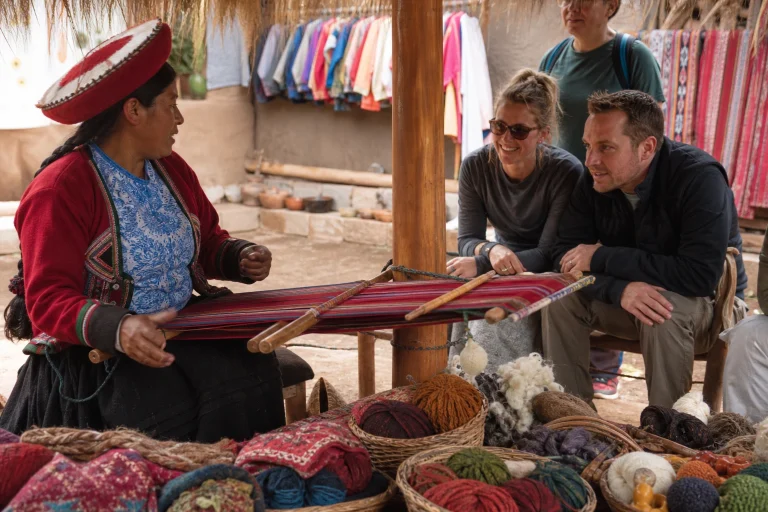
Chinchero deserves a defined place in the schedule rather than whatever time remains. Its archaeological and weaving themes make it a natural choice for travelers interested in living cultural traditions as well as historic places. A closer look at Chinchero textiles and market experiences can help shape the visit around those interests.
Plan Chinchero on a day without a tight rail deadline. A slow demonstration, conversation, or market visit loses its appeal when everyone is watching the clock. If a guide or driver proposes several additional stops, decide which ones are genuinely important before leaving rather than cutting every visit short later.
Chinchero is also a useful test of travel style. Visitors drawn to objects, craft, and cultural context should reserve more time here. Travelers whose main interest is monumental archaeology can make Moray or Ollantaytambo the day's anchor instead. Neither choice is better; the goal is to match limited hours to genuine curiosity.

Machu Picchu Private Archaeological and Historical Guided Tour
Explore Machu Picchu, one of the Seven Wonders of the World, in the company of a private guide. Enjoy the undivided...

Machu Picchu Private Tour from Aguas Calientes (Tickets included)
Discover Machu Picchu at your own pace with our exclusive Private Guided Tour from Aguas Calientes. Perfect for inde...

One-Day Inca Trail Hike to Machu Picchu from Cusco
Experience the best of the legendary Short Inca Trail in just one day from Cusco. Begin your hike at Km 104 and foll...
Use Moray as a focused archaeological stop
Moray's circular terraces give the visit a clear visual center. The site works well for travelers who want a concentrated archaeological experience without turning the day into a collection of unrelated stops. A guide to the Moray circular terraces can provide more context before arrival and help visitors decide how much time to reserve.
The temptation is to attach Moray to every nearby possibility. Resist that unless the schedule has real slack. One complementary stop can create a balanced day, but each extra detour consumes the margin needed for transport delays, meals, and time on site. A half-day plan should still contain breathing room.
Do not build the budget around an old admission figure or an informal transport estimate. Entrance rules and local transport costs should be checked for the travel date. Keep separate amounts available for site admission, local movement, meals, and any guide rather than treating them as one fixed package.
Stay overnight in Ollantaytambo when the train matters
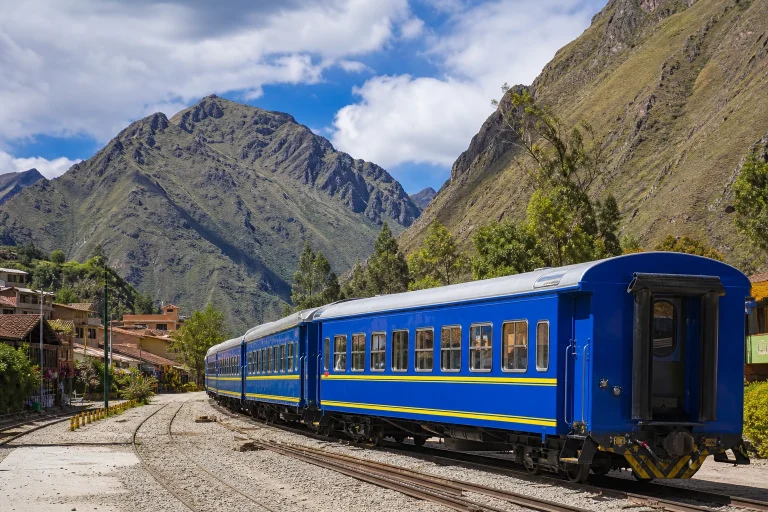
Ollantaytambo is the most practical overnight choice in this guide for travelers continuing by rail. PeruRail identifies it as its most commonly used station and the one with the broadest timetable range. Staying nearby reduces the number of moving parts on departure day and makes the recommended early station arrival easier.
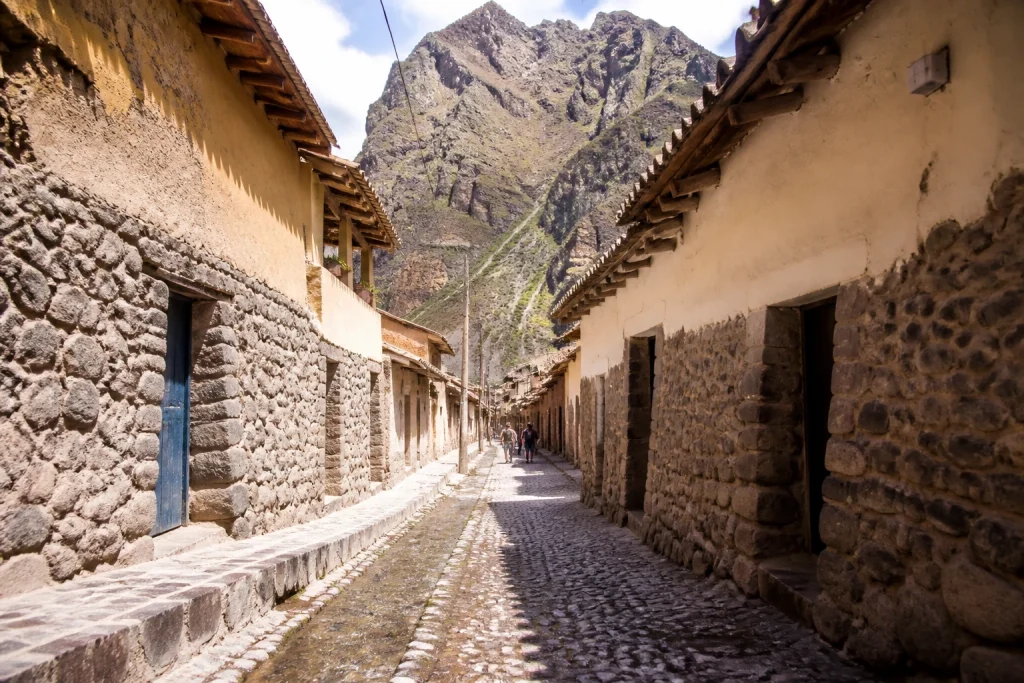
An overnight also creates time to appreciate the Ollantaytambo stone streets and historic town setting without carrying a train deadline through the visit. Arrive, settle in, explore at a manageable pace, and keep departure morning simple. This is less ambitious than a same-day dash from Cusco, but considerably more resilient.
PeruRail advises passengers to board 30 minutes before departure. Treat that as the minimum station requirement rather than the total transfer buffer. Time is also needed to reach the station, manage luggage, find the correct boarding area, and respond to traffic changes.
Accommodation choice should follow the same logic. Prioritize a location that simplifies the morning transfer, then compare comfort and amenities. A practical overview of where to stay among Sacred Valley lodges, hotels, and villages can help travelers decide whether Ollantaytambo or another base better matches the wider itinerary.
Build a flexible one-day or two-day route
Two days provide the best balance for these Sacred Valley stops. A one-day version is possible, but it should focus on one or two places rather than all four. The itinerary becomes much less forgiving when it includes a timed train departure.
A two-day plan ending in Ollantaytambo
- Choose Pisac or Chinchero as the first day's main destination. Allow a substantial visit rather than dividing the day among several minor stops.
- Use the remainder of day one for an unhurried meal, local exploration, or transfer to the night's accommodation.
- Visit Moray or another confirmed archaeological stop on day two only if the timing leaves a generous margin.
- Reach Ollantaytambo well before evening, check in, and keep the rest of the day flexible.
- Travel to the station on departure day without adding another major attraction beforehand.
This structure works because it separates exploration from the rail deadline. It also gives each destination a clear role. One place carries the cultural focus, another carries the archaeological focus, and Ollantaytambo protects the onward connection.
Still comparing Sacred Valley Hidden Gems Itinerary?
Ask for tour ideas, hotel suggestions, or a simple trip plan that combines both.
Trip Helper
A one-day route without a train connection
Select two stops at most and name one as the priority. If delays develop, shorten or remove the secondary stop. This is a better strategy than giving every destination an equally inadequate visit. Confirm the day's entry conditions before departure so a closure does not consume the limited schedule.
A one-day route with a train connection
The safest plan is to wake in or near Ollantaytambo and keep sightseeing secondary. During the 2026 road works, a Cusco-to-valley-to-train itinerary has less room to absorb delays. Travelers determined to include a visit should choose something brief and easily abandoned if transport runs late.
Account for the 2026 Ollantaytambo access works
Travelers visiting on or around August 16, 2026 should treat road access to Ollantaytambo station as an active logistics risk. PeruRail announced that road-improvement works began on April 13, 2026 and were expected to last about eight months. Reconfirm the current access pattern and service instructions before setting out.
PeruRail's announced station and parking approach uses Vía de Evitamiento, Rumira, San Isidro, Calicanto Bridge, and Avenida Ferrocarril. Traffic arrangements can evolve as work progresses, so the operator's latest directions should take priority over an old route saved in a phone or passed along by another traveler.
The works have also affected some bimodal timings. PeruRail stated that Expedition 504 and Vistadome 606 passengers transfer to buses from Pachar. Anyone booked on those services should review the current itinerary carefully, paying particular attention to the actual meeting point and transfer instructions.
For broader route comparisons, a guide to train routes to Machu Picchu can help clarify the planning choices. The booked operator and service remain authoritative for departure details. Check the confirmation again shortly before travel rather than assuming every service uses the same station procedure.
The train journey from Ollantaytambo to Machu Picchu Pueblo is described by PeruRail as approximately 2 hours 10 minutes. After arrival, the bus trip to the official Machu Picchu entrance takes roughly 25 to 30 minutes. These are separate stages, so do not treat arrival in the town as arrival at the sanctuary entrance.
Plan luggage, costs, and mobility before departure
Travel light and follow the booked luggage allowance
PeruRail's current pages do not state one consistent allowance for every service. Its FAQ lists one item up to 8 kilograms, while the train-services page describes an 8-kilogram backpack or a 12-kilogram carry-on for certain services. Follow the limit attached to the specific train booking and do not assume a larger allowance applies.

The operator advertises free luggage storage at Ollantaytambo between 04:15 and 21:00. It also lists extra charges of US$25 for checked luggage and US$15 for carry-on luggage. Policies can vary by service, so check the booking details before deciding what to leave, store, or take aboard.
Keep attraction and transport costs flexible
Admission and local transport costs should be checked close to the travel date. Avoid relying on old price lists for Pisac, Chinchero, Moray, the Maras salt pans, taxis, or local shared transport. Ask what is included before accepting a tour or transfer, particularly when the day combines several separately managed attractions.
A simple budget can use separate categories for admission, guide services, local transport, meals, luggage, and the train. This makes it easier to compare a private day with independent travel without pretending that variable charges form one universal price.

Explore Machu Picchu Private Guided Tour from Aguas Calientes
Discover the secrets of Machu Picchu with a private tour guide on an unforgettable journey from Aguas Calientes. Sta...

Machu Picchu Private Tour with Ticket, Bus from Aguas Calientes
Maximize your time at Machu Picchu with this private guided tour starting directly from Aguas Calientes. Skip the ha...

Machu Picchu Circuit 2 Entry Ticket and Private Official Guide
Can't find Circuit 2 tickets? We have you covered! We exclusively provide the highly-coveted Circuit 2 (Classic Rout...
Do not assume step-free access
Travelers with limited mobility should confirm the terrain, steps, toilets, drop-off point, and adapted transport for every planned site. Do not assume that individual archaeological centers are wheelchair-accessible or step-free. A private vehicle alone does not establish that paths and visitor facilities will suit a traveler's needs.
PeruRail asks passengers needing special luggage assistance to make contact at least 48 hours in advance, with assistance subject to available space. That service concerns luggage and should not be treated as confirmation of full accessibility at stations, archaeological sites, or connecting transport.
Choose depth over a longer checklist
The Sacred Valley's most rewarding hidden-gem itinerary is built around attention, not obscurity. Pisac, Chinchero, Moray, and Ollantaytambo are established places, yet each gains depth when it receives more than a hurried stop. Choose the destination that best matches your interests, then give it enough room to become memorable.
Travelers heading to Machu Picchu should make Ollantaytambo the logistical anchor and protect the train with an overnight stay. Everyone else can plan more freely, but the same principle applies: two considered visits usually create a better day than four rushed arrivals. Confirm current conditions, keep costs flexible, and let the valley set the pace.
Frequently asked questions
Are Pisac, Chinchero, Moray, and Ollantaytambo really hidden gems?
They are established Sacred Valley destinations, not undiscovered sites. Their hidden-gem appeal comes from exploring them slowly and noticing the cultural, archaeological, and local details that rushed tours often compress.
Should I stay overnight in Ollantaytambo before taking the Machu Picchu train?
An Ollantaytambo overnight is the more resilient option when the train connection matters. It reduces transfer uncertainty, supports the recommended early station arrival, and avoids combining a long sightseeing day with a fixed departure.
How early should I reach Ollantaytambo station?
PeruRail advises passengers to board 30 minutes before departure. Allow additional time for the transfer to the station, luggage, wayfinding, and any traffic changes caused by the 2026 road works.
How long is the trip from Ollantaytambo to Machu Picchu?
PeruRail describes the train journey to Machu Picchu Pueblo as approximately 2 hours 10 minutes. The bus from the town to the official entrance takes another 25 to 30 minutes.
Can I store luggage at Ollantaytambo station?
PeruRail advertises free luggage storage at Ollantaytambo from 04:15 to 21:00. Check the rules for the booked train because baggage allowances differ across the operator's service information.
How much should I budget for Sacred Valley attractions and local transport?
Budget separately for admission, local transport, meals, guides, and the train. Current attraction and local transport charges vary, so check them near the travel date rather than relying on old numeric estimates.
Are Sacred Valley archaeological sites wheelchair-accessible?
Do not assume the archaeological sites are step-free or wheelchair-accessible. Confirm terrain, toilets, drop-off arrangements, adapted transport, and any assistance directly for each planned stop.
A slower itinerary leaves more time to appreciate the Sacred Valley between its established archaeological centers by McKay Savage from London, UK, CC BY 2.0.
From Urubamba & Ollantaytambo: Sacred Valley Day tour with Lunch
Explore the best and most unique sites in the Sacred Valley on a private tour. Visit the impressive ruins of Ollantaytambo, an ancient Inca fortress...
.jpg)