Sacred Valley Horseback Riding Guide
Plan a horseback ride through Peru’s Sacred Valley with practical guidance on routes, altitude, seasons, costs, riding ability, safety, transportation, and booking.
 Visit Sacred Valley
September 9, 2026
Visit Sacred Valley
September 9, 2026

Horseback riding in the Sacred Valley offers a slower, more active way to experience Peru’s high Andean landscape. Many itineraries combine riding near Maras and Moray with vehicle transfers and sightseeing stops. The details vary considerably, including actual saddle time, group size, altitude, admissions, meals, and pickup arrangements. Choosing well starts with matching the route to your experience, available time, and comfort at elevation.
- Set aside a full day for longer rides, especially when transportation from Cusco is included.
- Acclimatize before riding because much of the valley is around 2,800 to 3,000 meters, and some routes climb higher.
- Roughly May through October usually offers the strongest odds of dry riding weather.
- Compare actual saddle time rather than relying only on a tour’s total advertised duration.
- Confirm helmet availability, horse-and-rider matching, trail conditions, admissions, meals, and cancellation terms before paying.
A half-day outing suits travelers who want a manageable introduction. A full-day private ride creates more room for scenery and stops around Maras, Moray, and the salt ponds, but it also involves longer transfers and more time at altitude. Multi-day programs provide deeper immersion at a far higher cost and require greater schedule flexibility.

From Urubamba & Ollantaytambo: Sacred Valley Day tour with Lunch
Explore the best and most unique sites in the Sacred Valley on a private tour. Visit the impressive ruins of Ollantaytambo, an ancient Inca fortress...

Sacred Valley Alpaca Hiking Tour
We involve local people in the activity: By doing so, we provide an opportunity for them to actively participate in the tourism industry in Cusco. You...
Is horseback riding in the Sacred Valley worth it?
It is a strong choice for travelers who value landscape, open-air activity, and a less hurried pace. The most satisfying tours state how long riders are actually in the saddle and explain which attractions are visited on foot. This distinction matters because a full-day itinerary can include several hours of driving, preparation, breaks, and archaeological sightseeing.
A road-based guided tour can be better for visitors primarily interested in detailed archaeological interpretation or several major sites in one day. Riding is better suited to travelers who see the journey through the landscape as the main experience. A shorter private ride can provide a useful middle ground for beginners, families, or anyone unsure about spending most of a day at elevation.
How a typical riding day works
Published day tours commonly begin with hotel pickup in Cusco, followed by a drive to a ranch or trailhead near Cruz Pata or Paucarbamba. Riders meet the horses, receive instructions, and may complete a short practice session before setting out. Depending on the product, the route then explores the Maras and Moray area before returning toward Cusco.
One private eight-hour itinerary advertises an 8:30 a.m. pickup and a return to Cusco at about 4:30 p.m. Another full-day ride is listed from 9 a.m. to 4 p.m. These are useful planning examples rather than universal schedules. Pickup windows, traffic, trail conditions, sightseeing stops, and the selected route can all affect the day.
Check where the riding portion begins, not just where the vehicle pickup occurs. Also confirm the expected saddle time, maximum group size, planned pace, number of guides, and whether inexperienced riders travel separately from stronger riders. A detailed itinerary is more valuable than a long list of attractions without timing.
Routes around Maras, Moray, and the salt ponds
The Maras and Moray area is a recurring base for Sacred Valley riding itineraries. Tours can combine mountain riding with visits to Moray and the salt ponds near Maras. However, an attraction listed on the itinerary is not proof that horses enter the archaeological or visitor area. Some portions can involve dismounting, walking, or continuing by vehicle.
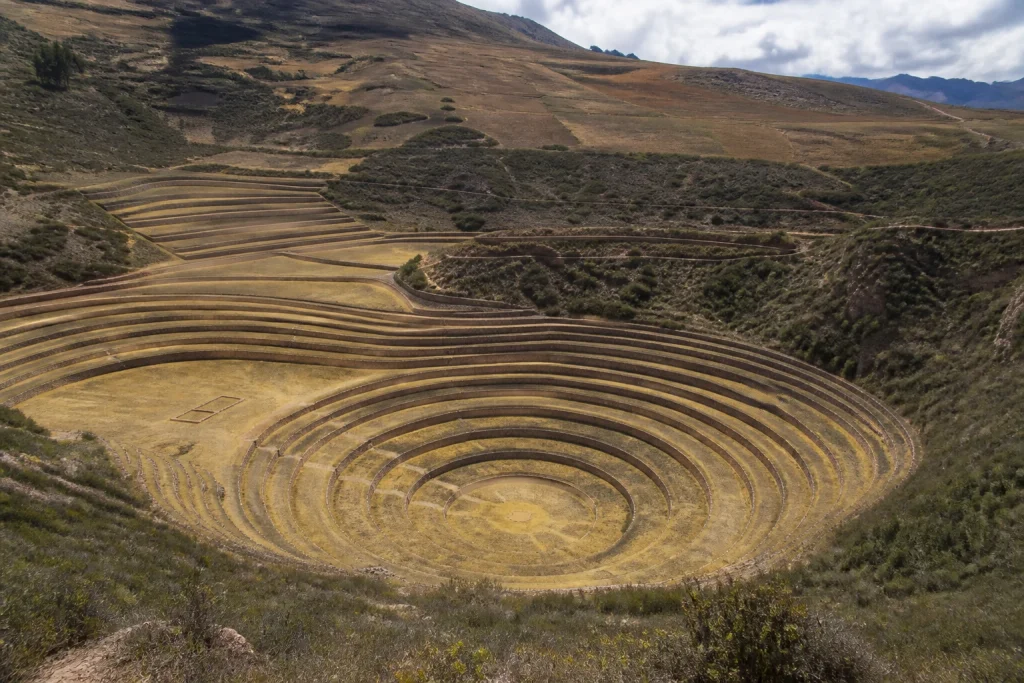
Travelers who want more context before selecting a route can compare the experience with a dedicated Maras and Moray half-day plan. That helps clarify whether riding should be the day’s central activity or an addition to archaeological sightseeing. If Moray is a priority, ask how much time is allowed at the terraces and whether interpretation is included.
Do not assume every advertised route is available in every season. Exposed trails can become less appealing during heavy rain, while road or trail conditions can alter the day’s plan. Ask for the intended route shortly before departure and confirm which sites will be entered on foot.
Choose between a half-day, full-day, or multi-day ride
| Ride format | Best suited to | Main tradeoff |
|---|---|---|
| Half-day ride | Beginners, tighter budgets, and travelers testing their comfort in the saddle | Less riding and fewer possible sightseeing stops |
| Full-day ride | Travelers prioritizing scenery and a broader Maras and Moray itinerary | More transfers, time at altitude, and physical commitment |
| Multi-day journey | Experienced or enthusiastic riders seeking deeper immersion | Much higher cost and a substantial schedule commitment |
For most first-time riders, a shorter tour is easier to evaluate and leaves more flexibility if weather or altitude becomes uncomfortable. Experienced riders should still ask about pace and terrain. A long advertised duration does not guarantee a long or challenging ride, particularly when the itinerary includes hotel transfers and visitor sites.

Natural Inca Hot Springs Day Trip – Soak & Relax in the Andes
The Inca thermal baths of Lares Valley are completely natural water that comes from the Andean mountains. This water...

Machu Picchu Private Tour with Ticket, Bus from Aguas Calientes
Maximize your time at Machu Picchu with this private guided tour starting directly from Aguas Calientes. Skip the ha...

Ticket Machu Picchu with Private Guide
Unlike standard tickets, this option includes a private licensed guide who will accompany you inside Machu Picchu. Y...
What riding experience do you need?
Some operators market Sacred Valley rides for all ages and ability levels, while another describes a route reaching 3,700 meters as easy. Treat these labels as broad marketing categories, not personal guarantees. Uneven ground, exposure to changing weather, mounting, balance, and extended time in the saddle can still challenge a beginner.
Tell the operator honestly about previous riding experience, recent activity level, balance concerns, and comfort around horses. Ask how horses are matched to riders and whether the guide can adjust the pace. Beginners should favor a route with an introductory session, a controlled pace, and the option to shorten the ride if necessary.
Experienced equestrians should request the same level of detail. Ask how much walking, trotting, or faster riding is planned, subject to trail conditions and group ability. Without that information, an advanced rider can book a scenic outing that is enjoyable but far gentler than expected.
Altitude changes the difficulty
Much of the Sacred Valley lies at roughly 2,800 to 3,000 meters above sea level. Although that is generally lower than Cusco, it remains high altitude. At least one advertised riding route reaches about 3,700 meters, so the elevation at the trailhead does not necessarily represent the highest point of the day.

Plan the ride after spending time acclimatizing rather than immediately after arriving in Cusco. Anyone already feeling unwell at altitude should reconsider a long day in the saddle. A shorter route with less elevation gain is a more sensible choice when exertion or altitude symptoms are a concern.
Ask for the trail’s starting elevation, approximate high point, and expected amount of physical effort. The word easy usually describes riding technique, not necessarily the combined effects of sun, cold, elevation, transfers, and several hours outdoors.
Best season for a Sacred Valley horse ride
Roughly May through October usually offers the strongest odds of dry weather for riding and archaeological sightseeing. The tradeoffs are cooler nights and more visitors, particularly during the middle of the season. Clear-looking mornings still do not guarantee that every trail will be suitable, so confirm local conditions shortly before departure.
The rainy season generally runs from November through April. The landscape becomes greener and visitor numbers can be lighter, but rain can interrupt exposed outdoor activities and make trails less appealing. Travelers visiting during this period should keep their schedule flexible and understand the operator’s weather and cancellation policy.
Mountain weather calls for layers in any season. A cold start can give way to stronger sun on an exposed route, while rain remains possible. The practical goal is flexibility rather than a single heavy outfit that becomes uncomfortable once the ride begins.
How much does Sacred Valley horseback riding cost?
Published prices vary sharply because the products are not directly comparable. Duration, private or shared format, minimum party size, transportation, meals, lodging, admissions, and payment charges all affect the total. Use advertised figures as planning benchmarks, not as a single market rate.
| Published product | Listed price benchmark |
|---|---|
| Four-hour ride | US$150 per person |
| Full-day ride listed from 9 a.m. to 4 p.m. | US$195 per person |
| Eight-hour private tour with a two-person minimum | US$216 per person |
| Another one-day riding product | US$249 per person |
| Nine-night riding holiday | US$6,200 per person |
Before comparing totals, check whether the price includes private transportation, a guide, helmet and tack, lunch, archaeological admission, taxes, tips, and payment-card fees. One private eight-hour listing requires a 40 percent advance payment and discloses extra charges for certain payment methods. Deposit and cancellation terms deserve attention before payment.
Still comparing Sacred Valley Horseback Riding?
Ask for tour ideas, hotel suggestions, or a simple trip plan that combines both.
Trip Helper
What to verify before booking
The best booking questions focus on the experience rather than the promotional name. Ask for the planned route, actual saddle time, highest elevation, group size, guide arrangements, riding pace, and horse-matching process. Also confirm whether the outing is private or shared and what happens if a rider cannot continue.
- Exact pickup area, departure window, trailhead, and final drop-off
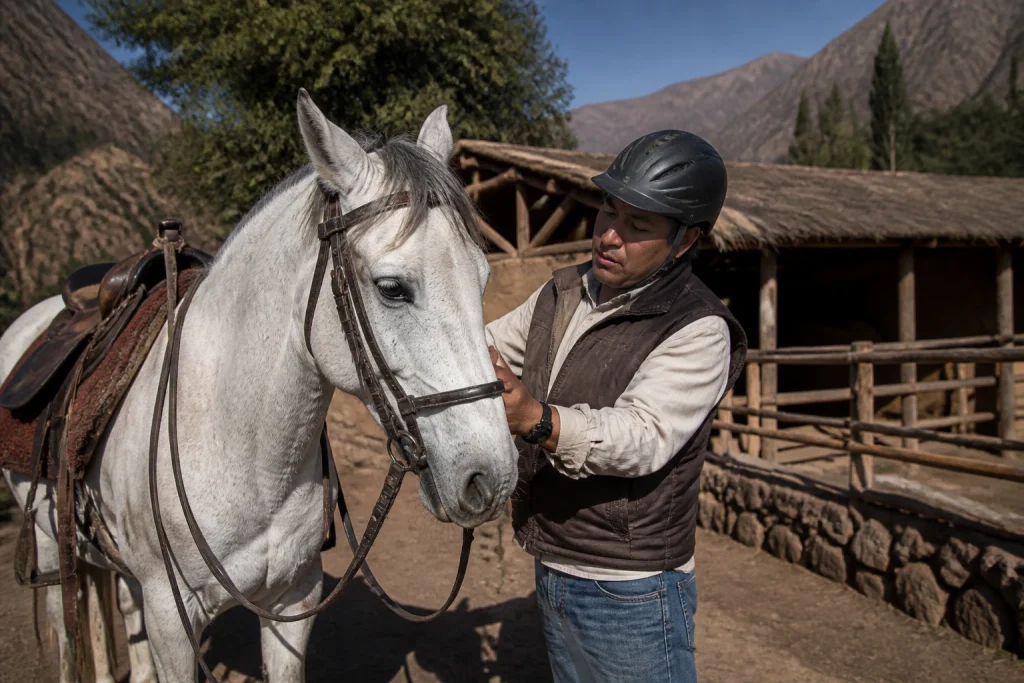
- Helmet availability, tack, practice session, and horse-and-rider matching
- Meals, water, admissions, taxes, tips, and payment fees
- Cancellation terms and the plan for unsafe weather or poor trail conditions
- Emergency procedures and insurance requirements
- Which attractions are visited on foot, by vehicle, or as part of the riding route
Review the final confirmation once for meeting details and inclusions, then plan the rest of the day around that schedule. Travelers can also consult Peru’s Ministry of Foreign Trade and Tourism traveler information when evaluating local travel services in the Cusco region.
What to wear and bring
Dress for sun, rain, wind, and temperature changes rather than a single weather forecast. Wear comfortable clothing that allows easy movement and footwear suitable for mounting and walking over uneven ground. Avoid relying on the tour to supply every personal item unless each inclusion is clearly stated.
- Warm, removable layers
- Sun protection
- A compact rain layer
- Water
- Secure footwear appropriate for mounting and uneven ground
- Any personal medication needed during a full day away
A helmet should fit securely and be suitable for riding. Confirm availability before departure rather than assuming one is included. Keep loose items controlled, pack lightly, and follow the guide’s instructions around the horses and during mounting.
Safety, weather, and access to visitor sites
The principal planning concerns are altitude, weather exposure, and differences between operators. A claim that tours run all year does not guarantee that a particular trail will be comfortable or usable on a specific day. Confirm the forecast, road conditions, and trail plan shortly before setting out.
Ask how the guide communicates with the group, what emergency procedure applies on the trail, and what transport is available if someone stops riding. Insurance conditions also deserve attention because riding activities can be treated differently from ordinary sightseeing.
Do not assume horses can enter Moray, the Maras salt ponds, or any other archaeological or controlled visitor area. A tour can include these places while using vehicles or foot access for part of the visit. Follow local site rules and the guide’s instructions at each stop.
Transportation and fitting the ride into your itinerary
Many published products include pickup in Cusco and a transfer to the ranch or trailhead. Before booking, confirm the pickup zone, driving time, final drop-off, and whether luggage can travel in the vehicle. Travelers already staying in the valley should ask if a local meeting point is available instead of automatically returning to Cusco.
A full-day ride is a poor fit for a tightly timed train departure. If Machu Picchu follows next, compare the day against the schedule for Sacred Valley trains to Machu Picchu. Ask whether the operator can finish in Ollantaytambo, but do not assume that modification is available unless it is included in the confirmed plan.
Ending near Ollantaytambo can be appealing for travelers continuing west, while the town’s living Inca streets reward time of their own. Staying locally can also reduce unnecessary backtracking. A guide to where to stay in the Sacred Valley can help compare Ollantaytambo, Urubamba, and other bases before committing to a pickup arrangement.
Machu Picchu Entrance Ticket
This experience gives you something most travelers can’t find: peace of mind. Whether you plan ahead or need a sol...

Machu Picchu Official Bus – Round Trip
Travel seamlessly between Aguas Calientes and the majestic Machu Picchu with this official round-trip shuttle servic...

Inka Deep Tissue Release Massage
Your ritual blends deep, firm tissue release with ancestral-inspired recovery stretches, making it the ultimate body...
Accessibility and health considerations
A tour described as suitable for all levels is not automatically accessible. Published descriptions do not establish universal weight limits, mounting assistance, adaptive equipment, accessible toilets, vehicle access, or the amount of uneven ground. Travelers who need any of these features should discuss the complete route before booking.
Limited mobility, balance concerns, pregnancy, medical conditions, and little riding experience can change which itinerary is appropriate. A shorter private ride offers more control over pace and stops. A non-riding Sacred Valley tour is the better alternative when mounting, altitude, or prolonged time in the saddle presents a concern.
A simple way to compare tour options
- Compare actual saddle time and total duration.
- Check the route’s starting point, highest elevation, and planned pace.
- Identify every included transfer, meal, admission, and equipment item.
- Review minimum group size, deposit, payment fees, and cancellation terms.
- Choose the option that leaves enough time for acclimatization and onward transportation.
The clearest itinerary usually wins. A modest route with realistic timings, a practice session, clear inclusions, and a sensible weather plan is more useful than an ambitious description that never explains how the day unfolds.
Who should book this experience?
Sacred Valley horseback riding best suits travelers who want an active landscape experience and can devote at least half a day. It is especially rewarding when the route, pace, horse matching, and sightseeing balance are clearly explained. The main limitations are altitude, changing weather, and the variable amount of riding hidden inside some full-day schedules.
Choose a half-day ride for lower commitment, a full-day itinerary for a broader Maras and Moray experience, or a multi-day journey when riding is a central purpose of the trip. Acclimatize first, protect the train schedule, and confirm the practical details before paying. With those decisions settled, the day can remain focused on the horses and the scale of the Andes.
Frequently asked questions
Is Sacred Valley horseback riding suitable for beginners?
Some rides are marketed for beginners and all experience levels, but suitability depends on terrain, pace, altitude, saddle time, and the support provided. Beginners should choose a shorter route with a practice session and clear horse-and-rider matching.
How long does a Sacred Valley horseback tour take?
Published options range from roughly four-hour rides to full-day outings lasting about seven or eight hours. Total tour time can include pickup, driving, preparation, breaks, and sightseeing, so ask how much time is actually spent riding.
What is the best season for horseback riding in the Sacred Valley?
Roughly May through October generally offers the strongest odds of dry riding weather. November through April brings greener scenery and potentially fewer visitors, but rain can disrupt exposed routes and affect trail conditions.
How much does a Sacred Valley horse ride cost?
Published benchmarks range from US$150 for a four-hour ride to US$249 for some one-day products, while an eight-hour private listing is US$216 per person with a two-person minimum. Prices are not directly comparable because inclusions, duration, group format, and fees differ.
Do horseback tours enter Moray and the Maras salt ponds?
Do not assume horses enter every listed attraction. Tours can include Moray and the salt ponds as itinerary stops while using foot or vehicle access for part of the visit, so confirm the exact route and current site rules.
Should I acclimatize before horseback riding?
Yes. Much of the Sacred Valley is around 2,800 to 3,000 meters, and some advertised routes climb to about 3,700 meters. Schedule the ride after acclimatizing and consider a shorter option if altitude or exertion is a concern.
Can a horseback tour finish in Ollantaytambo instead of Cusco?
Only if the operator confirms that arrangement for the selected tour. Many published products return to Cusco, so verify the final drop-off before coordinating an Ollantaytambo stay or Machu Picchu train.
What should I bring on a Sacred Valley horse ride?
Bring warm layers, sun and rain protection, water, and secure footwear suitable for mounting and uneven ground. Confirm helmet availability and any supplied equipment before departure.
Are Sacred Valley horseback tours wheelchair accessible?
Accessibility is not guaranteed. Published descriptions do not establish universal mounting assistance, adaptive tack, accessible vehicles, toilets, or smooth ground, so travelers with mobility needs should confirm the complete setup before booking.
From Urubamba & Ollantaytambo: Sacred Valley Day tour with Lunch
Explore the best and most unique sites in the Sacred Valley on a private tour. Visit the impressive ruins of Ollantaytambo, an ancient Inca fortress...
Sacred Valley Alpaca Hiking Tour
We involve local people in the activity: By doing so, we provide an opportunity for them to actively participate in...