Sacred Valley Eco Hotels Guide
Choose a Sacred Valley eco hotel with more confidence by comparing documented environmental practices, community commitments, and rail-day logistics. This guide looks at El Albergue, Las Qolqas, and Lizzy Wasi, with practical planning advice…
 Visit Sacred Valley
October 6, 2026
Visit Sacred Valley
October 6, 2026
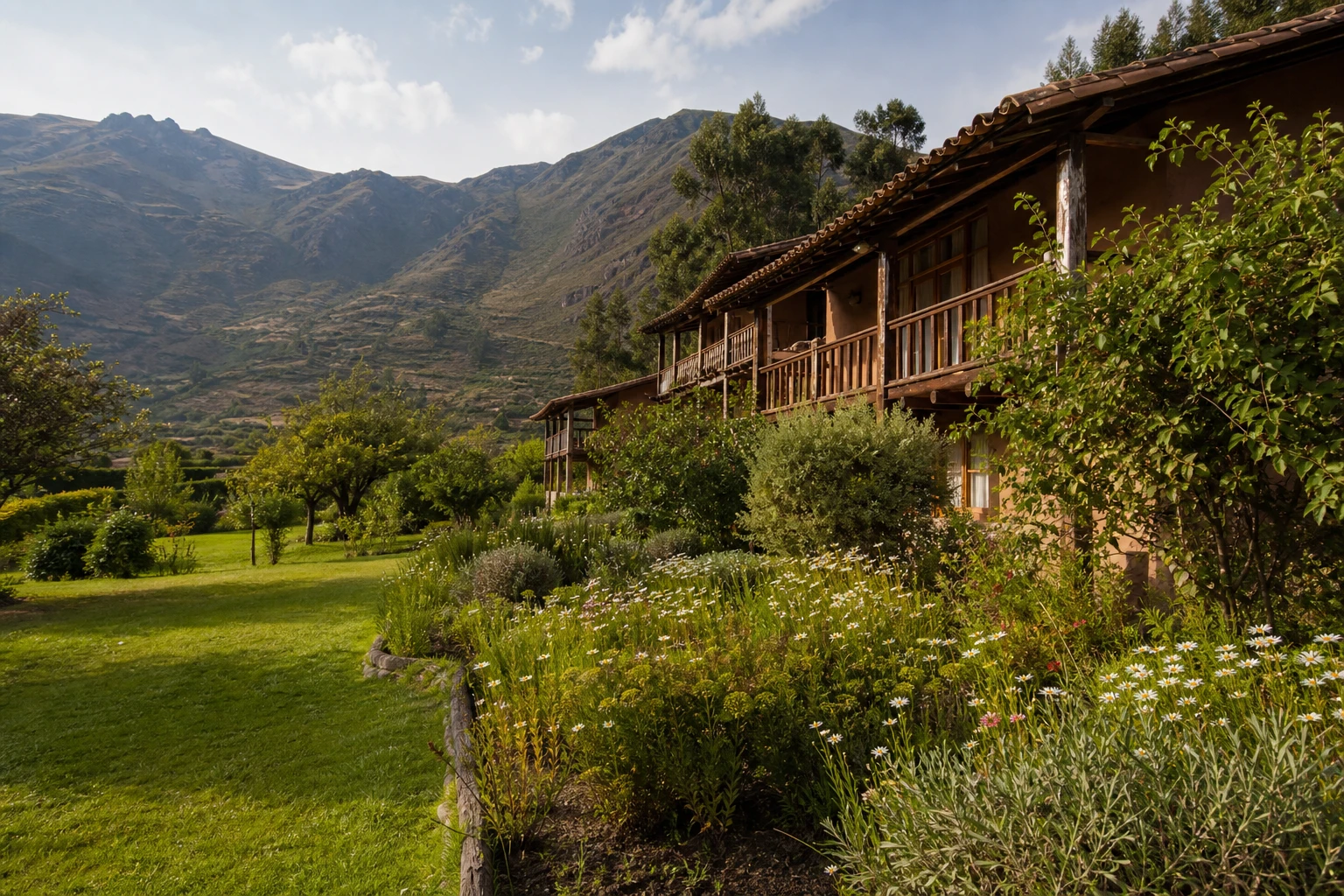
A meaningful Sacred Valley eco hotel choice starts with the details behind the label. Look for named practices, such as organic growing, water treatment, solar power, local employment, or conservation support, then weigh them against the practical shape of your trip. In this part of Peru, the key lodging decision is often simple: stay beside the Ollantaytambo rail station, choose a more secluded lodge nearby, or use Urubamba as a broader valley base.
- Las Qolqas presents the fullest set of documented environmental measures in this guide, including solar power, drinking-water treatment, biodigesters, a natural-wetland wastewater system, and community-focused practices.
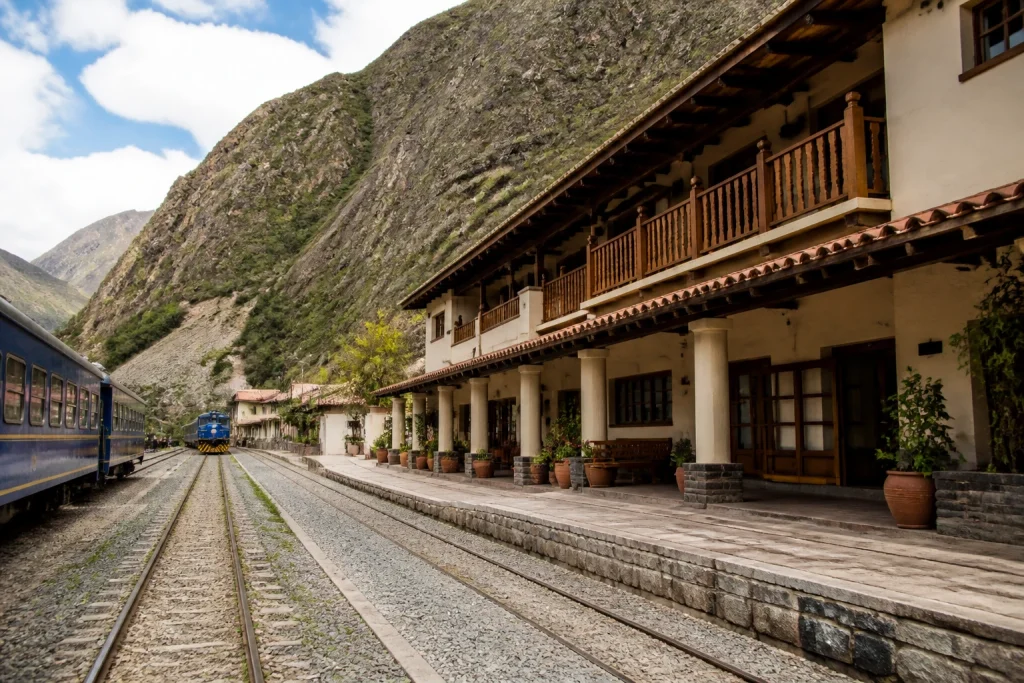
- El Albergue sits at Ollantaytambo train station and describes an on-site organic farm alongside education and conservation support.
- Lizzy Wasi is a practical Urubamba comparison with locally sourced breakfast and green space, but it is best described more modestly than a fully documented eco lodge.
- For PeruRail services on the Cusco to Machu Picchu route, the listed carry-on allowance is one bag or backpack up to 8 kilograms and 115 linear centimeters.
- Use live quotes for hotel costs, and confirm access needs directly with each property before committing to a stay.
Judge eco claims by the actions a hotel names
“Eco” is a broad travel label, not a single standard. Give greater weight to operational details that a property can name clearly: how it handles water and waste, where its energy comes from, whether food is grown or sourced locally, and how it supports nearby communities or conservation. Treat wider terms such as sustainable or climate positive as a hotel’s stated approach unless a current certification is specifically identified.

From Urubamba & Ollantaytambo: Sacred Valley Day tour with Lunch
Explore the best and most unique sites in the Sacred Valley on a private tour. Visit the impressive ruins of Ollantaytambo, an ancient Inca fortress...

The Best Private Sacred Valley Tour in Cusco ( with Pisac)
We know very well each place of this tour, since we have been grown in this area and we studied over 3 years to get...

Machu Picchu by Train: A Once in a Lifetime Day Trip from Cusco
See Machu Picchu in a day without the stress of organizing it yourself. From your Cusco pickup to the train, shuttle...
- Food and land: look for an on-site farm, organic growing, or clearly described local sourcing.
- Water and waste: seek specific systems, such as drinking-water treatment, biodigesters, recycling, or wastewater processing.
- Energy: solar power is a concrete operational measure when a property identifies it.
- Community and heritage: local employment, fair trade, education support, reforestation, and archaeological conservation are meaningful commitments when described with care.
- Certification: do not assume one exists simply because a hotel uses eco-focused language.
This approach leaves room for different kinds of responsible stays. A property does not need to claim every possible initiative to deserve consideration. It does need to offer more than a vague slogan if environmental and community practices are central to your booking decision.
Choose your base before choosing your room
Start with your daily movement. El Albergue is at Ollantaytambo train station. Las Qolqas lies 2 kilometers east of town, with a roughly 20-minute walk or a short shuttle connection to the station. Urubamba can work well as a valley base, but it adds an onward transfer to Ollantaytambo for the rail gateway. If town time matters, plan around Ollantaytambo’s living Inca town as well as your train departure.
| Base style | Best suited to | Main planning consideration |
|---|---|---|
| At Ollantaytambo station | A rail-focused Machu Picchu itinerary | El Albergue places your lodging at the station. |
| Near Ollantaytambo in a garden setting | Travelers who value a more removed lodge atmosphere | Las Qolqas is about 2 kilometers from town, so plan for its walk or shuttle. |
| Urubamba | Travelers using the valley as a broader base | Allow for the onward journey to Ollantaytambo when a rail day is on the schedule. |
El Albergue: best for staying at the rail station
El Albergue is the strongest fit for travelers who want their accommodation directly at Ollantaytambo train station. The hotel describes an on-site organic farm and support for local education and conservation. Its operator also presents its sustainability approach as climate positive, which is best read as the hotel’s own stated commitment rather than as a third-party certification.
Choose El Albergue when the ease of a rail departure ranks high on your list and you want a hotel whose published story includes organic growing and local initiatives. It is especially sensible for a one-night rail stop, or for travelers who prefer to keep the transfer between lodging and station as simple as possible.
Las Qolqas: best for documented resource systems and a lodge setting
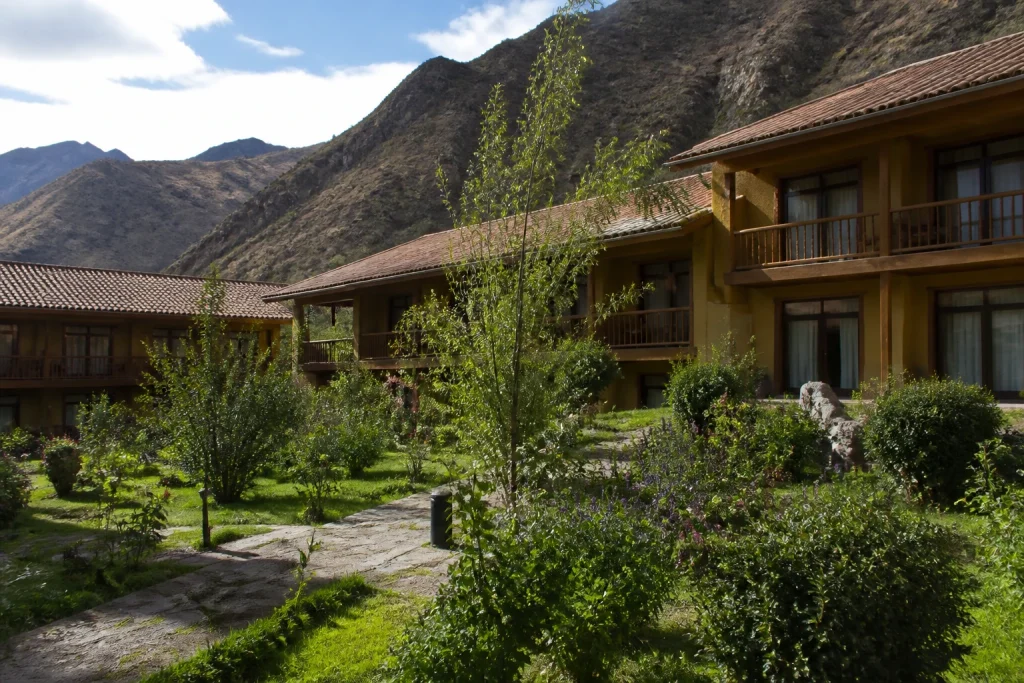
Las Qolqas is 2 kilometers east of Ollantaytambo, in a more removed setting than a town-center stay. The lodge states that the walk into town takes about 20 minutes and that its complimentary shuttle reaches the Machu Picchu train station in under 10 minutes. That combination suits travelers who want a nature-forward base without giving up a practical connection to the train.
Its published environmental and community measures are unusually specific. Las Qolqas cites local employment, fair trade, water management, recycling, reforestation, and archaeological-site conservation. A Tourism Cares profile also describes solar power, on-site drinking-water treatment, biodigesters, and a natural-wetland wastewater system. These details make it the clearest choice here for travelers seeking clearly named operational practices.
Lizzy Wasi: a green-space Urubamba alternative
Lizzy Wasi belongs in the comparison for travelers who prefer to base themselves near Urubamba’s main square. The property places itself minutes from the square, about one hour from Cusco, and around 20 minutes from the Ollantaytambo train. It also highlights locally sourced breakfast and extensive green space.
Frame Lizzy Wasi as a convenient, green Urubamba option with local-sourcing notes, rather than applying an unqualified eco-hotel label. It can be a useful match when town access and a central valley position matter more than being immediately beside the railway.

Machu Picchu Private Archaeological and Historical Guided Tour
Explore Machu Picchu, one of the Seven Wonders of the World, in the company of a private guide. Enjoy the undivided...

Machu Picchu Private Guided Tour (No Ticket)
The guide will be exclusively for you or your group, the tour is along the circuit indicated on your ticket. The gui...

Machu Picchu Ticket, Bus & Private Guide
Maximize your time at Machu Picchu with this private guided tour starting directly from Aguas Calientes. Skip the ha...
Plan your Machu Picchu rail day around luggage and location
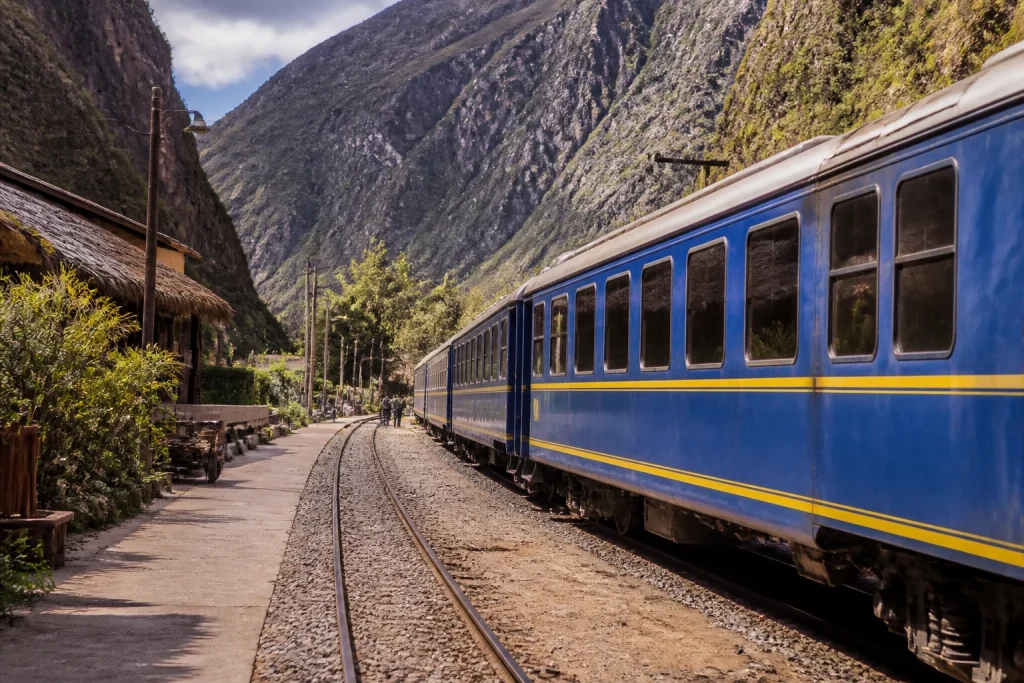
A Machu Picchu rail day is easier when you separate the luggage you need from the luggage you do not. PeruRail lists one carry-on bag or backpack per passenger, up to 8 kilograms and 115 linear centimeters, for its listed Cusco to Machu Picchu services. Its Ollantaytambo luggage storage is listed as open from 04:15 to 21:00. A comparison of PeruRail or Inca Rail and Sacred Valley trains to Machu Picchu can help shape the rest of your rail-day plan.
- Pack a separate overnight or rail-day bag that stays within the listed PeruRail carry-on limit.
- Check your actual train departure time before settling on a hotel shuttle, breakfast, or check-out plan.
- If using Ollantaytambo luggage storage, confirm its operating details for your travel date before relying on it.
- Contact PeruRail at least 48 hours ahead if you need luggage assistance.
- Keep passports, rail tickets, medication, valuables, and essential layers in the bag that travels with you.
Get comparable live quotes instead of using old rate sheets
Do not plan a Sacred Valley hotel budget around an old sample rate. Hotel costs depend on dates, room type, and what is bundled into the stay, while the available property pages direct travelers toward live availability and booking tools. Request a quote that shows the full trip cost in clear components, especially if you are combining lodging with transfers, meals, or train travel.
- Send the same dates, number of guests, and room requirements to each property you are comparing.
- Ask for the room amount and any separately listed transfer, meal, service-charge, and tax components.
- Check whether the quoted arrangement fits your rail schedule, particularly for an early departure from Ollantaytambo.
- Review what is included before treating a package as comparable with a room-only stay.
- Compare the final quoted total alongside location and documented practices, rather than choosing on the headline room figure alone.
Confirm accessibility property by property
Do not treat an eco-focused label, garden setting, or shuttle service as an accessibility promise. A traveler with mobility, sensory, or other access needs should obtain property-specific confirmation before booking. Ask about the route from vehicle to room, path surfaces and stairs, room and bathroom measurements, dining access, shuttle vehicle access, and any support needed at Ollantaytambo station.
- Is there a step-free route from the arrival point to the assigned room?
- What are the exact bathroom configuration and room-entry measurements?
- Are the paths between room, dining, reception, and shuttle level, paved, and lit?
- Can the shuttle accommodate the equipment or assistance you need?
- What station assistance should be arranged in advance for the rail journey?
Match the hotel to the priority that matters most
This is a fit guide, not a ranking. The most suitable property depends on the balance you want between station convenience, a more removed lodge setting, Urubamba access, and the level of detail provided about environmental practices.
| Your priority | A useful starting point | Why it fits |
|---|---|---|
| Rail-station convenience | El Albergue | It is located at Ollantaytambo train station and describes an organic farm plus local education and conservation support. |
| Specific resource-management measures | Las Qolqas | Its published descriptions include water, waste, solar, community, and conservation initiatives. |
| Urubamba position with green space | Lizzy Wasi | It is near Urubamba’s main square and highlights locally sourced breakfast and extensive green space. |
| A confirmed accessibility setup | Ask each property directly | Access arrangements should be confirmed for the specific room, terrain, facilities, vehicle, and station connection involved. |
Still comparing Sacred Valley Eco Hotels And Ollantaytambo Rail Planning?
Ask for tour ideas, hotel suggestions, or a simple trip plan that combines both.
Trip Helper
The most considered choice pairs clear practices with a workable itinerary
Choose El Albergue for the station location and its published farm, education, and conservation commitments. Choose Las Qolqas for the strongest range of named resource and community measures, with a short shuttle or walk separating it from town. Consider Lizzy Wasi when Urubamba access, green space, and locally sourced breakfast are the better fit for your schedule.
Once you know your rail day and preferred base, select the stay whose actions are described clearly and whose logistics feel easy to live with. A broader guide to where to stay in the Sacred Valley, including lodges, hotels, and villages, can help place this hotel decision within the rest of your route.
Frequently asked questions
What makes a Sacred Valley hotel genuinely eco-conscious?
Look for clearly named practices rather than relying on the word “eco.” Useful details include organic growing, solar power, water and wastewater systems, recycling, local employment, fair trade, and conservation or education support. A broad sustainability claim should not be treated as proof of current certification.
Which eco hotel is closest to the Ollantaytambo train station?
El Albergue is located at Ollantaytambo train station. It is the most practical option in this guide for travelers who want to keep the connection between their hotel and a Machu Picchu rail departure straightforward.
Is Las Qolqas walkable from Ollantaytambo?
Las Qolqas says it is about a 20-minute walk from Ollantaytambo, roughly 2 kilometers east of town. The lodge also states that it provides a complimentary shuttle to the Machu Picchu train station in under 10 minutes.
What luggage can I take on the train to Machu Picchu?
PeruRail lists one carry-on bag or backpack up to 8 kilograms and 115 linear centimeters for its listed Cusco to Machu Picchu services. Pack a smaller rail-day bag and check your departure details before travel.
How should I compare Sacred Valley eco hotel prices?
Use live quotes for the exact dates and room type you need. Ask each property to separate the room amount from transfers, meals, service charges, and taxes so you can compare the final trip cost clearly.
Are Sacred Valley eco hotels accessible for travelers with reduced mobility?
Accessibility needs should be confirmed directly with each property before booking. Ask about step-free routes, terrain, room and bathroom dimensions, dining access, shuttle vehicles, and assistance at the Ollantaytambo station.
From Urubamba & Ollantaytambo: Sacred Valley Day tour with Lunch
Explore the best and most unique sites in the Sacred Valley on a private tour. Visit the impressive ruins of Ollantaytambo, an ancient Inca fortress...
The Best Private Sacred Valley Tour in Cusco ( with Pisac)
We know very well each place of this tour, since we have been grown in this area and we studied over 3 years to get...

Machu Picchu Private Tour from Aguas Calientes (Tickets included)
Discover Machu Picchu at your own pace with our exclusive Private Guided Tour from Aguas Calientes. Perfect for inde...
Machu Picchu by Train: A Once in a Lifetime Day Trip from Cusco
See Machu Picchu in a day without the stress of organizing it yourself. From your Cusco pickup to the train, shuttle...