Maras Salt Mines Guide
Plan a practical visit to the Maras Salt Mines in Peru’s Sacred Valley, with current entry-price guidance, road and walking options, ticket advice, and tips for building a flexible Cusco day trip.
 Visit Sacred Valley
August 16, 2026
Visit Sacred Valley
August 16, 2026

The Maras Salt Mines, known locally as the Salineras de Maras, are one of the Sacred Valley’s most memorable working landscapes. In Maras District, Urubamba Province, thousands of small salt ponds spread across the hillside in a vast, human-made pattern. This is a place to slow down, look closely, and plan thoughtfully: the final approach is rural, entry uses its own ticket, and a little extra time makes the visit far more enjoyable.
- The Salineras de Maras are a community-owned salt-production landscape associated with the Maras and Pichingoto communities.
- Visitors see around 3,000 ponds supplied by saline water emerging at Qoripujio.
- From Cusco, allow roughly 1.5 hours by road each way as a planning estimate, plus time for the unpaved final approach.
- Entry is sold with a dedicated Salineras ticket rather than a ticket you should assume is included with another sightseeing pass.
- Marasal lists entry at S/15 for national visitors and S/25 for international visitors; reconfirm prices before traveling.
For travelers building a Sacred Valley itinerary, Maras works best as a deliberate stop rather than a rushed photo break. The reward is the scale of the ponds and the chance to understand a living production tradition passed between generations. Leave room in the day for the road, the walkways, and the simple pleasure of taking in the view without watching the clock.

Sacred Valley Alpaca Hiking Tour
We involve local people in the activity: By doing so, we provide an opportunity for them to actively participate in the tourism industry in Cusco. You...
Why the Maras Salt Mines are worth visiting
Maras is compelling because salt production and landscape are inseparable here. Rather than one building or monument, the attraction is a large network of ponds that turns a hillside into an intricate patchwork. Each section belongs to a wider system fed by naturally saline water, and the overall effect becomes clearer as you take in the site from more than one viewpoint.
The setting also carries cultural weight. Peru’s Ministry of Culture describes the knowledge behind salt production at Maras as a living intergenerational tradition. Marasal S.A., the community-owned administrator and marketer linked to the Maras and Pichingoto communities, is part of that continuing local connection. Treat the visit as time in a working community landscape, not simply a scenic stop on a checklist.
How salt is produced at Salineras de Maras
The process begins with saline water emerging at Qoripujio. That water is directed into the ponds, where evaporation leaves salt behind. Around 3,000 ponds make up the visible system, so the experience is less about finding one dramatic feature and more about seeing how many small basins work together across the landscape.
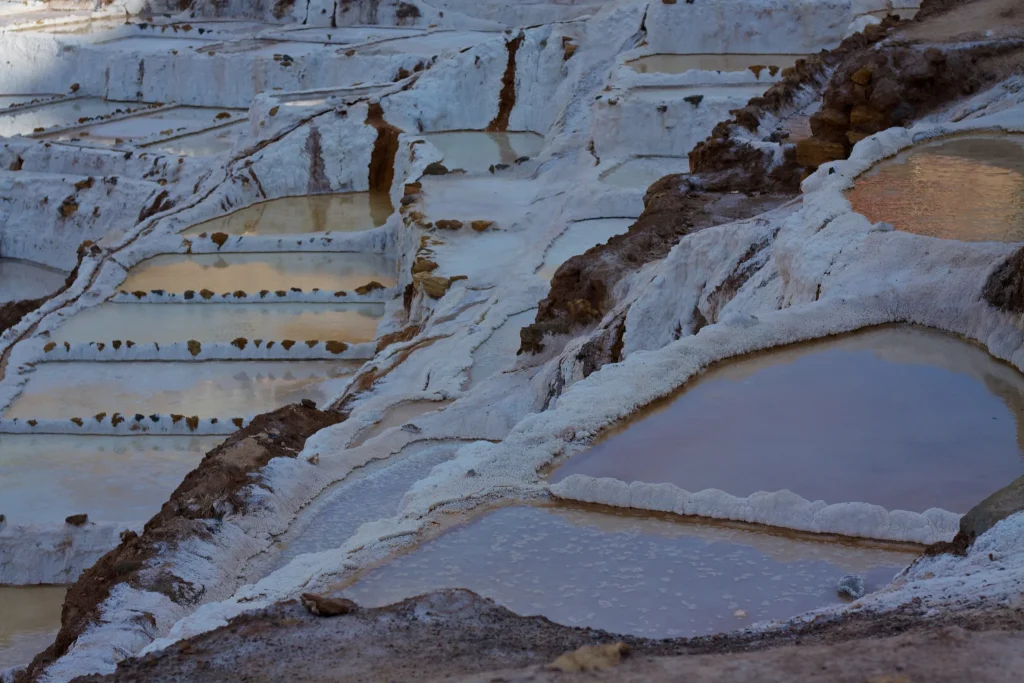
This simple explanation is useful before you arrive because it changes how you look at the site. The channels, pond edges, and repeated shapes are part of a productive system. Pause at designated viewing areas, take your photographs with care, and follow any instructions given on site. Respect for the working landscape is part of what keeps a visit to Maras meaningful.
Getting to the Maras Salt Mines from Cusco
For an independent road trip, use about 1.5 hours from Cusco to the salt mines as a sensible starting estimate. Official route information breaks the journey into a drive from Cusco to Maras town, followed by a 6.6-kilometer unpaved stretch to the Salineras. Actual travel time depends on your departure point, traffic, weather, stops, and road conditions, so avoid a tightly timed same-day schedule.
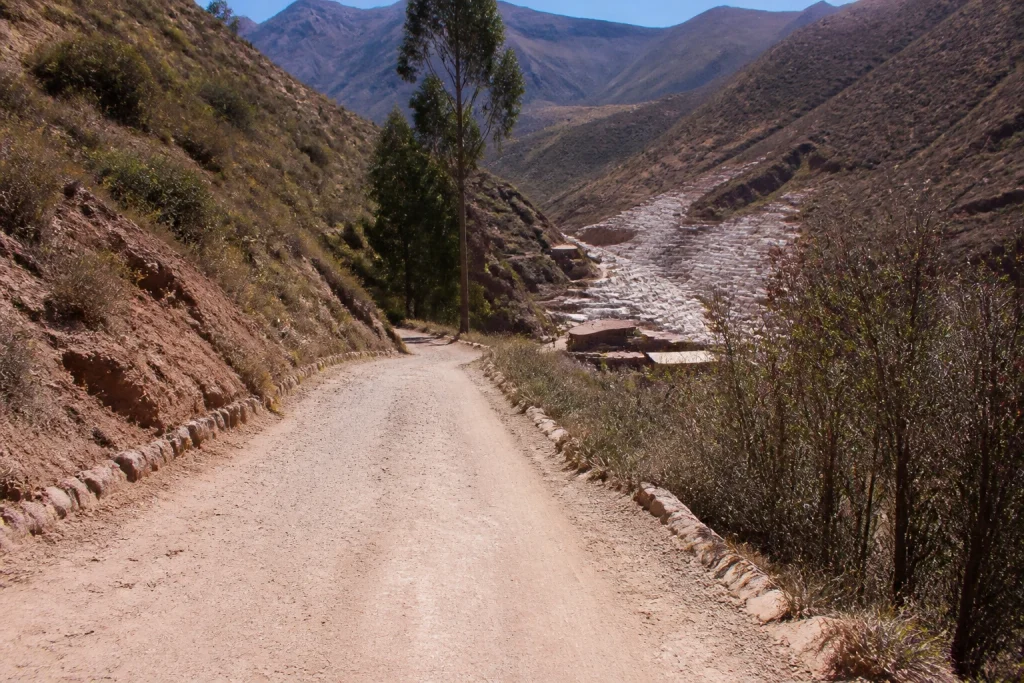
The final unpaved approach
The final road is the part of the journey that deserves the most patience. It has been reported as dusty and uneven, and conditions can change. If you are arranging a private driver or joining transport, ask about the day’s access conditions before departure. Travelers prone to motion discomfort should also factor the rougher section into their plan.
Walking from Maras town
A walking approach from Maras town is also documented: about 3.7 kilometers, or roughly 45 minutes, on a rural bridle path. It is a worthwhile option for travelers who specifically want to walk, but it is not a shortcut for anyone trying to save time. Wear footwear suited to uneven ground, carry what you need for the route, and remember that the return walk also needs to fit into the day.
Tickets, entry prices, and visit timing
Plan on buying a dedicated Salineras ticket. Marasal’s published entry products list S/15 for national visitors and S/25 for international visitors. These are the best current published figures, but admission prices can change, so check again shortly before your trip. Do not assume that another Cusco-area sightseeing ticket includes entry to the salt mines unless the relevant ticket authority confirms it.
Build your route around a confirmed visit window rather than an old online schedule. An earlier tourism inventory listed daytime visiting, but current entry listings do not state fixed hours. Check the current opening window with Marasal or the Maras municipal tourism office before setting out, especially if you are traveling from Cusco or fitting Maras around another timed activity.

Machu Picchu Guided Tour from Aguas Calientes
The Incan site of Machu Picchu is a UNESCO World Heritage Site. It is one of the most famous places in the world. It...

Machu Picchu Private Archaeological and Historical Guided Tour
Explore Machu Picchu, one of the Seven Wonders of the World, in the company of a private guide. Enjoy the undivided...

One-Day Inca Trail Hike to Machu Picchu from Cusco
Experience the best of the legendary Short Inca Trail in just one day from Cusco. Begin your hike at Km 104 and foll...
How to plan a smooth Maras visit
- Confirm the current visit window, ticket price, and transport details before leaving Cusco or your Sacred Valley base.
- Allow about 1.5 hours each way by road from Cusco as a planning figure, then add a buffer for the unpaved final approach.
- Choose your arrival method early: vehicle access is simpler for most visitors, while the 3.7-kilometer path from Maras town adds a rural walk.
- Buy or arrange the dedicated Salineras entry ticket as required, rather than budgeting on the assumption that another visitor pass covers the site.
- Leave enough time for the return journey. A flexible itinerary is more useful here than one built around an unconfirmed closing time.
If your schedule includes both stops, a combined Maras and Moray half-day itinerary can help structure the day. The important part is not trying to force too many fixed-time commitments around it. Give each place its own time, allow for the rural road connection, and keep the return journey in mind before committing to an evening reservation elsewhere.
Mobility, comfort, and practical access
Do not treat the Maras Salt Mines as a guaranteed wheelchair-accessible attraction. The documented vehicle approach includes an unpaved road, and the walking option from Maras follows a rural path. There is no published official accessibility policy or confirmed step-free route. Travelers with mobility needs should get a current, transport-specific assessment before booking a vehicle or tour.
For everyone else, the main comfort consideration is the approach rather than the distance from Cusco alone. A rough, dusty final road can shape the whole outing, particularly when conditions are poor or a vehicle is not well suited to rural terrain. Factor in time to move at an easy pace, and keep the plan flexible enough to adapt to local advice on the day.
How to visit respectfully and take better photographs
The strongest photographs at Maras show the pattern and scale of the ponds, but the place deserves more than a quick visual record. Look for compositions that show the repeating basins as part of a wider production landscape. Keep to visitor areas, avoid interfering with the ponds or water channels, and follow the directions of staff and local signage. A respectful visit supports the character that makes Maras distinctive.
Is a trip to the Maras Salt Mines worth it?
Yes, Maras is well worth including for travelers who enjoy distinctive cultural landscapes and are prepared for a rural approach. Its main strength is the remarkable scale of the salt-pond system and the living tradition behind it. Its main limitation is logistics: road conditions, current hours, and access arrangements need a little flexibility. Confirm the essentials, allow generous travel time, and let this remarkable working landscape set the pace.
Frequently asked questions
Where are the Maras Salt Mines?
The Salineras de Maras are in Maras District, Urubamba Province, in Peru’s Cusco region. They are part of the Sacred Valley area and are commonly visited from Cusco or nearby valley towns.
How much is entry to the Maras Salt Mines?
Marasal currently lists entry at S/15 for national visitors and S/25 for international visitors. Prices can change, so reconfirm the current rate before traveling.
Are the Maras Salt Mines included in the Cusco Tourist Ticket?
Plan to buy a dedicated Salineras ticket rather than assuming another sightseeing pass includes entry. Confirm any ticket-package inclusion directly with the relevant ticket authority before you go.
How long does it take to get to Maras from Cusco?
Allow roughly 1.5 hours by road each way from Cusco as a planning estimate, before time at the site. The final 6.6 kilometers from Maras town are on an unpaved road, so build in extra margin.
Can you walk to the salt mines from Maras town?
Yes. A documented rural walking route is about 3.7 kilometers and takes roughly 45 minutes each way. It is best for visitors prepared for walking on an uneven rural path.
What are the Maras Salt Mines opening hours?
Check the current visit window with Marasal or the Maras municipal tourism office shortly before departure. Operating times can change, and current entry listings do not publish a fixed schedule.
Are the Maras Salt Mines wheelchair accessible?
Accessibility is not guaranteed. The unpaved approach and rural walking route mean travelers with mobility needs should obtain a current, transport-specific access assessment before arranging the visit.

From Urubamba & Ollantaytambo: Sacred Valley Day tour with Lunch
Explore the best and most unique sites in the Sacred Valley on a private tour. Visit the impressive ruins of Ollantaytambo, an ancient Inca fortress...
Sacred Valley Alpaca Hiking Tour
We involve local people in the activity: By doing so, we provide an opportunity for them to actively participate in...

Natural Inca Hot Springs Day Trip – Soak & Relax in the Andes
The Inca thermal baths of Lares Valley are completely natural water that comes from the Andean mountains. This water...

Machu Picchu Private Tour from Aguas Calientes (Tickets included)
Discover Machu Picchu at your own pace with our exclusive Private Guided Tour from Aguas Calientes. Perfect for inde...
.jpg)