Sacred Valley Souvenir Shopping Guide
Plan a thoughtful Sacred Valley shopping trip with practical advice for visiting Pisac, Chinchero, and Ollantaytambo, evaluating souvenirs, managing costs, packing purchases, and checking customs rules.
 Visit Sacred Valley
September 17, 2026
Visit Sacred Valley
September 17, 2026
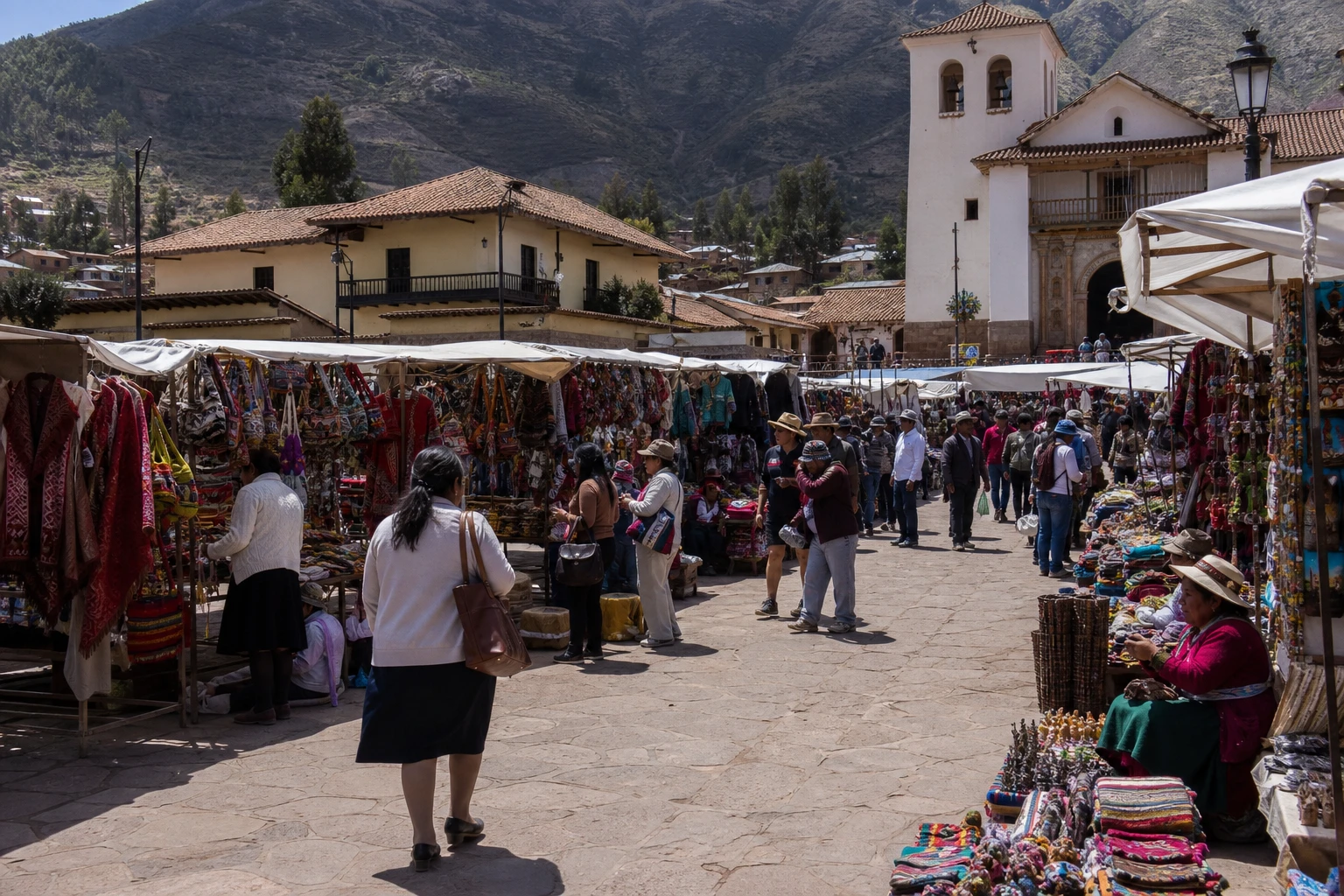
Souvenir shopping in the Sacred Valley works best when it is treated as part of the journey rather than a hurried stop between ruins. Pisac has the strongest recent support for a dedicated market visit, while Chinchero and Ollantaytambo can be considered flexible additions to a broader itinerary. The reward comes from slowing down, comparing carefully, and asking useful questions before choosing what deserves space in your luggage.
- Choose Pisac on Sunday for the best-supported combination of market activity, agricultural producers, and central browsing.
- Confirm market days and hours shortly before traveling because older published schedules should not be treated as current.
- Ask about materials, origin, maker, construction, and care instead of relying on broad labels.
- Do not assume that one town is cheaper, that bargaining is expected, or that every seller accepts the same payment methods.
- Keep archaeological admission, souvenir purchases, packing needs, and possible customs restrictions in separate parts of your budget and plan.
This guide does not prescribe a list of supposedly essential purchases. Instead, it gives you a method for choosing well. You will learn how to select a shopping stop, inspect different kinds of objects, discuss price politely, protect fragile purchases, and separate the market experience from archaeological sightseeing.

Sacred Valley Tour: Pisac, Maras, Chinchero & Ollantaytambo
Explore the best of Peru’s Sacred Valley on a private full-day tour designed for a personalized and comfortable experience. With your own expert loc...

From Urubamba & Ollantaytambo: Sacred Valley Day tour with Lunch
Explore the best and most unique sites in the Sacred Valley on a private tour. Visit the impressive ruins of Ollantaytambo, an ancient Incan fortress...
Choose a shopping stop that fits your itinerary
Begin by deciding what kind of experience you want. A dedicated market morning calls for different planning than a quick browse during a day of sightseeing. Pisac is the clearest choice when shopping is a central goal. Chinchero and Ollantaytambo make more sense when they already fit your route and you can confirm current market activity before arrival.
Avoid building a tightly timed day around an old schedule. Market arrangements can change, and historic listings for Pisac, Chinchero, and Ollantaytambo are not reliable enough to serve as current operating hours. Check shortly before the visit through your accommodation, guide, or a local tourism office, especially if a particular market is the main reason for your trip.
Make Pisac your primary market destination
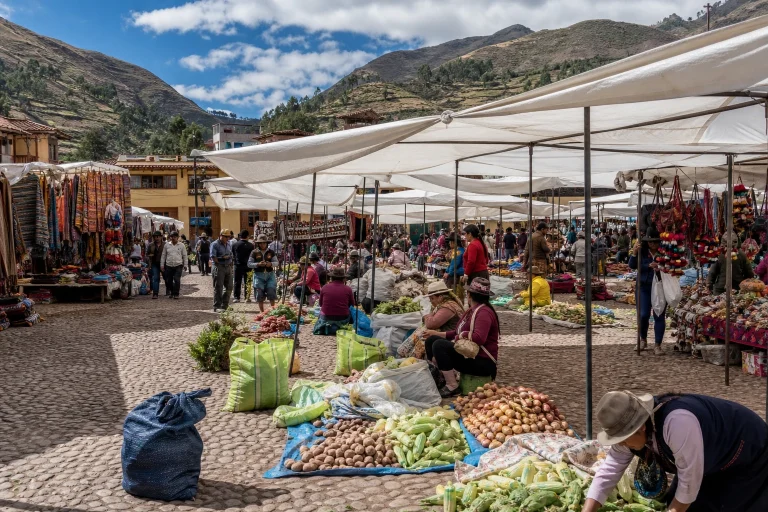
Pisac has the strongest current case for a market-focused outing. The district has an established artisan-market association, and the municipality documented a Sunday market in Plaza Constitución with producers arriving from Pisac, nearby rural communities, and neighboring districts. Agricultural goods were part of that Sunday gathering, giving the center of town a broader market character than souvenir stalls alone.
Sunday is therefore the best-supported choice for travelers who want the fullest market atmosphere. It can also bring more activity and a greater concentration of visitors. A non-Sunday visit can suit travelers who prefer to make Pisac a less market-centered stop, although current artisan-stall availability and hours should still be confirmed locally.
For more detailed timing and expectations, the Pisac Sunday Market guide is a useful companion to this broader shopping plan. Travelers combining shopping with archaeology can also use the Pisac ruins and market guide to keep the town visit distinct from the higher archaeological complex.
Treat Chinchero and Ollantaytambo as flexible shopping stops
Chinchero's main square and Ollantaytambo's Plaza Araccama have both appeared in Peru's artisan-market documentation. However, the detailed schedules commonly attached to those listings are old. Plan either place as a flexible opportunity rather than promising yourself a specific number of stalls at a fixed hour.
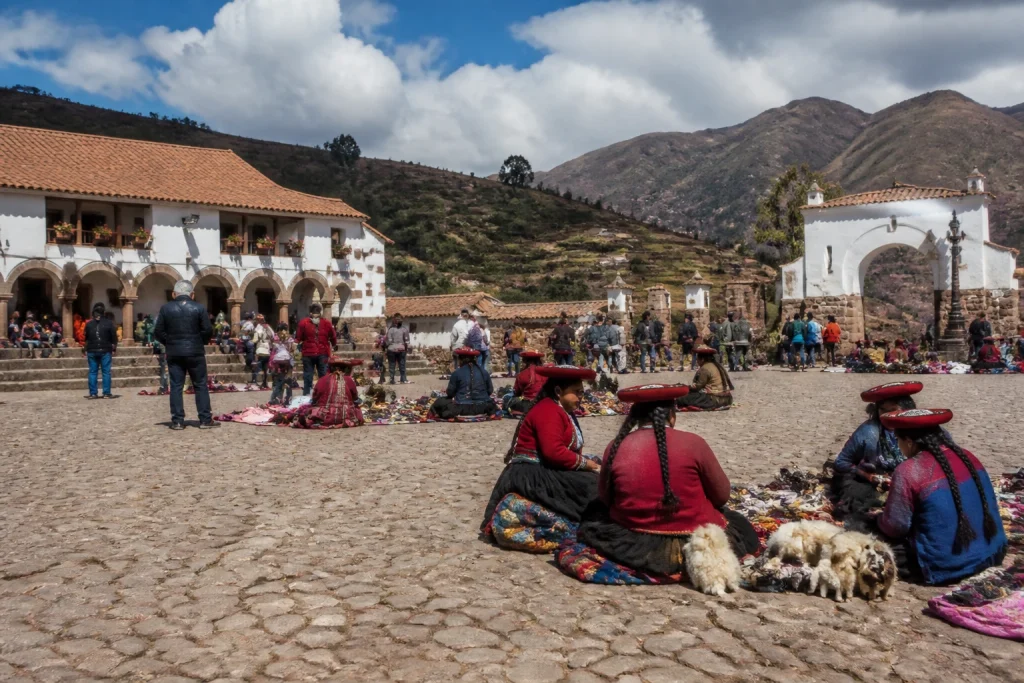
Chinchero makes the most sense when the town is already part of your route and you have confirmed what will be operating. The Chinchero weaving and market guide provides destination context for travelers who want to understand the town's textile theme without reducing the visit to a shopping transaction.
Ollantaytambo deserves the same flexible approach. Leave time to look, but do not make an unconfirmed market schedule the hinge of your day. The Ollantaytambo Inca town guide can help you place any browsing within a wider visit to the settlement rather than treating the town as a roadside retail stop.
Ask questions before judging a souvenir
A good buying decision begins with specific questions. Ask what the item is made from, who made it, where it was produced, how long it took to complete, and how it should be cleaned or stored. A detailed answer can help you compare similar-looking pieces, although no single answer should replace your own inspection.
If supporting a particular maker or community matters to you, state that clearly. Ask whether the person selling the object also made it and whether other people participated in its production. This is more useful than assuming that every product displayed in a famous market was created in that town.
Compare like with like. Two objects with different materials, dimensions, construction, or finishing are not meaningful price comparisons. Before deciding, look at the front, back, edges, fastenings, seams, base, and any point likely to bear weight. The most colorful choice is not automatically the best made.

Machu Picchu Circuit 2 Guided Tour
Explore the wonders of Machu Picchu via the official Circuit 2 route, known for its stunning views and historical si...

Official Machu Picchu Entrance Ticket
Secure your visit to Machu Picchu with this official entrance ticket to one of the New Seven Wonders of the World. E...

Machu Picchu: Official Entrance Tickets
With this ticket you can visit the Inca city of Machu Picchu. The ticket allows you to visit most of the archaeologi...
Use the right inspection checklist for each item
The categories below are practical inspection guides, not guarantees about what a particular market will carry. Availability changes by vendor and visit. Start with the item's physical condition, then ask questions about its material and origin.
Textiles and clothing
- Ask for the specific fiber content rather than relying on a general description.
- Check seams, hems, buttons, zippers, ties, and loose threads.
- Hold the fabric naturally to see its drape, weight, and transparency.
- Ask how the color and pattern were produced if technique matters to you.
- Request care instructions before buying anything that could shrink, stretch, or bleed color.
Ceramics and other breakable pieces
- Inspect the rim, handles, base, and projecting details for chips or hairline cracks.
- Place the piece on a level surface when stability matters.
- Ask whether it is decorative or intended for practical use.
- Discuss packing before paying and check the wrapped parcel yourself.
- Consider weight as well as size when planning your luggage.
Jewelry and metalwork
- Ask the seller to identify the metal, stones, and other materials precisely.
- Test clasps, hinges, posts, chains, and adjustable parts gently.
- Check that paired pieces match in size and finish.
- Ask about cleaning and storage, particularly for mixed materials.
- Keep any available receipt or material description with the item.
Food, plants, and natural materials
Pause before buying anything made from food, plants, seeds, untreated wood, animal material, or other natural substances. Packaging alone does not establish that an item can enter your home country. Review current destination-country import rules and Peru's traveler customs guidance before committing to a purchase that could be restricted or require declaration.
Handle prices, payment, and bargaining politely
There is no dependable valley-wide price chart for souvenirs, and current evidence does not support declaring one town cheaper than another. Material, size, technique, condition, and the seller's own pricing can all matter. Set a personal spending limit, compare genuinely similar objects, and decide what the item is worth to you.
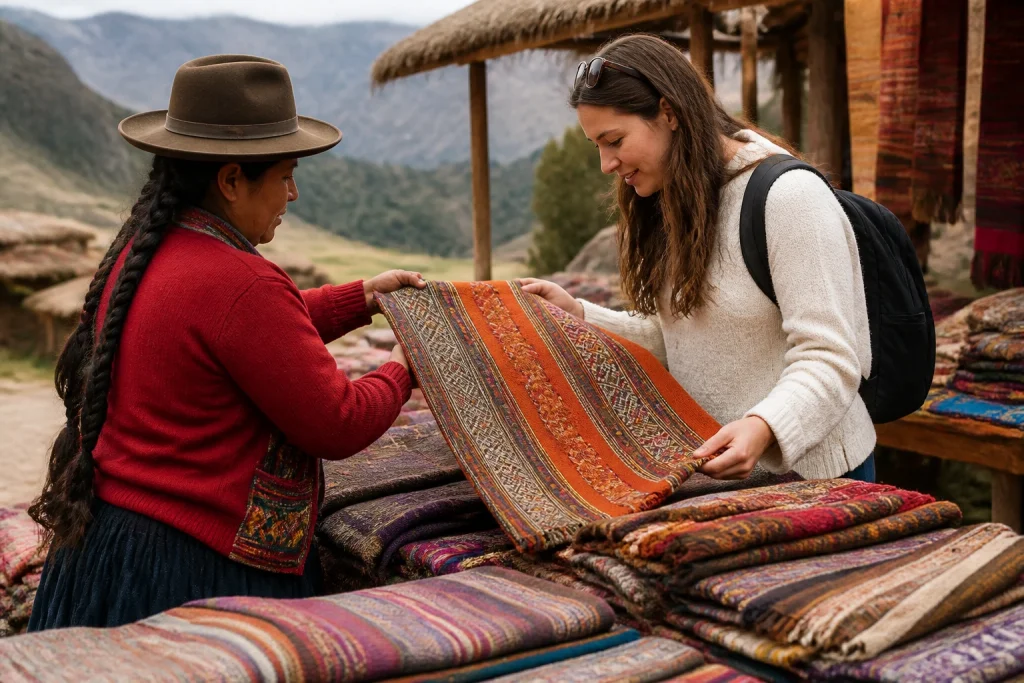
Ask the price clearly and confirm the total before the item is packed. If you are interested in several pieces, ask for the combined total rather than calculating an expected discount yourself. This keeps the conversation simple and prevents confusion about which items are included.
Do not assume bargaining is expected. You can politely ask whether the stated price is fixed, then accept the answer without turning the exchange into a contest. Walking away is appropriate when the price does not fit your budget. Belittling the work to obtain a discount is not.
Payment methods should also be confirmed before you settle on a purchase. Do not assume universal card acceptance or universal cash-only trading. Ask what the seller accepts, complete the transaction in the agreed method, and collect a receipt when one is offered, particularly for a valuable item.
Pack purchases for the rest of the journey
A souvenir still has to survive vehicles, hotels, trains, flights, and baggage handling. Carry a reusable bag for light purchases and leave some room in your main luggage. For fragile pieces, ask the seller to wrap projecting parts separately and cushion empty spaces inside the package.
Photograph a delicate object before it is wrapped, then inspect the parcel before leaving. Place hard or fragile pieces away from the outside walls of a suitcase and surround them with soft clothing. Keep jewelry, documents, and especially delicate purchases with you when baggage rules permit.
Check the weight and dimensions of larger purchases against your airline or transport allowance. Oversize or overweight fees can change the true cost of an object. If a seller proposes shipping, review the carrier, tracking, insurance, packaging, customs paperwork, and total charge before agreeing.
Still comparing Sacred Valley Souvenir Shopping And Market Planning?
Ask for tour ideas, hotel suggestions, or a simple trip plan that combines both.
Trip Helper
Plan for altitude and individual access needs
Pisac town sits at about 2,950 meters above sea level, while its archaeological sites are roughly 3,300 meters. Shopping in town and exploring the ruins therefore should not be treated as identical physical outings. If altitude or fatigue affects you, keep the market portion separate and avoid packing too much into the same block of time.
Detailed accessibility conditions at the markets can change and should be checked for your specific visit. Travelers who need step-free access, nearby vehicle drop-off, seating, accessible toilets, or extra maneuvering space should confirm those requirements in advance rather than relying on a general description of the town.
Build in pauses and avoid making one person carry every purchase. A folding tote can organize small items, but it should not become an unexpectedly heavy shoulder bag. If you are traveling with a driver or guide, explain your mobility needs and desired shopping time before the day's route begins.
Keep sightseeing admission separate from shopping costs
The Cusco Tourist Ticket covers admission to archaeological attractions that include Pisaq, Ollantaytambo, Moray, and Chinchero. It concerns site entry, not souvenir purchases. Do not count the ticket as market credit or combine it with your shopping allowance when estimating the day's spending.
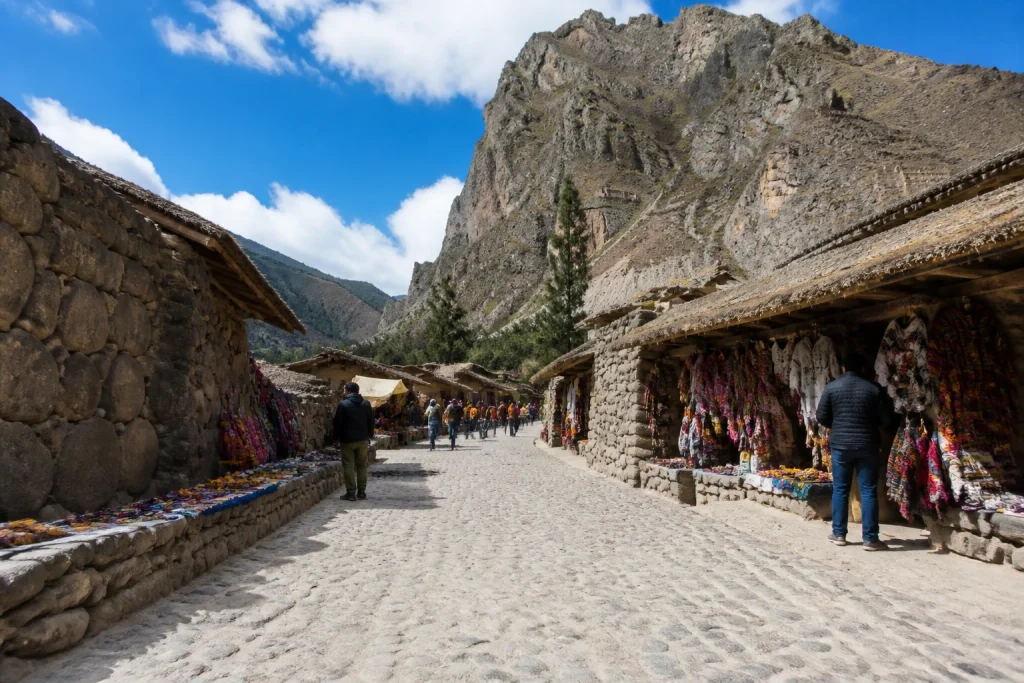
A simple plan uses separate budget categories for transport, attraction admission, meals, souvenirs, and baggage or shipping. Exact costs depend on your route and choices, but the separation makes it easier to see what a purchase will actually add to the day.
Allow protected shopping time rather than hoping it fits into the final few minutes of a tour stop. If you are considering a guided Sacred Valley outing, check how much independent browsing time the itinerary allows. A tour that reaches several sites can still be a poor shopping plan if every stop is tightly scheduled.
Shop with curiosity and respect
Ask before photographing a seller, maker, demonstration, or close-up display. A market is a workplace as well as a visitor experience. Keep pathways and counters clear, handle delicate objects only with permission, and return anything you inspect to the place where you found it.
Useful questions can open a warmer conversation than rapid price comparisons. Ask about technique, materials, care, or the story behind a design when the seller has time to talk. If you decide not to buy, a courteous thank-you closes the exchange gracefully.
Build a shopping day around what matters most
Pisac is the strongest choice for travelers who want shopping to anchor the day, with Sunday offering the best-supported market atmosphere. Chinchero and Ollantaytambo are better treated as flexible additions after checking current arrangements. Wherever you stop, compare carefully, ask precise questions, protect fragile purchases, and check customs rules for natural materials.
The main limitation is uncertainty around changing schedules, prices, payment methods, and detailed access conditions. Resolve those points close to your visit, then leave enough time to browse without pressure. A thoughtful purchase should fit your taste, budget, luggage, and route home.
Frequently asked questions
Where is the best place for souvenir shopping in the Sacred Valley?
Pisac is the best-supported choice for a dedicated market visit. The district has an established artisan-market association, and its municipality has documented Sunday market activity in Plaza Constitución.
What is the best day to visit Pisac Market?
Sunday has the strongest recent support for a full market atmosphere. Producers from Pisac and surrounding communities have participated in the Sunday market, but confirm current arrangements shortly before visiting.
Are Sacred Valley souvenir prices fixed?
Pricing practices vary, so ask politely whether a stated price is fixed. There is no dependable current price chart or evidence that one Sacred Valley town is consistently cheaper than another.
Do Sacred Valley market sellers accept cards?
Payment methods should be confirmed with the seller before purchase. Do not assume that every vendor accepts cards or that every transaction must be paid in cash.
Does the Cusco Tourist Ticket cover market shopping?
No, the Cusco Tourist Ticket concerns admission to included archaeological attractions, not souvenir purchases. Keep attraction admission and shopping in separate parts of your budget.
Can I visit Pisac Market and the ruins on the same day?
Yes, but treat them as separate physical outings and leave enough time for both. Pisac town is about 2,950 meters above sea level, while the archaeological sites are roughly 3,300 meters.
Can I take every Sacred Valley souvenir home?
No, some purchases involving food, plants, animal products, untreated wood, or other natural materials can be subject to customs or import rules. Check current SUNAT traveler guidance and the regulations of your destination country before buying.
Sacred Valley Tour: Pisac, Maras, Chinchero & Ollantaytambo
Explore the best of Peru’s Sacred Valley on a private full-day tour designed for a personalized and comfortable experience. With your own expert loc...
From Urubamba & Ollantaytambo: Sacred Valley Day tour with Lunch
Explore the best and most unique sites in the Sacred Valley on a private tour. Visit the impressive ruins of Ollanta...

Machu Picchu Private Tour from Aguas Calientes (Tickets included)
Discover Machu Picchu at your own pace with our exclusive Private Guided Tour from Aguas Calientes. Perfect for inde...

Machu Picchu Full Day the Best Service
-We offer you a personalized experience in Machu Picchu. -You have your certified guide, and friendly to whom you c...