Urubamba Travel Guide
Plan an Urubamba stay in Peru’s Sacred Valley with practical advice on Media Luna, seasonal rainfall, Machu Picchu connections, booking checks, and itinerary choices.
 Visit Sacred Valley
September 29, 2026
Visit Sacred Valley
September 29, 2026

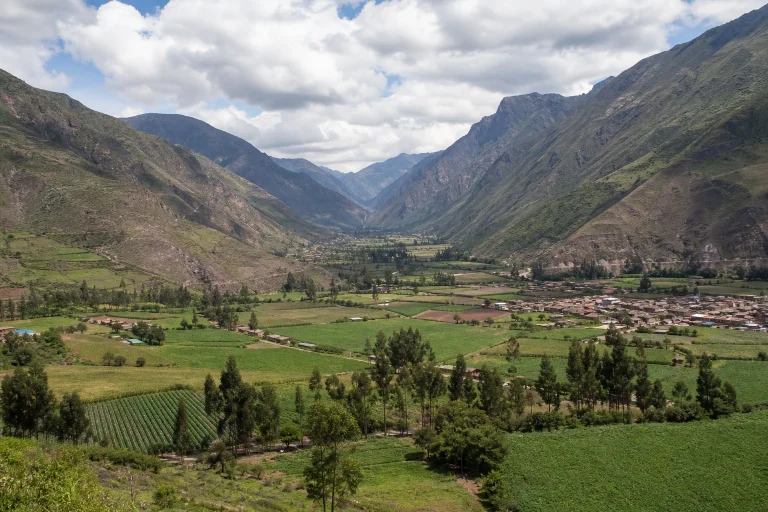
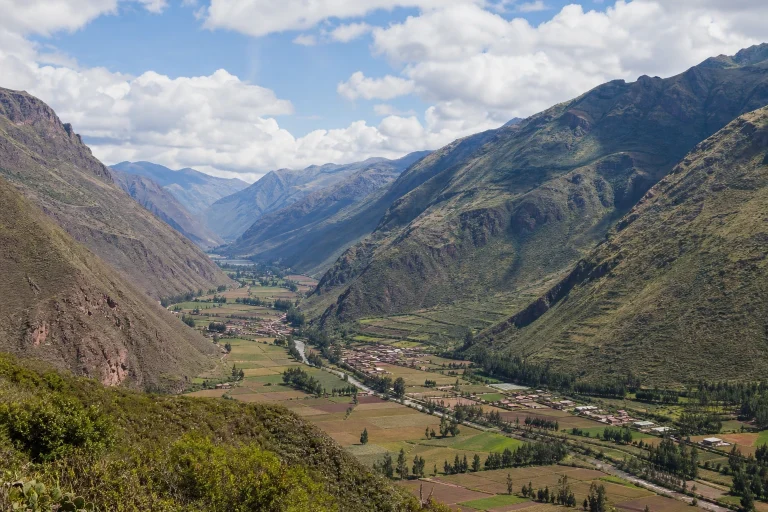
Urubamba is a practical Sacred Valley base for travelers linking valley days with Machu Picchu. Its key planning question is simple: stay in the valley, then coordinate the separate trip to Ollantaytambo, where the documented rail leg toward Machupicchu Pueblo begins. This Urubamba travel guide covers that route, the seasonal rainfall pattern, a nearby archaeological outing, and the booking checks that keep a trip workable.
Urubamba planning points at a glance
- Use Urubamba as a valley base if you are comfortable arranging an onward connection to Ollantaytambo for the rail segment toward Machu Picchu.
- Media Luna is a close archaeological option, reached 5 km from Urubamba on the paved road toward Ollantaytambo, followed by a 250 m walk.
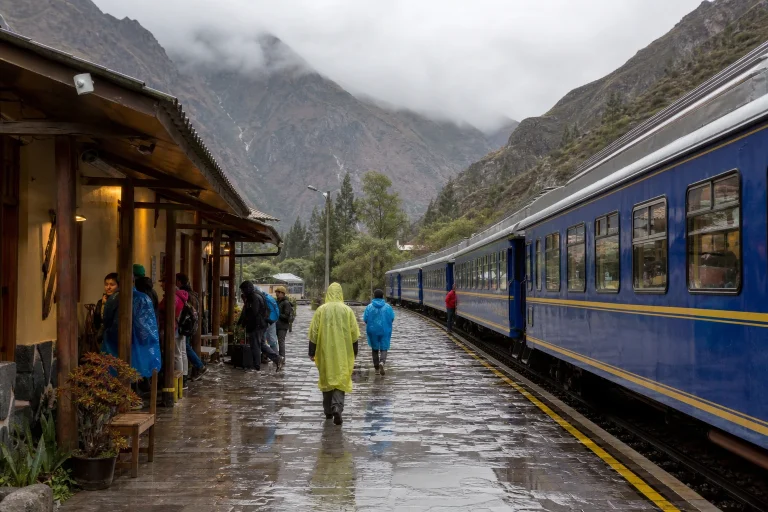
- For Machu Picchu, plan three distinct legs: Ollantaytambo to Machupicchu Pueblo by rail, then onward by tourist bus to the archaeological park.
- May to August is the lower-rainfall period in the Urubamba basin. September to April is wetter, with January typically the rainiest month.
- Reconfirm Machu Picchu rail, access-bus, and entry arrangements immediately before travel.
Choose Urubamba for a Sacred Valley base, not a rushed stop
Urubamba suits travelers who want to organize several Sacred Valley days from one base and are happy to treat the Machu Picchu connection as a separate part of the journey. The tradeoff is clear: Ollantaytambo is the key interchange for the rail leg, so an Urubamba stay requires deliberate transfer planning rather than a last-minute dash to the station.

The Best Private Sacred Valley Tour in Cusco ( with Pisac)
We know very well each place of this tour, since we have been grown in this area and we studied over 3 years to get a guide license. as well, our vehi...

From Urubamba & Ollantaytambo: Sacred Valley Day tour with Lunch
Explore the best and most unique sites in the Sacred Valley on a private tour. Visit the impressive ruins of Ollanta...

Machu Picchu Private Tour from Aguas Calientes (Tickets included)
Discover Machu Picchu at your own pace with our exclusive Private Guided Tour from Aguas Calientes. Perfect for inde...

Machu Picchu 2Day Tour by Train from Cusco with Overnight Stay
Our tour guides at Machu Picchu are incredibly passionate about storytelling and are committed to creating unforgett...
Decide where to sleep only after setting the shape of your days. If your priority is a valley base with local excursions and flexibility, Urubamba fits that rhythm. If your itinerary revolves around an early rail departure, build the connection to Ollantaytambo into the plan first. The Sacred Valley lodges, hotels and villages guide can help compare the accommodation question alongside your transport needs.
Build a local day around Media Luna
Media Luna is the simplest close-range archaeological outing to add to an Urubamba itinerary. The site is 5 km from Urubamba on the paved road toward Ollantaytambo, with a further 250 m walk. That compact approach makes it a sensible option for a day when you want an archaeological stop without committing to a long transfer.
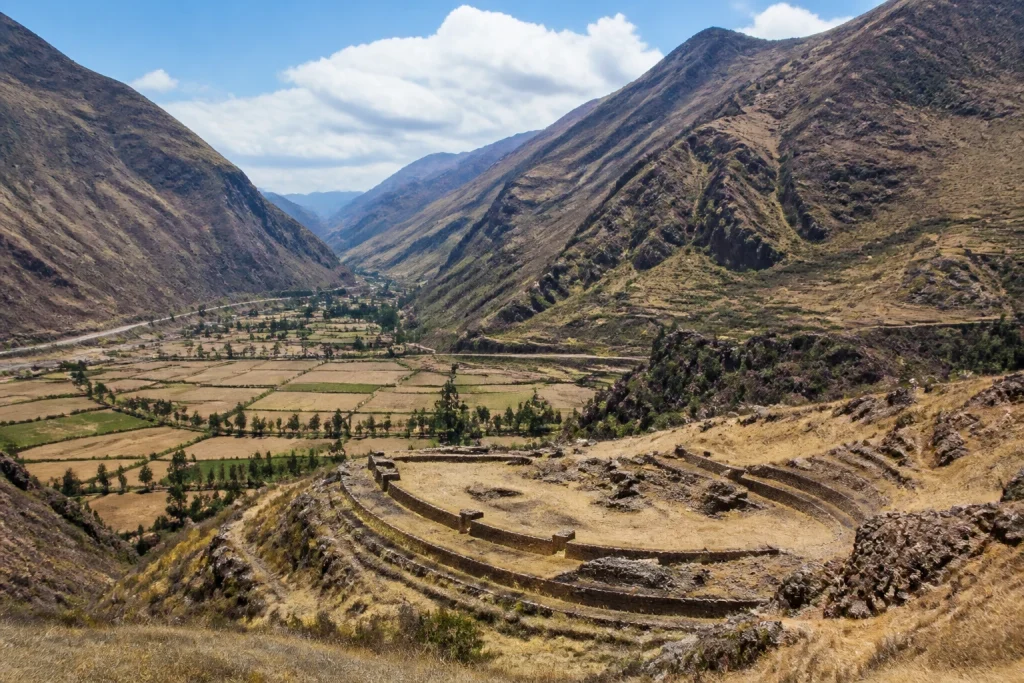
Leave enough time for the final walk and for arranging the return journey. Media Luna works especially well as a flexible piece of the itinerary: use it to anchor a local day, then keep the rest of the schedule open for food, rest, or further valley sightseeing. For a broader shortlist, the guide to the best things to do in the Sacred Valley offers useful ideas for shaping the remaining days.
Another separate planning option is the Maras and Moray half-day itinerary. Treat it as a distinct outing rather than trying to compress every Sacred Valley landmark into the same day as a timed rail or Machu Picchu connection.
Plan Machu Picchu as a staged journey
The route to Machu Picchu should be planned as linked transport legs, not as one vague transfer. The published itinerary runs from Cusco to Ollantaytambo by tourist bus, onward to Machupicchu Pueblo by rail, then from the pueblo to the archaeological park by tourist bus. An Urubamba itinerary adds the task of reaching Ollantaytambo in time for the rail departure.
- Cusco to Ollantaytambo: 61.5 km by tourist bus, with a planning estimate of about 1 hour 29 minutes.
- Ollantaytambo to Machupicchu Pueblo: 43 km by rail, with a planning estimate of about 1 hour 32 minutes.
- Machupicchu Pueblo to the Machu Picchu archaeological park: 10 km by tourist bus, with a planning estimate of about 30 minutes.
Use these figures to understand the structure of the day, not as a live timetable. They do not include the Urubamba-to-Ollantaytambo connection, waiting time, check-in, or the time spent inside the archaeological park. Build margins around every handoff, particularly where a booked rail departure is involved.
Ollantaytambo matters because the rail segment begins there. Pair your transport planning with the Ollantaytambo stone-streets guide if you want to give that stop more time, and use the Sacred Valley train routes to Machu Picchu comparison when weighing the rail portion of the journey. Reconfirm rail, access-bus, and entry arrangements shortly before travel, as operational details can change.
Choose travel dates around the rainfall pattern
Weather is the clearest seasonal factor for an Urubamba trip. The Urubamba basin’s lower-rainfall period runs from May through August. September through April is wetter, with January identified as the rainiest month across much of the basin and July as the month with the lowest precipitation.
| Travel period | What it means for planning |
|---|---|
| May to August | Lower-rainfall period in the Urubamba basin. |
| September to April | Wetter period, so build rain readiness into day plans. |
| January | Typically the rainiest month in much of the basin. |
| July | Typically the lowest-precipitation month. |
Treat this as a weather lens, not a rigid verdict on the best month. For wetter dates, keep a waterproof outer layer handy and avoid stacking too many fixed outdoor commitments into one day. For lower-rainfall dates, the same sensible approach applies: protect enough time for transport connections, because a smooth itinerary depends on more than the forecast.

Machu Picchu Private Archaeological and Historical Guided Tour
Explore Machu Picchu, one of the Seven Wonders of the World, in the company of a private guide. Enjoy the undivided...

From the Sacred Valley: Salt Mines & Moray - Private tour
As a company based in the Sacred Valley, we are true specialists in the region, enabling us to provide a more person...

Machu Picchu Guided Tour with Local Expert – 2 or 3 Hour Service
Discover Machu Picchu with a professional local guide who will bring the Inca citadel to life through history, cultu...
Coordinate each transfer before building the day around it
Do not leave the Urubamba-to-Ollantaytambo connection as an afterthought. It is its own segment of the itinerary, separate from the rail trip onward to Machupicchu Pueblo. Set your actual departure and pickup details from your current reservation confirmations, then allow time for the handoff before the rail departure.
Avoid building the whole day around a tight, self-created connection. A little breathing room is more valuable than an overly ambitious breakfast, sightseeing stop, or shopping detour on a rail day. Keep a copy of booking details accessible and make sure every traveler in the group knows the next meeting point.
If Pumamarca is on your list, check current road conditions before making it a fixed-date commitment. Paving toward the complex was still described as advancing in July 2025, so a completed paved approach should not be assumed without a current update.
Set your budget using current ticket and transport details
Do not set a Machu Picchu budget from old screenshots or guidebook figures. Use current official ticket information for entry, then check rail and access transport costs in the same planning session. Entry prices, ticket rules, and visit circuits are details to settle with current information before you commit to an itinerary.
- Which current entry date and visit circuit fit the itinerary?
- Which rail departure works with the actual connection to Ollantaytambo?
- How will you reach Ollantaytambo from your Urubamba base?
- What access-bus arrangements apply on the date of travel?
- What change and cancellation terms apply to each booking?
Answer those questions before adding optional stops. This order keeps the Machu Picchu day protected, then leaves the rest of the Sacred Valley itinerary free to expand around it. The Sacred Valley lodges, hotels and villages guide is also useful when you are matching where you stay to the transfer plan you have chosen.
Assess accessibility site by site
Do not assume that every Sacred Valley attraction has the same accessibility conditions. Choquequirao, a regional archaeological add-on, does not offer disability access because of the distance and conditions of its route. That specific limitation should not be applied automatically to every other site in the valley.
For Urubamba stays and other attractions, check the current details for the individual hotel, transfer, and site that you plan to use. Focus on the actual walking distance, surface, steps, vehicle access, and assistance available, rather than relying on a general label for the destination.
Shape a focused Urubamba itinerary
A strong Urubamba plan has room to breathe. Give the base day a local purpose, reserve a separate window for the Machu Picchu transport chain, and leave one flexible block for the weather or a nearby excursion. Media Luna can fill that local role without requiring a full-day commitment.

- Arrival or settling-in day: confirm the onward transfer plan and keep the schedule light.
- Local Sacred Valley day: use Media Luna as a compact archaeological outing, or choose another dedicated excursion that does not conflict with rail timing.
- Machu Picchu day: treat the route through Ollantaytambo, Machupicchu Pueblo, and the access bus as the day’s main event.
- Flexible day: keep it available for weather adjustments, a longer valley visit, or a stop you chose after locking the essential bookings.
This approach makes Urubamba useful without asking too much of a single day. It also helps avoid the common planning error of treating a timed rail connection as an extra that can be squeezed around a full sightseeing schedule.
Still comparing Sightseeing?
Ask for tour ideas, hotel suggestions, or a simple trip plan that combines both.
Trip Helper
Make Urubamba work for your travel style
Urubamba is a sensible choice for travelers who want a Sacred Valley base and can plan the onward Ollantaytambo connection with care. Its strongest combination is a nearby outing such as Media Luna, a weather-aware schedule, and a staged Machu Picchu journey with generous transfer time. Set the essential bookings first, confirm live transport and entry details before leaving, then let the rest of the valley unfold at a calmer pace.
Frequently asked questions
Is Urubamba a good base for visiting Machu Picchu?
Yes, Urubamba can work well as a Sacred Valley base if you are prepared to arrange an onward connection to Ollantaytambo. The rail leg in the documented Machu Picchu route starts from Ollantaytambo, so that transfer needs to be part of the plan.
How do travelers reach Machu Picchu from an Urubamba itinerary?
Plan the journey through Ollantaytambo, then take rail to Machupicchu Pueblo and a tourist bus to the archaeological park. The published route estimates about 1 hour 32 minutes by rail and about 30 minutes by bus after reaching Ollantaytambo.
When is the lower-rainfall period in Urubamba?
May through August is the lower-rainfall period in the Urubamba basin. September through April is wetter, with January generally the rainiest month and July the lowest-precipitation month.
What is a short archaeological outing near Urubamba?
Media Luna is a close archaeological option, located 5 km from Urubamba on the paved road toward Ollantaytambo, followed by a 250 m walk. It is well suited to a flexible local day.
How should I budget for Machu Picchu from Urubamba?
Use current official ticket information for Machu Picchu entry, then price the rail and access transport for your chosen date. Do not rely on older published fare tables because ticket prices, rules, and visit circuits can change.
Are Sacred Valley archaeological sites accessible for travelers with disabilities?
Accessibility must be checked for each site individually. Choquequirao does not offer disability access because of the distance and route conditions, but that limitation should not be assumed for every Sacred Valley attraction.

Machu Picchu Private Guided Tour (No Ticket)
The guide will be exclusively for you or your group, the tour is along the circuit indicated on your ticket. The guide is patient with those who like...

Machu Picchu Private Tour with Expert Guide
Discover Machu Picchu with your own private official guide and enjoy a personalized experience in English, French, o...

From the Sacred Valley Chinchero, Maras, Moray and Ollantaytambo
What makes our tour special is that we are based right here in Urubamba, the heart of the Sacred Valley. Being local...

Machu Picchu Ticket, Bus & Private Guide
Maximize your time at Machu Picchu with this private guided tour starting directly from Aguas Calientes. Skip the ha...